Notifications
Clear all
B2B Opportunities & Joint Ventures
1
Posts
1
Users
0
Reactions
1,439
Views

Topic starter
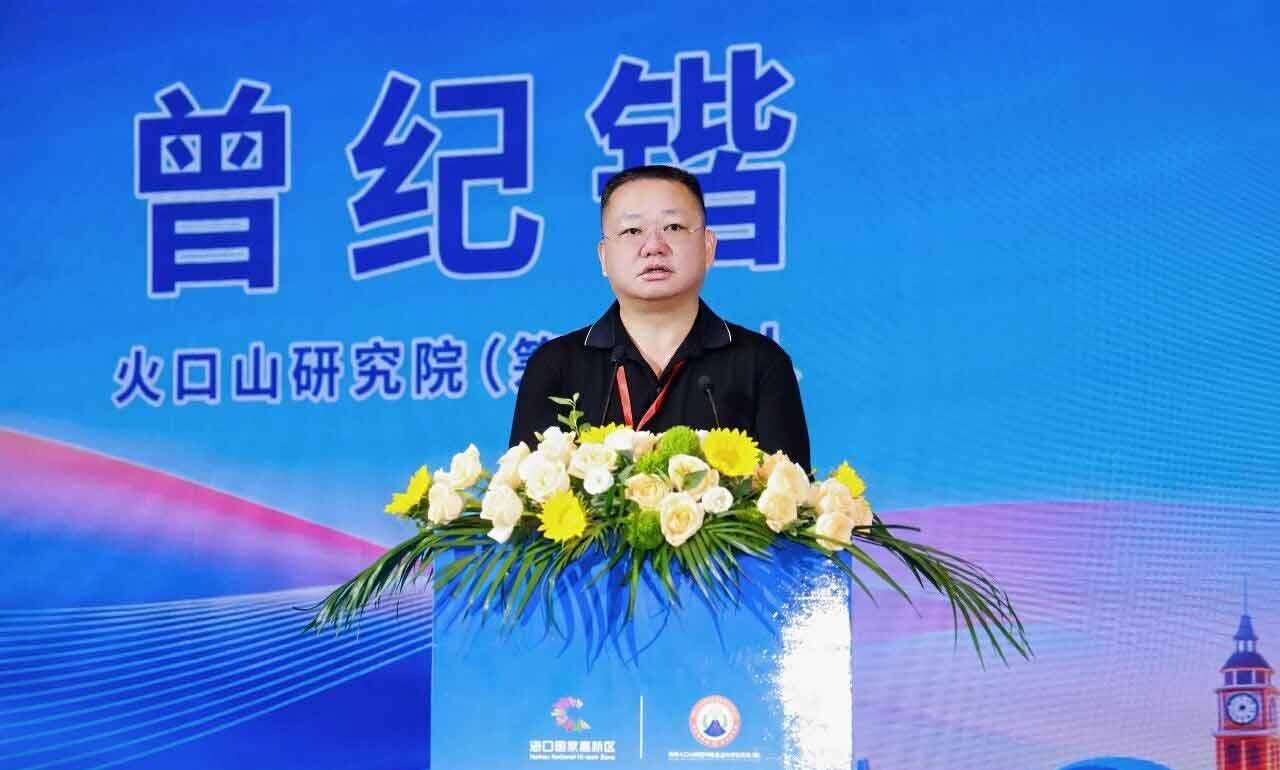
Preparations have begun in Haikou for a new research institute focused on medical nutrition, foods for special medical purposes and special dietary foods. The proposed Hainan Huokoushan Institute of Food Science for Special Medical and Dietary Purposes was announced at an academic symposium held in Haikou on August 8. The English name used here is a working translation; no official English name has been identified.
The institute remains under preparation. Tianzhuang Nutrition says it is intended to operate as a non-profit research-service organisation connecting clinical needs, academic research and product development.
People's Daily Online's Hainan channel confirmed the involvement of Haikou National High-Tech Industrial Development Zone and Hainan Tianzhuang Nutrition Engineering Co., Ltd. It said discussions covered special medical and dietary food technologies, AI and digital nutrition, clinical applications and the commercialisation of research.
According to Tianzhuang's event announcement, the meeting was hosted by the management committee of Haikou National High-Tech Industrial Development Zone, with support from the Haikou Municipal Committee of the Chinese People's Political Consultative Conference. The Hainan Food Science and Technology Society and the proposed institute were listed as co-organisers, with Tianzhuang responsible for running the event.
Participants included Huang Xiaojun, an academician of the Chinese Academy of Engineering and director of Peking University's Institute of Hematology, and Zhang Jun, vice-president of Hainan Medical University and president of Hainan Provincial People's Hospital. Experts from Ruijin Hospital affiliated with Shanghai Jiao Tong University School of Medicine, Hainan University and West China Second University Hospital of Sichuan University also delivered presentations.
What the institute plans to work on
Foods for special medical purposes, commonly known as FSMPs, are specially formulated foods for people whose nutritional needs cannot be met normally because of restricted food intake, digestive or absorption problems, metabolic disorders or particular medical conditions.
In China, FSMPs are regulated as food rather than medicine and are subject to a specific registration regime. Products must be registered with the State Administration for Market Regulation, and official guidance states that they should be used under the direction of a doctor or clinical dietitian.
"Special dietary foods" is a broader category. Chinese national guidance includes infant formula, complementary foods for infants and young children, FSMPs and other foods designed for particular physiological or dietary requirements within this category.
Tianzhuang says the proposed institute will concentrate on six areas: medical and precision nutrition, technology and applications for FSMPs and special dietary foods, clinical collaboration and evidence-based evaluation, digital nutrition, policy and standards work, and academic exchange and professional training.
The research presented at the August symposium gives some indication of the areas it may pursue.
Zhang Jiachao, dean of Hainan University's School of Food Science and Engineering, presented work on interactions between probiotics and medicines. Cheng Guo of West China Second University Hospital discussed the development of clinical nutrition, while Lu Yong, vice-president of Ruijin Hospital, addressed cartilage imaging, early identification of degeneration and potential nutritional intervention.
The organisers say the institute is intended to bring clinical requirements and real-world data more directly into research and product development.
They have also set out a proposed governance model. According to Tianzhuang's announcement, academic direction would be led by an academic committee, research topics would be determined by expert teams, and Tianzhuang would act as a service and support party rather than directing academic work.
Those remain plans for an organisation that is still under preparation. The announcement describes the institute as being in preparation and does not provide a registration document or detailed operating structure.
What Tianzhuang already operates
The institute would build on research and production activity that Tianzhuang has already developed separately from the proposed organisation.
Tianzhuang has established research and clinical cooperation with more than 20 research institutes and major tertiary hospitals. Named partners include West China Second University Hospital of Sichuan University, Children's Hospital of Soochow University and hospitals affiliated with Nanjing Medical University. TropicalHainan's editor has separately confirmed the company's wider cooperation network.
On January 13, 2026, Hainan University published notice of a proposed transfer to Tianzhuang of three technical secrets arising from tropical probiotic research. The proposed transaction was valued at RMB 4 million.
The university described the three research areas as the use of different tropical probiotics to alleviate liver injury, hyperuricemia and chronic colitis.
Tianzhuang has also taken a product through China's FSMP registration and production-licensing process.
The Hainan Provincial Market Supervision Administration reported that Tianzhuang Xiaoershan (天壮小尔膳), a complete-nutrition FSMP developed for children aged one to 10 with restricted food intake, digestive or absorption problems or metabolic disorders, received registration approval from the State Administration for Market Regulation on August 2, 2025.
The provincial regulator conducted a production-conditions inspection on September 3 and issued a production licence after confirming that requirements had been met. The product formally entered production on September 27. The regulator described it as Hainan's first complete-nutrition FSMP.
Tianzhuang's activity is also visible in provincial food-standard records. Hainan Health Commission data for the second half of 2024 lists several enterprise standards filed by the company for special dietary food products. These are company product standards lodged with the health authority, not regulatory product approvals.
The company has also participated in formal standards work.
The National Public Service Platform for Standards lists Tianzhuang among the drafting organisations for GB/T 15091.2-2026, Fundamental Vocabulary and Classification of Processed Food, Part 2: Classification of Processed Food, a recommended national standard that took effect on August 1, 2026.
The National Digital Standards Library also lists Tianzhuang among the drafting organisations for T/CEAC 053-2024, Technical Specification for the Use Evaluation of Foods for Special Medical Purposes. This is a group standard issued through the China Business Economics Association, rather than a national standard.
In May 2026, Tianzhuang announced that its engineering technology centre would provide FSMP research and testing services to outside companies. People's Daily Online's Hainan channel reported that the centre offers services including formulation design, quality research, process development, registration support and commercial production support, working alongside a CNAS-accredited laboratory identified as L25438.
The company also states that it holds production qualifications covering the full range of special dietary food categories and has participated in additional national, industry and group standards. TropicalHainan's editor has separately confirmed these company capabilities, although the complete qualification and standards lists have not been independently audited for this article.
Taken together, the documented activity shows that the company initiating the institute already operates across research collaboration, testing, regulatory registration, standards work and manufacturing.
Those capabilities belong to Tianzhuang. The proposed institute remains a separate organisation under preparation, and the extent to which it ultimately draws on the company's facilities, personnel and partnerships will depend on the structure established during the next stage.
What happens next
The August meeting marks the beginning of the institute's establishment process, not the opening of a fully operating research organisation.
The broader policy direction is clear. Hainan's provincial market regulator says current policy measures support the development of FSMPs as an emerging industry, alongside biomanufacturing, medical aesthetics and digital therapeutics.
For Tianzhuang, the proposed institute would extend a model the company has already been developing through clinical cooperation, university research, specialist manufacturing, standards work and external research services.
A new medical nutrition research institute is being prepared in Haikou at a time when Hainan is supporting foods for special medical purposes (FSMPs) as an emerging industry.
Tianzhuang Nutrition already provides external companies with formulation development, testing, registration support and commercial production services through its engineering technology centre, working alongside a CNAS-accredited laboratory.
Companies in medical nutrition, FSMPs, special dietary foods, food technology and related sectors interested in connecting with Tianzhuang Nutrition or exploring cooperation with the new Medical Nutrition Research Institute can contact TropicalHainan at Business@tropicalhainan.com.
This topic was modified 2 months ago 2 times by Patrick Quinn
Posted : 25/08/2026 12:03 pm

Register Your Business

Follow Us on WeChat

Jobs in Hainan