Beneath the Earth, Preparing for the Moon: China’s New Astronaut Cave Training Program

Deep beneath the dramatic karst formations of Chongqing’s Wulong District, Chinese astronauts recently traded the vastness of space for the tight confines of an underground world. For six days and five nights, they navigated darkness, isolation, and physical extremes, conditions designed to mirror the challenges of deep‑space exploration.
Beneath the Earth, Preparing for the Moon: China’s New Astronaut Cave Training Program

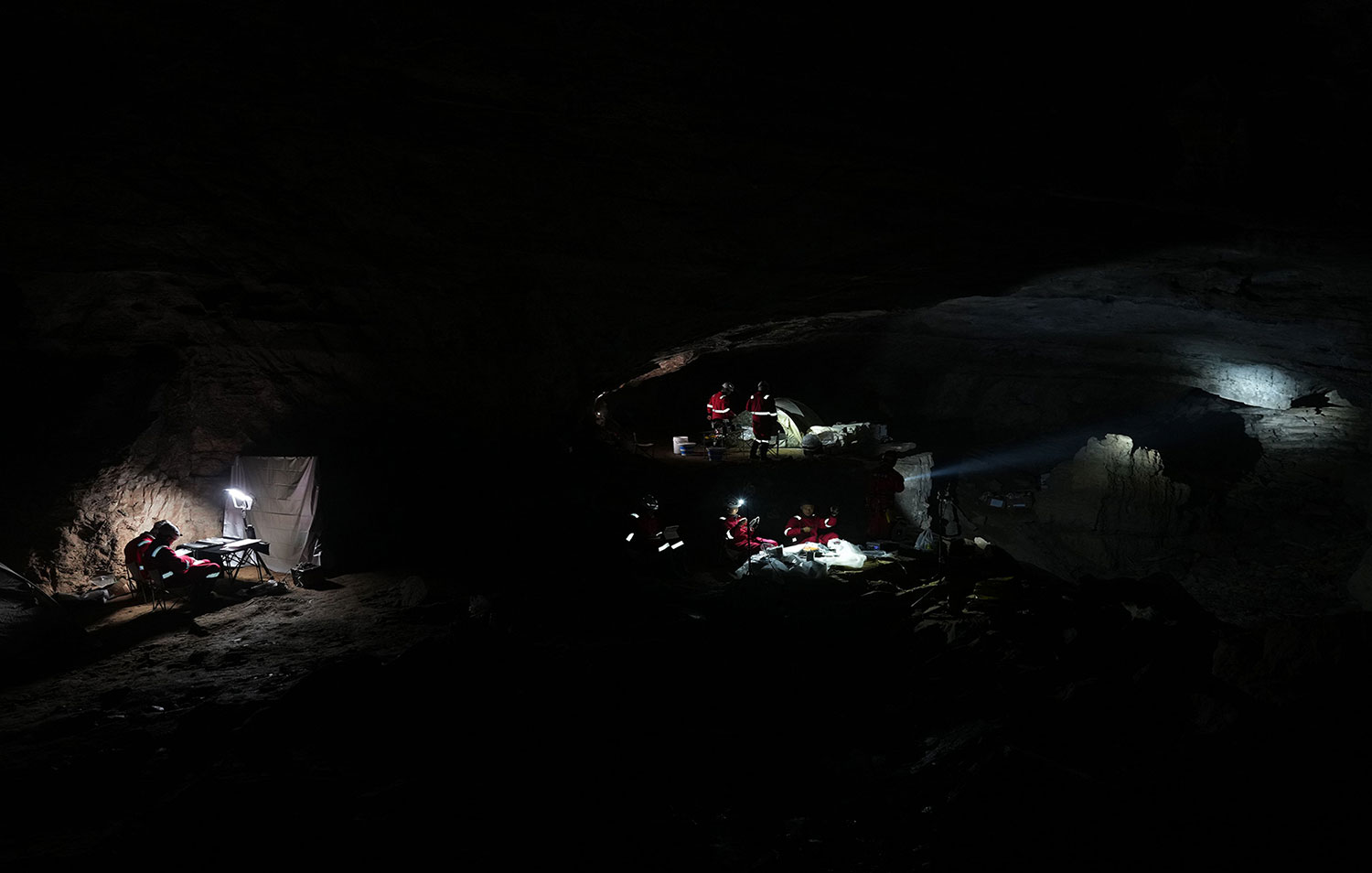
December 2025: Astronauts conduct training inside the cave; shown here is the main camp area.

The program, organized by the China Astronaut Research and Training Center, brought together 28 astronauts in four rotating groups. Each team followed the same demanding schedule, designed to recreate the psychological and environmental pressures astronauts may face far from Earth, confinement, uncertainty, and the need for constant self‑reliance.

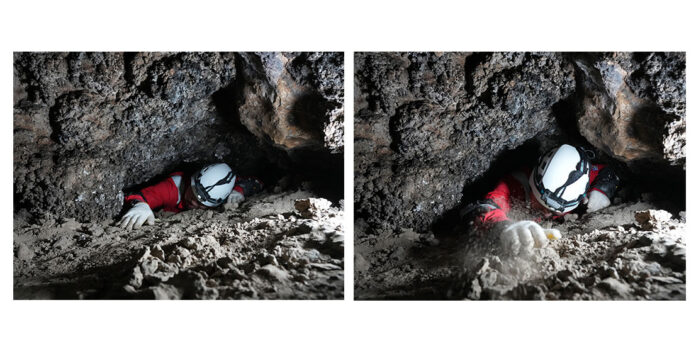
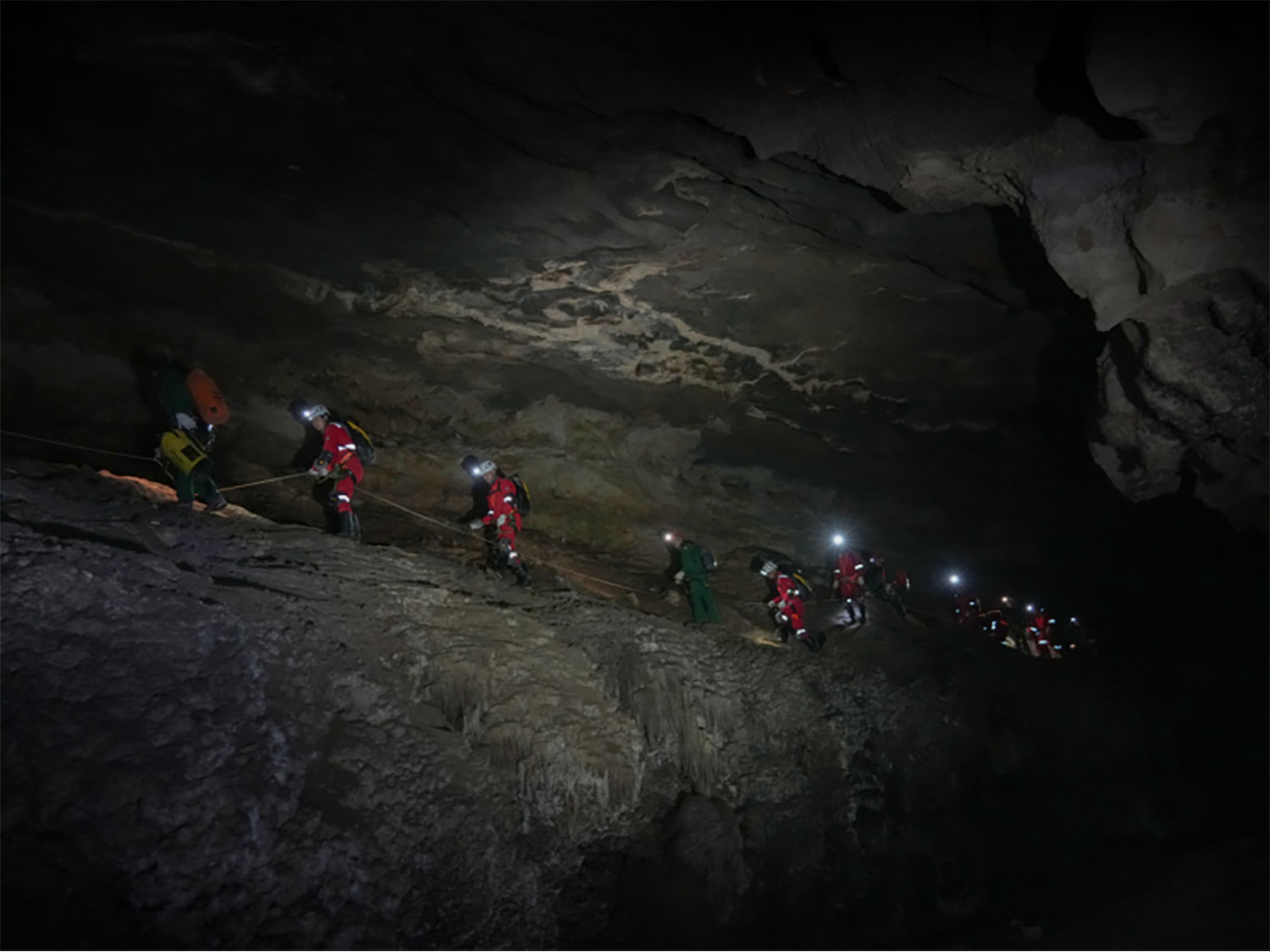
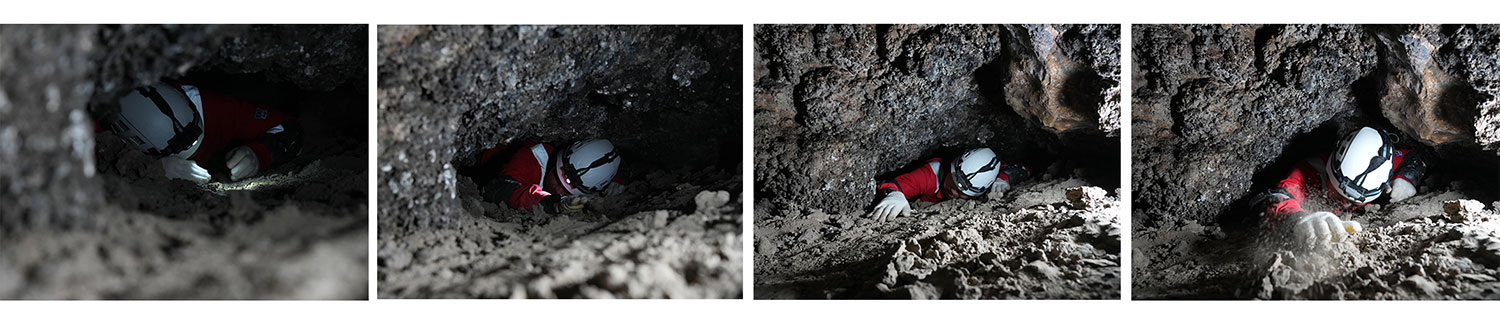
Caves, sealed off from the outside world and devoid of natural light, offer an ideal analogue for space. According to Wu Bin, Deputy Chief Designer of the Astronaut System of China’s Manned Space Program, the underground setting allowed trainers to design mission‑like tasks: exploration, scientific sampling, material management, and life‑support operations. Astronauts squeezed through narrow passages, climbed and rappelled down cliffs, and endured long stretches of cold, damp conditions.

But the psychological demands were just as intense. Darkness, sensory deprivation, and the ever‑present sense of risk pushed astronauts to their mental limits. “This training aimed to enhance astronauts’ abilities in hazard response, independent work, teamwork, emergency decision‑making, scientific investigation, physical endurance, and psychological resilience,” Wu said.
Beneath the Earth, Preparing for the Moon: China’s New Astronaut Cave Training Program

December 2025: An astronaut traverses a cliff section during cave training.
Beneath the Earth, Preparing for the Moon: China’s New Astronaut Cave Training Program

December 2025: An astronaut squeezes through a narrow passage during cave training.

To support future space station stays and crewed lunar missions, the program introduced more than ten specialized subjects, from environmental monitoring to simulated ground‑space communication. Seven scientific studies also examined how humans interact with extreme environments, generating valuable data.

Astronauts alternated between cave and jungle training in staggered phases, allowing the entire program to be completed within a month. Safety was ensured through cooperation with local authorities and search‑and‑rescue teams, along with detailed emergency planning and instructor pre‑training inside the cave.

Ye Guangfu, an astronaut who previously participated in European cave training and served as a commander for this program, noted that China’s approach placed greater emphasis on autonomy. Reduced in‑cave support and strengthened psychological monitoring offered important lessons for future missions.

Psychological resilience remained central throughout. Instructor Jiang Yuan described caves as classic extreme environments, isolated, unpredictable, and socially restrictive. Continuous assessments and group support techniques helped astronauts adapt, while researchers collected extensive data that will inform psychological support systems for long‑duration missions.

For many participants, the experience was transformative. Zhu Yangzhu, a member of the first training group, said the cave’s enclosed space and complex terrain mirrored the isolation and unknowns of deep‑space exploration. “It tested our limits and deepened our understanding of coordination and cooperation,” he reflected.

Alongside the cave program, each group completed two days of jungle survival training, building confidence in harsh outdoor environments and reinforcing teamwork.

As China’s manned space program expands, the training center continues to refine its methods, introducing new technologies such as mixed‑reality EVA training, visuomotor‑conflict treadmills, visual stroboscopic systems, and deep‑space psychological endurance training. Experienced astronauts now play a growing mentoring role, bringing real spaceflight experience into both classroom teaching and hands‑on instruction.

Related article: International Astronaut Centre Announced for Hainan, Opening in 2026

International Astronaut Centre Announced for Hainan, Opening in 2026 – TropicalHainan.com
Hainan will launch an International Astronaut Centre in 2026, integrating health management, science education, and global space cooperation. The project was announced at IPSPACE 2025 …
www.tropicalhainan.com
SourceSource

- Follow Us on WeChat -

spot_img

Related articles:

Death in China: The Foreigner’s Final Paperwork Problem

A practical look at what happens regarding a foreigner’s passport, funeral arrangements, bank accounts, phone and apps when a foreign national dies in China ...

Hainan’s 2026 Investment Opportunity List Shows What the Free Trade Port Wants Built Next

Hainan’s 2026 Investment Opportunity List shows what the Free Trade Port wants built next, from ports and digital trade to medical platforms and future industries …

Explainer: Apostille vs Consular Authentication for Hainan Work Permit Documents

Apostille has replaced Chinese consular authentication for relevant documents from Convention countries, but notarisation, translation and validity rules can still apply ...

Lost Your Passport in China: The Emergency Document You Should Know About

Lost your passport in China? If your embassy, consulate, or relevant home-country institution in China cannot reissue a travel document, China has an Exit-Entry Permit for Foreigners …

Get weekly email updates for new articles published!

Follow Us on WeChat

spot_img

Latest Articles ...

Hainan’s new services plan points to a shift in how foreign operators may use the FTP: banking, permits, policy access and talent recognition …
How Hainan’s 30% rule is beginning to shape business decisions for companies using the FTP’s customs route into mainland China ...
Typhoon Season 2026 in Hainan: What residents need to know about storm forecasts, El Niño impacts, ferry suspensions, airport disruptions, warning levels, and how to prepare for typhoons from July to October ...
How international graduates can stay in China after graduation through Hainan’s startup residence route, and why it does not allow paid work ...
spot_img

Why Your Name Doesn’t Match Across Chinese Systems, and What to Do About It

Your name exists in five different systems in China. Zero automated checks and they don't talk to each other. Here's what happens when they disagree ...

Why Foreigners Lose Access to Their Chinese Bank Accounts

Frozen accounts, blocked cards, restricted access. Most expats in China don't think about their bank account until they can't access it …

China’s Green Card: How Rare Is It, and What It Takes to Get One

Between 2004 and 2017, China issued just over 10,000 permanent residency permits to foreign nationals. This guide explains the four eligibility routes, the real criteria, and your honest odds of qualifying …

Why Your Passport Doesn’t Work: A Foreigner’s Guide to China’s ID-Only Systems

Your passport is legally valid for trains, hotels, SIM cards and payment accounts in China. The problem isn't the rules, it's the systems built on top of them …
spot_img

Looking for an international pre-school in Haikou?

Flora's International Preschool has three preschools in the Haikou area. Our schools follow a European curriculum

Continue Reading ...

Death in China: The Foreigner’s Final Paperwork Problem

A practical look at what happens regarding a foreigner’s passport, funeral arrangements, bank accounts, phone and apps when a foreign national dies in China ...

Hainan’s 2026 Investment Opportunity List Shows What the Free Trade Port Wants Built Next

Hainan’s 2026 Investment Opportunity List shows what the Free Trade Port wants built next, from ports and digital trade to medical platforms and future industries …

Explainer: Apostille vs Consular Authentication for Hainan Work Permit Documents

Apostille has replaced Chinese consular authentication for relevant documents from Convention countries, but notarisation, translation and validity rules can still apply ...

Get weekly email updates for new articles published!

Never miss another important notice or event. Be informed of what you need to know, when you need to know it.