
- From the time you stop paying your bill, there is a period during which your number will eventually be cancelled and then reassigned to someone else, depending on your carrier’s specific suspension and recycling rules.
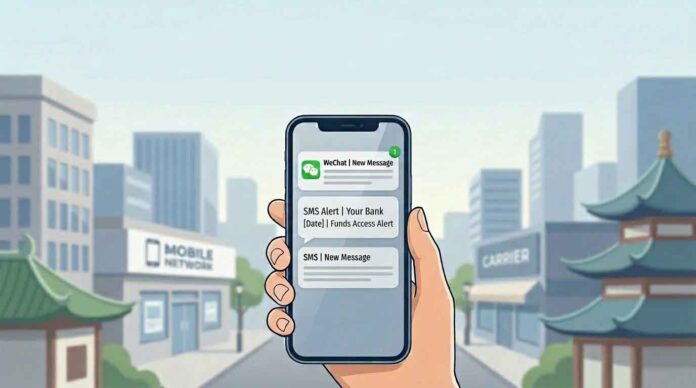
- A new holder of your old number can receive SMS codes and alerts intended for you, which may enable them to attempt WeChat logins, trigger Alipay verification, and see bank alerts, depending on the other security checks in place.
- There is an official government tool to audit which apps are bound to your number. Foreign passport holders cannot use it.
- There is also a newer service that clears prior account bindings when a number changes hands. Here is how it affects you.
Many expats who let a Chinese number lapse assume that once the SIM goes quiet, its link to their accounts goes with it. It does not. The number may be gone, but the bindings remain, and the number itself will eventually reach someone else.
Under the Ministry of Industry and Information Technology’s (MIIT) Telecom Service Standards (Article 2.1.7), the minimum freeze period after a number is formally deregistered is 90 days. Beyond that, carriers typically allow a further suspension period of several months from the point of non-payment. The two stages combined mean the total window before reassignment is often around six months, though the exact timing varies by carrier and plan and is not fixed in law.
During that period, the number remains associated with your account in the operator’s systems, and apps relying on it for verification will continue to send messages to that number until you update your details.
What the New Holder Can Access
When a recycled number is assigned to a new user, what they can access depends on the platform.
Based on Tencent’s documented user reports, WeChat currently behaves roughly as follows when a recycled number is used to register a new account: the system can detect that the number was previously used and ask whether the existing account is theirs. If the new user confirms it is not, the number is typically removed from the old account’s profile.
In this scenario, the phone number is removed as a login method from the previous account. The account itself is expected to remain in place with its contacts, chat history, and WeChat Pay balance intact, unless it has been separately cancelled or deleted.
One key vulnerability is the window before the new user registers.
During that period, the recycled number can still receive SMS verification codes. Those codes can, in principle, be used as part of the process to log into the previous owner’s account, if the other required login details are also known.
A case reported by Xinhua in January 2026 illustrates the kind of access risk that can occur when a recycled number is still tied to an active WeChat account: a Mr Wang in Inner Mongolia had his former number reclaimed by his carrier and reissued to a new user, who used it to log into his WeChat account, which contained 100,000 RMB. Police identified the new user and recovered access to the account, preserving the funds.
Source: https://pub-zhtb.hizh.cn/a/202601/25/AP69759189e4b08d8f2f3f66a2.html
Alipay
Alipay’s publicly available user agreement and help materials do not, as of the time of writing, describe in detail what happens when a bound Chinese mobile number is recycled and taken over by a new user.
What is documented: Alipay typically requires a payment password and, for some higher-risk operations, face or ID verification, which means that SMS alone is generally not enough for large transfers.
While SMS alone is rarely sufficient for large Alipay transfers, it may be enough to exploit small-sum no-password payment settings, if those have been enabled.
In one 2024 media report, branch staff at Agricultural Bank of China and Bank of China said the risk ‘should be relatively small,’ though both acknowledged it cannot be completely ruled out. Staff specifically noted that no-password payment settings 免密支付 (no-password small payments) could be affected.
Source: https://www.chinanews.com.cn/sh/2024/04-08/10194438.shtml
Bank Accounts
In the case described in that same report, bank staff said SMS alerts only display the last four digits of the card number. On their own, such truncated details reveal little beyond confirming that a card ending in those digits exists, though they could still contribute to wider social-engineering risks.
Mobile banking apps in China generally require a password or PIN and are tied to a verified real-name account, a phone number alone is not enough to log in. A key concern is not the SMS in isolation, but what a new number holder might be able to do by combining those messages with other information they obtain.
The Tool That Should Help, But Doesn’t Work for You
In July 2022, MIIT launched 一证通查 2.0 (One ID, One Search 2.0), a service that allows users to see which internet accounts are bound to their Chinese phone number and access each platform’s individual unbinding process.
By 2025, official reports indicated that 一证通查 (One ID, One Search) had been connected to around 25 major internet platforms.
It is not a one-click removal tool, unbinding must be completed separately on each platform.
Access is via the WeChat official account 工信微报 (MIIT Micro-Report) or the Alipay 一证通查 (One ID, One Search) mini-program, among other official channels.
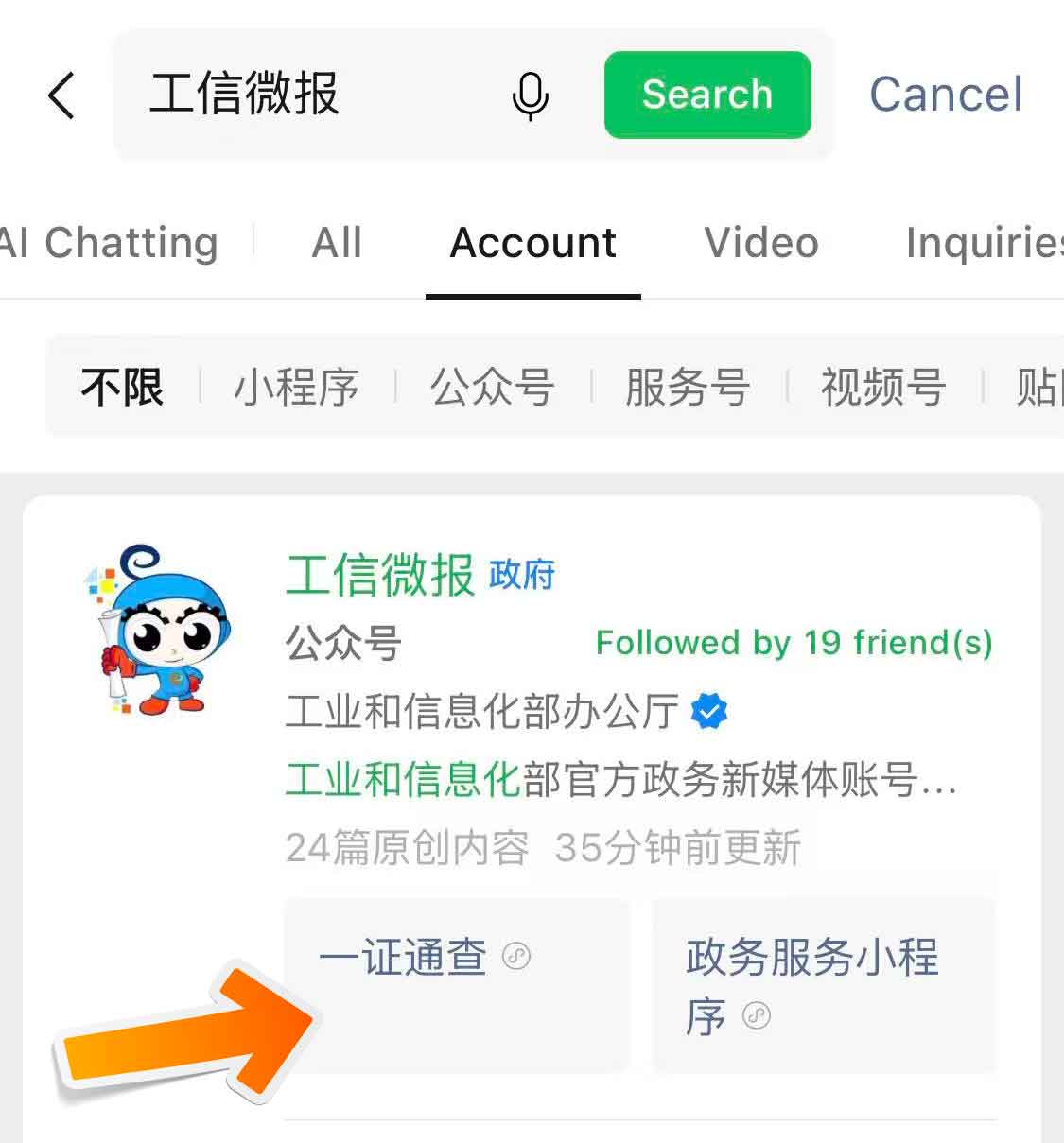
The system requires three inputs: a Chinese phone number, a verification code, and the last six digits of a Chinese national resident ID card.
No passport-based login option has been identified in the system’s design or in MIIT documentation as of April 2026. The practical result is that, at present, foreign passport holders have no officially supported way to use the service to audit which apps are bound to their Chinese mobile numbers.
It is worth noting, that once a number is formally cancelled, 一证通查 (One ID, One Search) cannot be used to query linked accounts even by Chinese national ID holders, the tool only functions while the number remains active.
The Newer Service, And What It Means for You
Since around 2024, MIIT has driven the rollout of a second service, 二次号码焕新 (Secondary Number Renewal).
This service is designed for the new holder of a recycled number, not the previous one. When the new user activates it, carriers and participating platforms coordinate to remove historical bindings with more than 200 major apps, typically completing the process within five working days.
Note that the service does not cover bank apps, overseas internet services such as Apple ID, or some niche Chinese apps.
At a State Council Information Office press conference on 21 January 2026, MIIT spokesperson 谢存 (Xie Cun) reported that carriers had batch-refreshed over 250 million secondary numbers before reissuance, completing over one billion internet app unbindings.
The proactive renewal service, available via official carrier apps and mini-programs, supports removal of historical bindings with 239 common internet apps and had processed more than 360 million unbinding requests for over 5.8 million users.
Source: http://www.news.cn/20260121/8069a5121742487482202859fba1355c/c.html
If the new user activates 二次号码焕新 (Secondary Number Renewal), the service will remove historical bindings on the 239 participating apps, including any accounts you previously linked to that number. This can reduce your residual exposure, but only if the new holder chooses to activate it.
There is currently no standard way for former users to be notified that it has been done.
How the new holder accesses the service, by carrier:
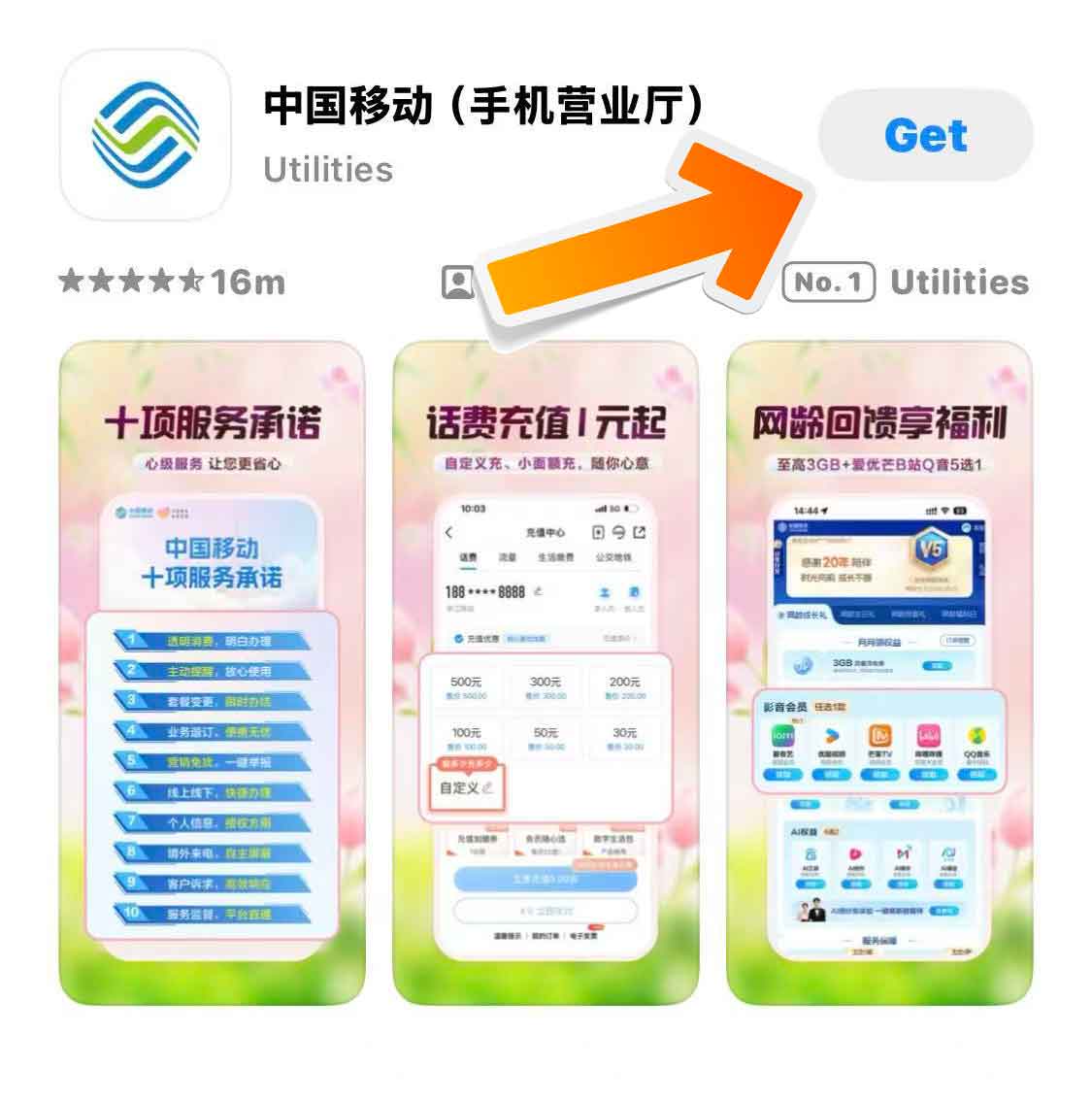
China Mobile (中国移动): Open the 中国移动 (手机营业厅) (China Mobile Mobile Business Hall) app. Search for 二次号码焕新 (Secondary Number Renewal) available in the Chinese version only.
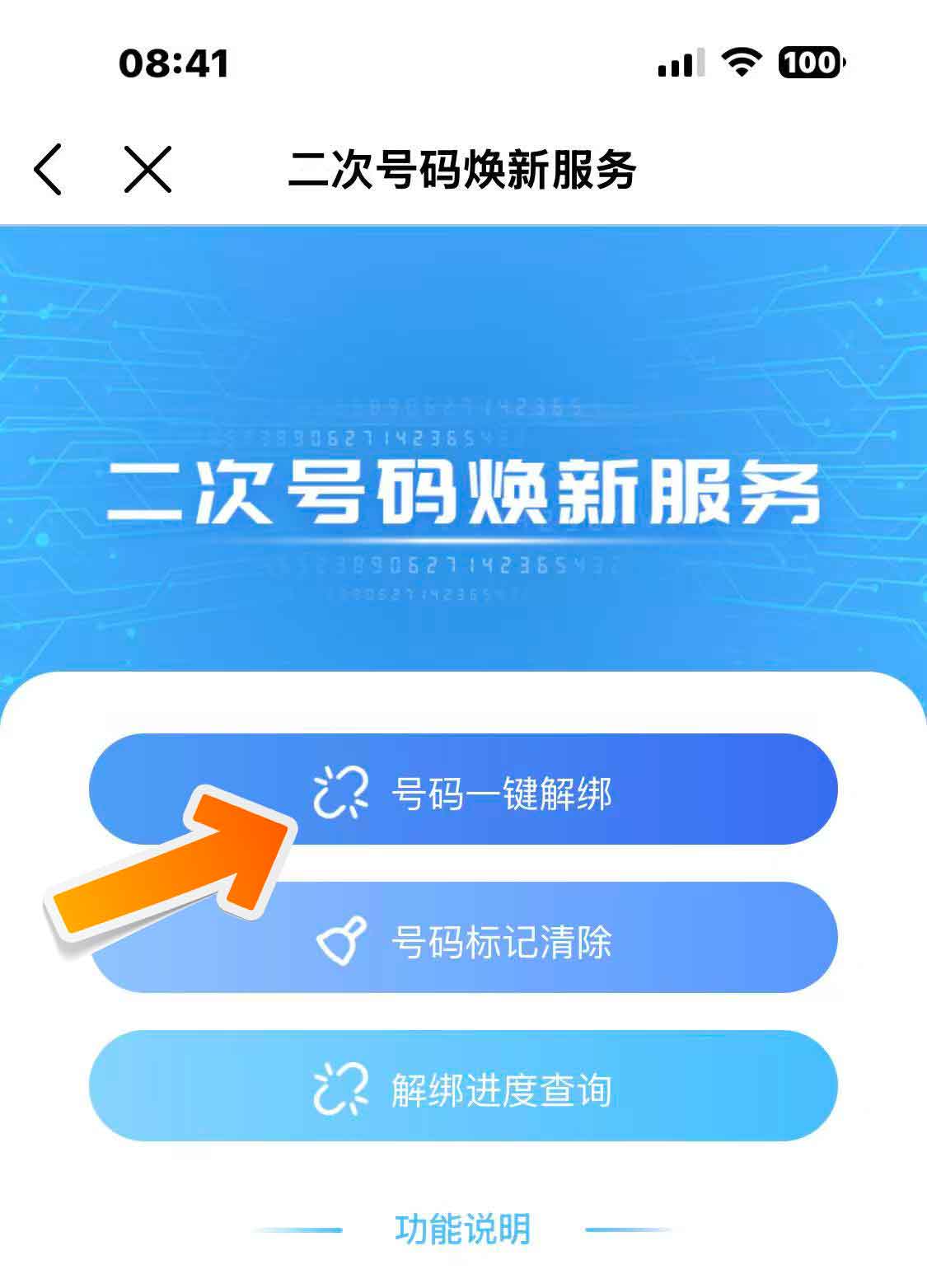
Note: there is a limited English version of the app, but the Secondary Number Renewal option is available in Chinese app only. The service is available to current China Mobile users and those who ported their number to China Mobile after June 2021.
China Unicom (中国联通): Open the China Unicom (中国联通) official app, navigate to 服务 (Services) → 通用服务 (General Services) → 二次号码焕新 (Secondary Number Renewal), and submit. Alternatively, search for “二次号码焕新 (Secondary Number Renewal)” in the app’s search bar.
China Telecom (中国电信): Open the China Telecom (中国电信) official app, navigate to 查询办理 (Query/Apply) → 全部 (All) → 生活服务 (Life Services) → 便民 (Convenience) → 二次号码焕新 (Secondary Number Renewal). Alternatively, search for “号码焕新 (Number Renewal)” in the app’s search bar.
Whether the service is accessible to foreign passport holders who registered their number with a passport rather than a Chinese national ID card has not been confirmed in any official source as of April 2026.
What You Can Actually Do
One particularly effective preventive measure (covered in our previous article) 停机保号 (suspend service, preserve number), the number preservation service available from all three major carriers for roughly 5–10 RMB per month depending on operator, plan, and region.
Keeping your number on a preservation plan keeps it from being cancelled and reassigned for as long as that plan remains in effect, which removes the specific risk tied to number recycling, though other account security risks remain.
For those who have already let a number lapse, or who are about to:
Before the number lapses, while it is still active
If you visit a carrier service hall to cancel your number, all three major carriers now state they will remind you to unlink your accounts before the cancellation is processed. Take that reminder seriously, it is the last practical checkpoint before the exposure window opens.
WeChat: Change your bound number in-app. Navigate to 我 (Me) → 设置 (Settings) → 账号与安全 (Account Security) → 手机号 (Phone) → 更换手机号 (Change Mobile). The system sends a verification code to the old number, which must still be active to receive it. In straightforward cases this is a quick process.
Alipay: In current versions, update your number under 我的 (Me) → 设置 (Settings) → 安全中心 (Security Centre) → 手机号 (Phone Number), provided the old number can still receive codes.
Bank accounts: For foreign nationals, updating a bank-bound number typically requires an in-person branch visit with a passport and residence documents, as remote updates are often restricted for non-ID card holders.
In practice, a number of national banks are able to process this at branches in major cities, though some branches may be more familiar with the procedure than others. Allow at least half a day.
After the number has already lapsed
WeChat account recovery: Via help.wechat.com or in-app. The recovery form asks for detailed information, WeChat ID, registration and last login dates, at least three WeChat friend IDs, a new SMS-capable number, and device and location details. Some users report receiving replies within several working days, but Tencent does not publicly guarantee a specific timeline.
Alipay: If your old number is gone, Alipay directs users to its 95188 hotline or in-app support for identity verification and account changes. Alipay does not publish a detailed foreigner-specific process, so be prepared to provide passport details and allow time on the call.
Banks: If you believe your bank account has been accessed and suspect a recycled number might be involved, contact your bank immediately to freeze or restrict the account and consider filing a report with the local public security bureau.
If you suspect compromise
WeChat general account issues: 4006700700 (mainland) / +86 571 95017 (overseas WeChat Pay support)
Alipay: 95188
Bank: contact your branch directly, request an immediate freeze, file a report with local public security 派出所 (local police station)
This article is the companion piece to Your Chinese SIM Card: 6 Things Every Expat Should Know, which covers balance checking, number preservation, and the 无忧行 (Wuyouxing) app for China Mobile (中国移动) users travelling abroad.
Related article: Your Chinese SIM Card: 6 Things Every Expat Should Know