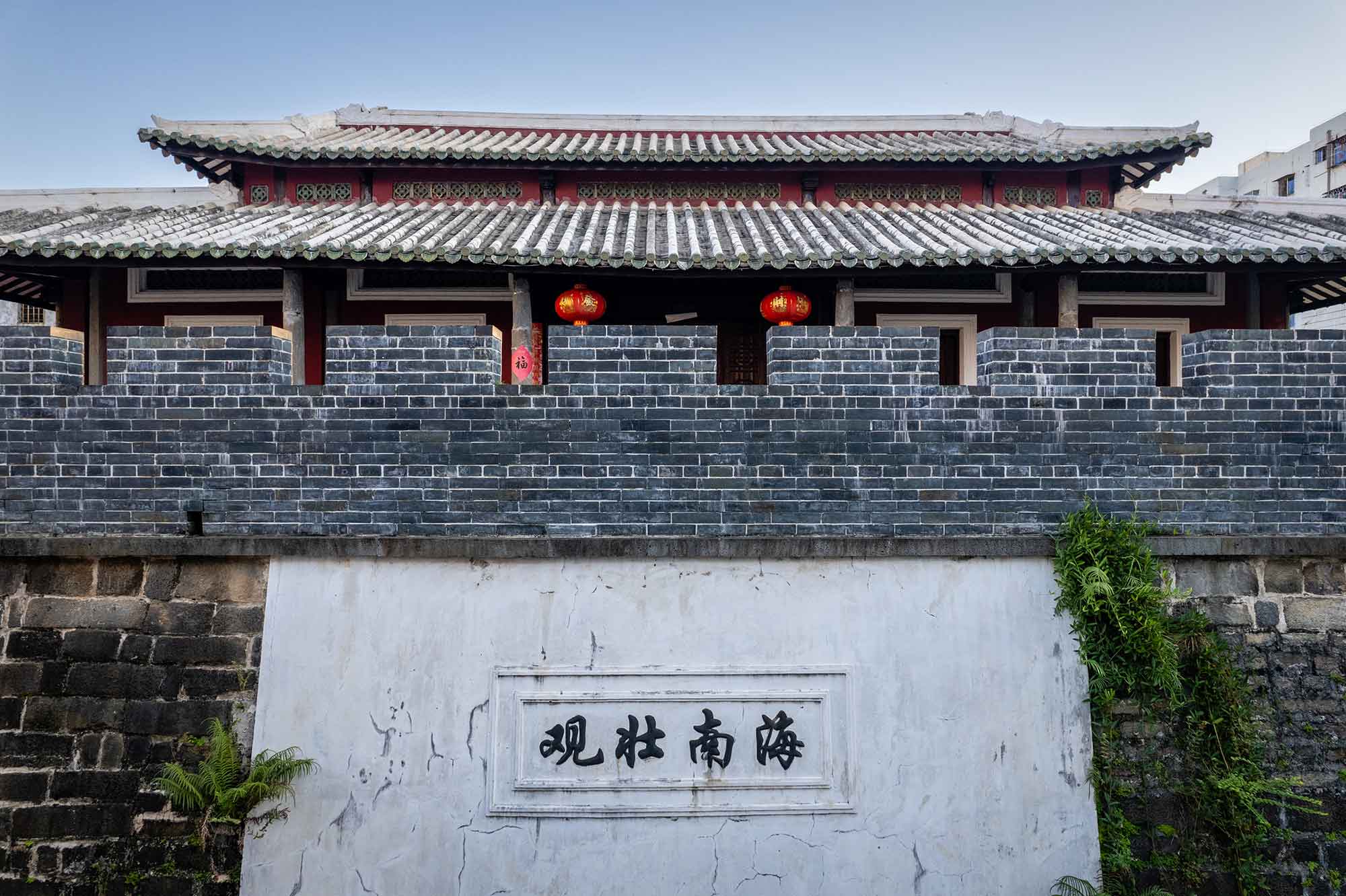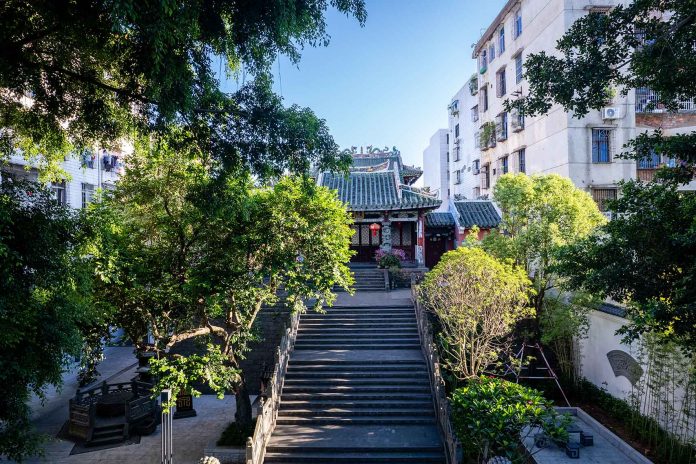
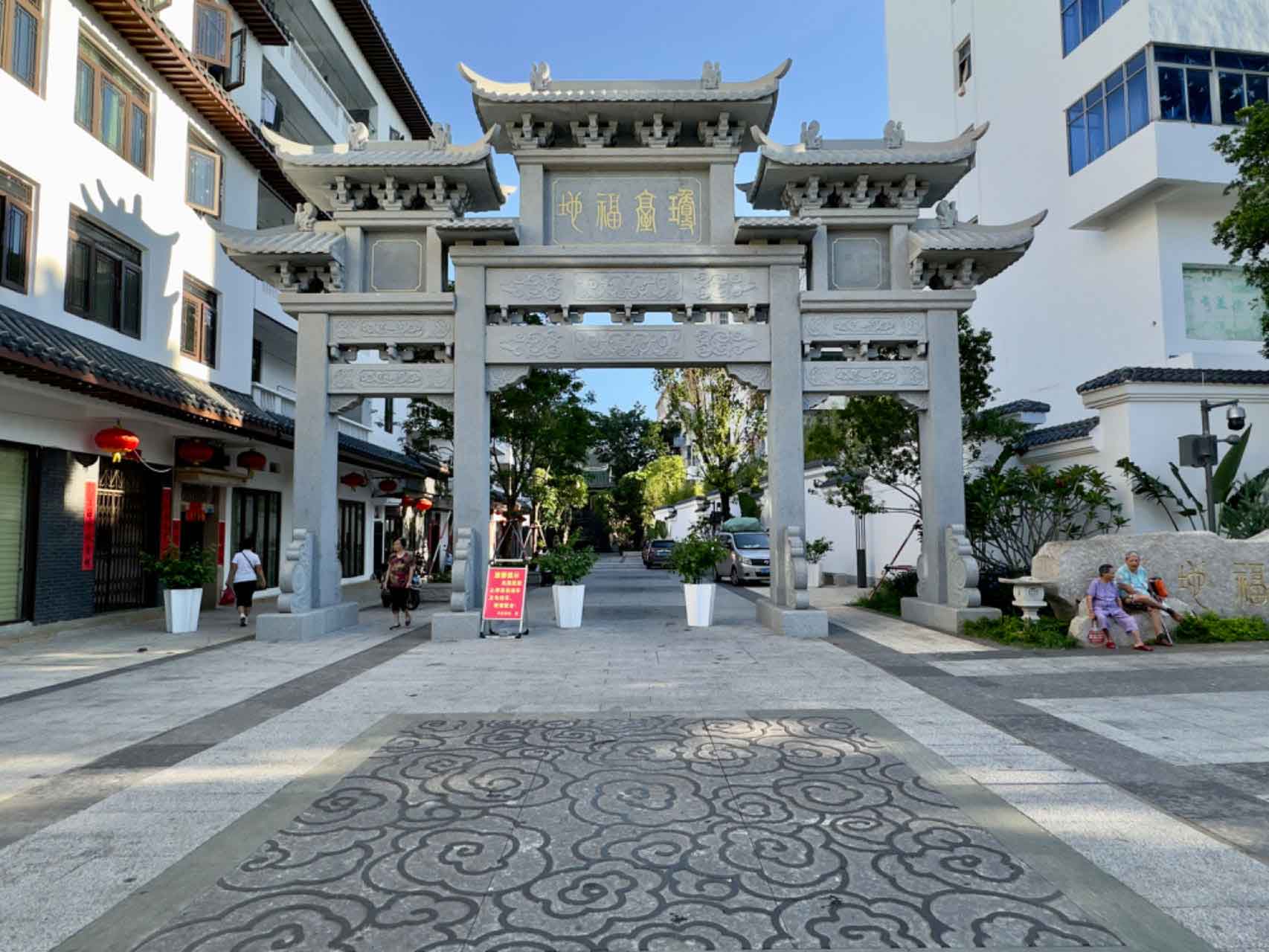
As you walk through the ancient city of Haikou, history seems to greet you at every turn. Turning into Wen Zhuang Road, one of the oldest streets in Haikou, you’ll see a beautifully crafted archway. The four large characters “Qiongtai Fudi” are inscribed in gold, leading you onto a narrow, paved path known as Guandi Lane.
Entering Guandi Lane
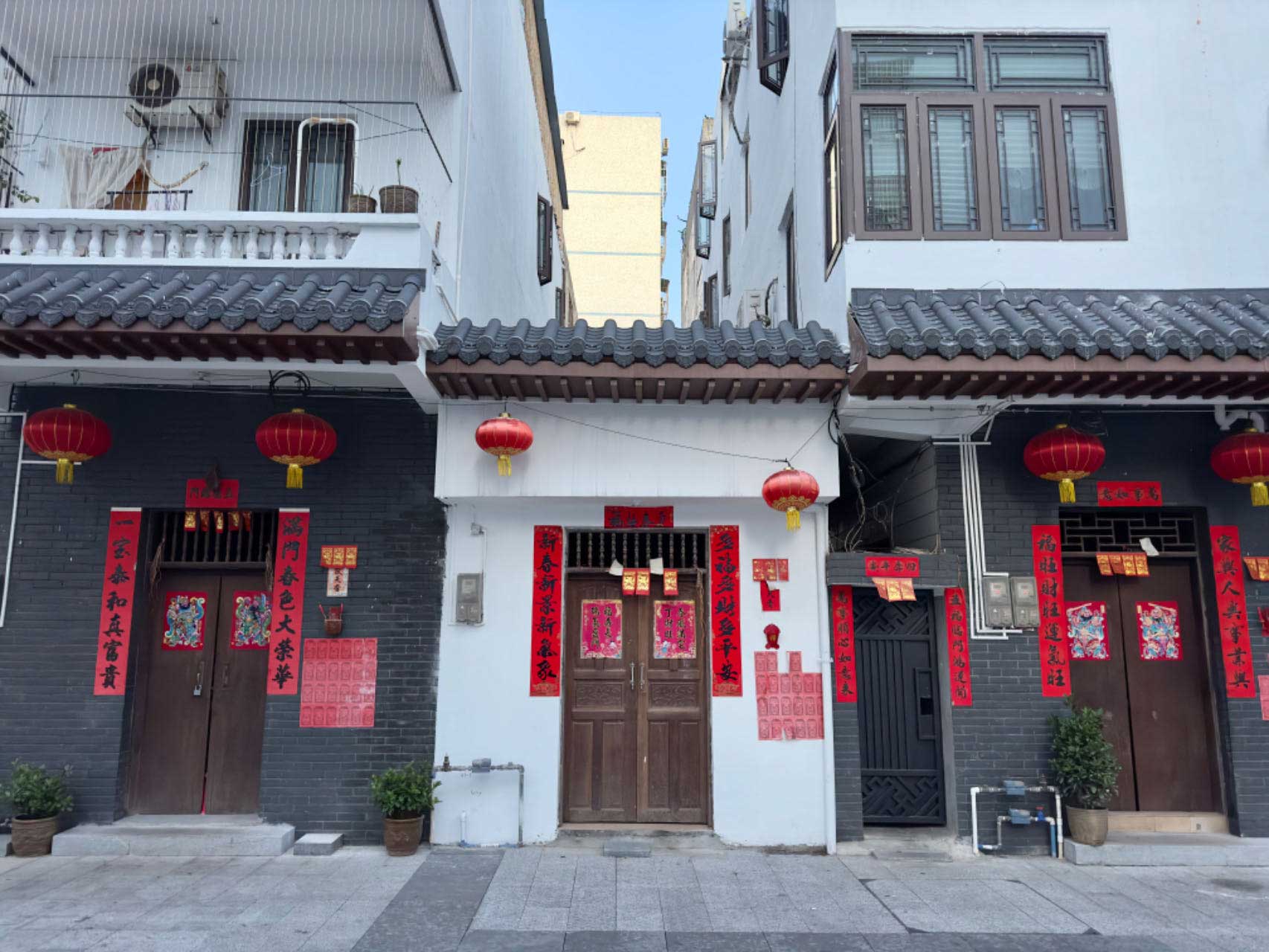
As you walk down this Lane, you’ll notice the mix of residential homes, lively small shops, barber shops, and game rooms. Open doorways offer glimpses of historical artifacts like stone mills, water troughs, and ancient wells.
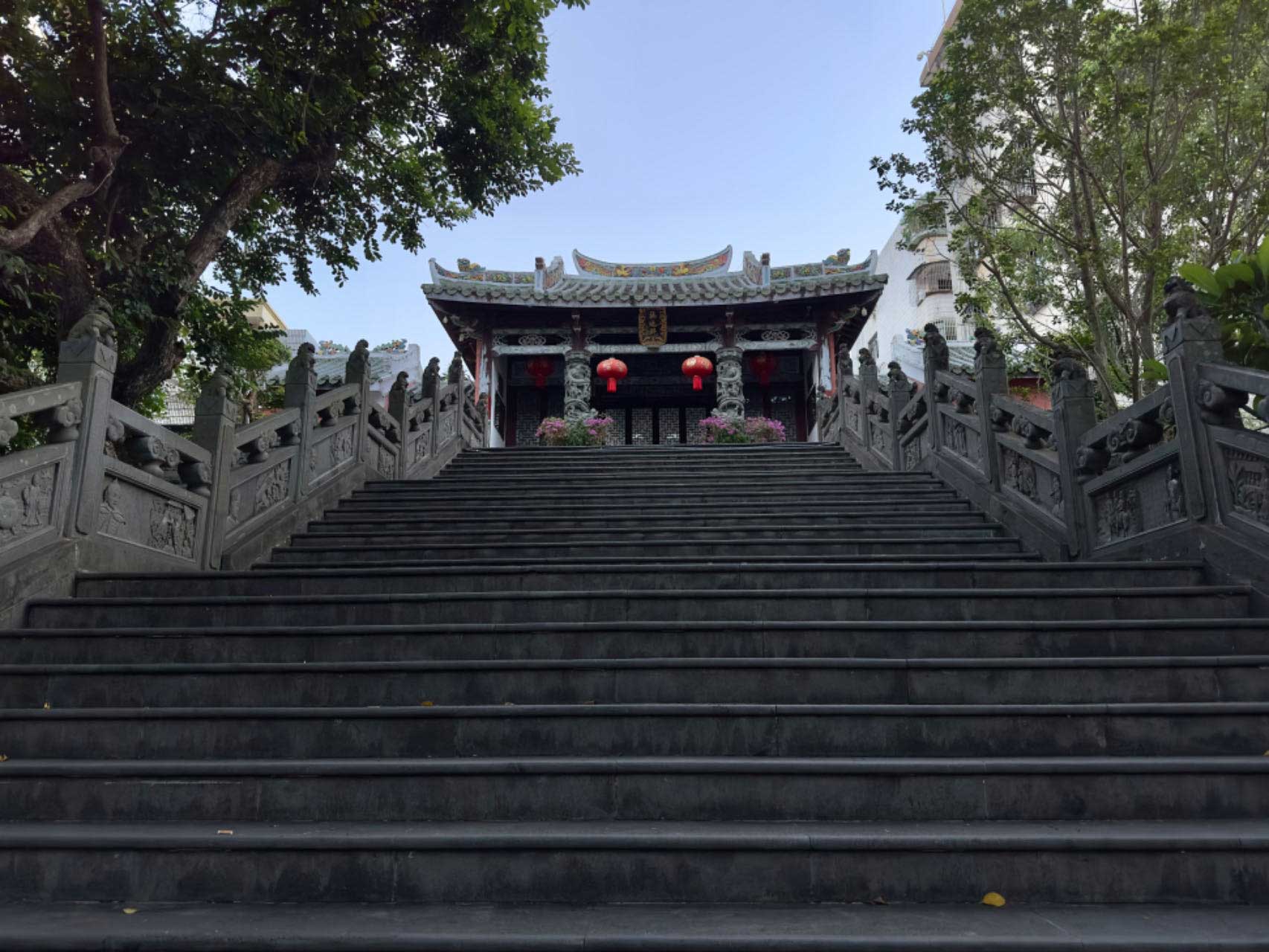
Bao’er Hill
At the end of the lane, you’ll be greeted by the cool shade of century-old banyan trees. Looking up, you’ll see Bao’er Hill rising in the background. Atop the hill, a cluster of ancient buildings with intricate carvings and colourful paintings come into view—this is the historic Qiongtai Fudi.
The Significance of Qiongtai
In ancient times, “Qiongtai” was another name for Hainan. Legend has it that because the island’s shape resembled a turtle with its neck withdrawn, Emperor Taizu (927-976), of the Song Dynasty moved the city’s administrative centre to the “neck” of the turtle.
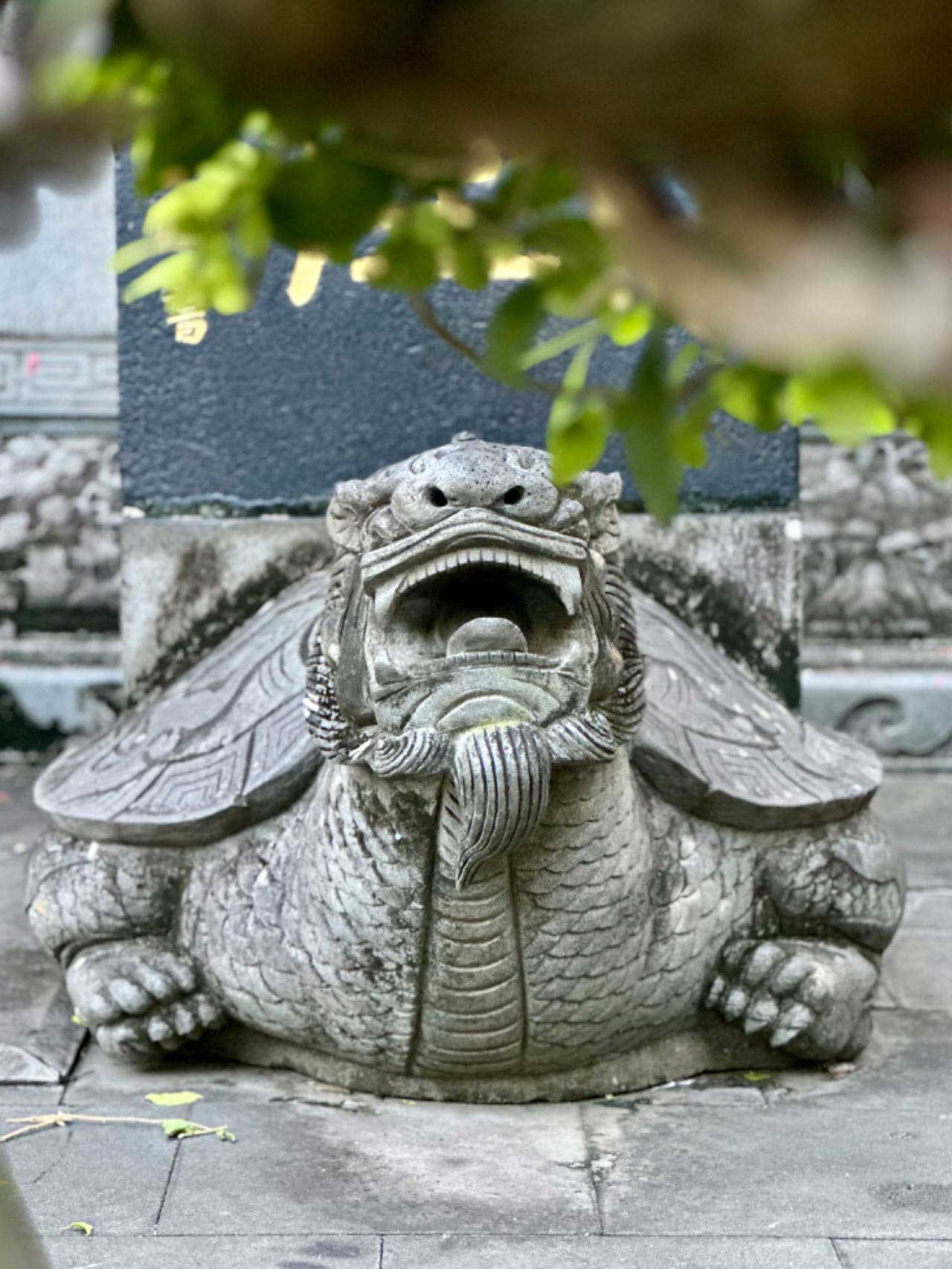
This symbolic move was believed to keep the turtle, and therefore any potential threats, under control.
According to the story:
- Hainan Island was thought to resemble a turtle with its neck withdrawn.
- In Chinese mythology and symbolism, turtles are often seen as powerful creatures.
- The belief was that if the turtle (Hainan Island) were to “extend its neck,” it could pose a threat to the stability of the empire.
- To prevent this symbolic threat, Emperor Taizu decided to relocate the administrative centre of Hainan to a spot that corresponded to the “neck” of the turtle, which was believed to keep the turtle “in check.”
Historical Developments
In 1073, during the reign of Emperor Shenzong of the Song Dynasty, the Qiongguan Administrative Office was established to oversee the island and the area became known as Qiongtai.
In 1403, Yang Yi, the commander of the Hainan Guard, erected a stone stele at the top of Bao’er Hill and a stone archway labelled “Qiongtai Fudi” on the southern slope. In 1488, during the early Ming Dynasty, a Guandi Temple was built on the hill.
By 1757, during the reign of Emperor Qianlong of the Qing Dynasty, an official called Zhang Jieqi had restored Qiongtai Fudi, turning it into a popular spot for scholars and commoners alike.
A Cultural and Historical Landmark
Today, Qiongtai Fudi stands as a testament to Hainan’s rich history, where both scholars and locals come to appreciate its history and seek blessings.
Climbing the Stone Steps
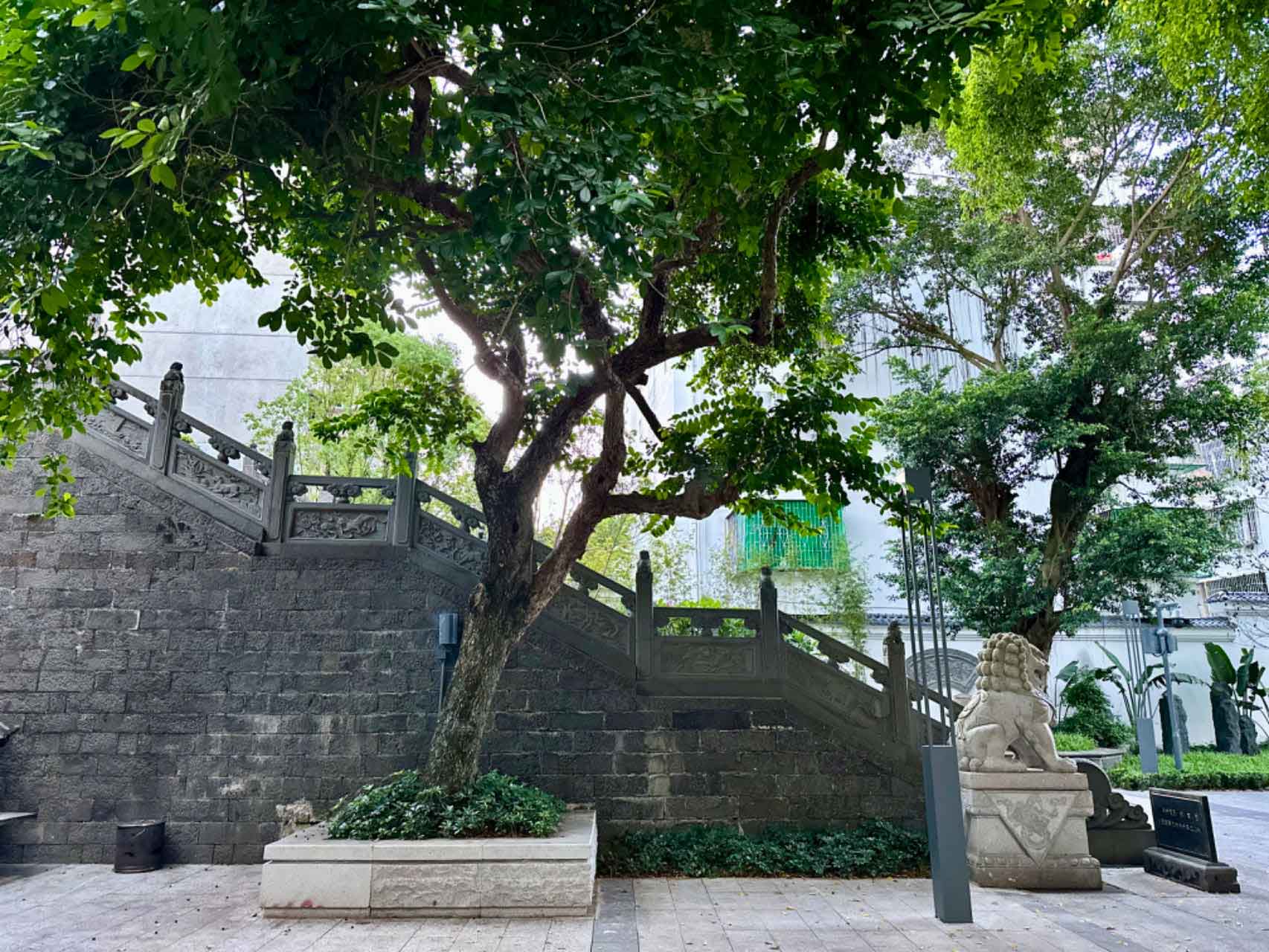
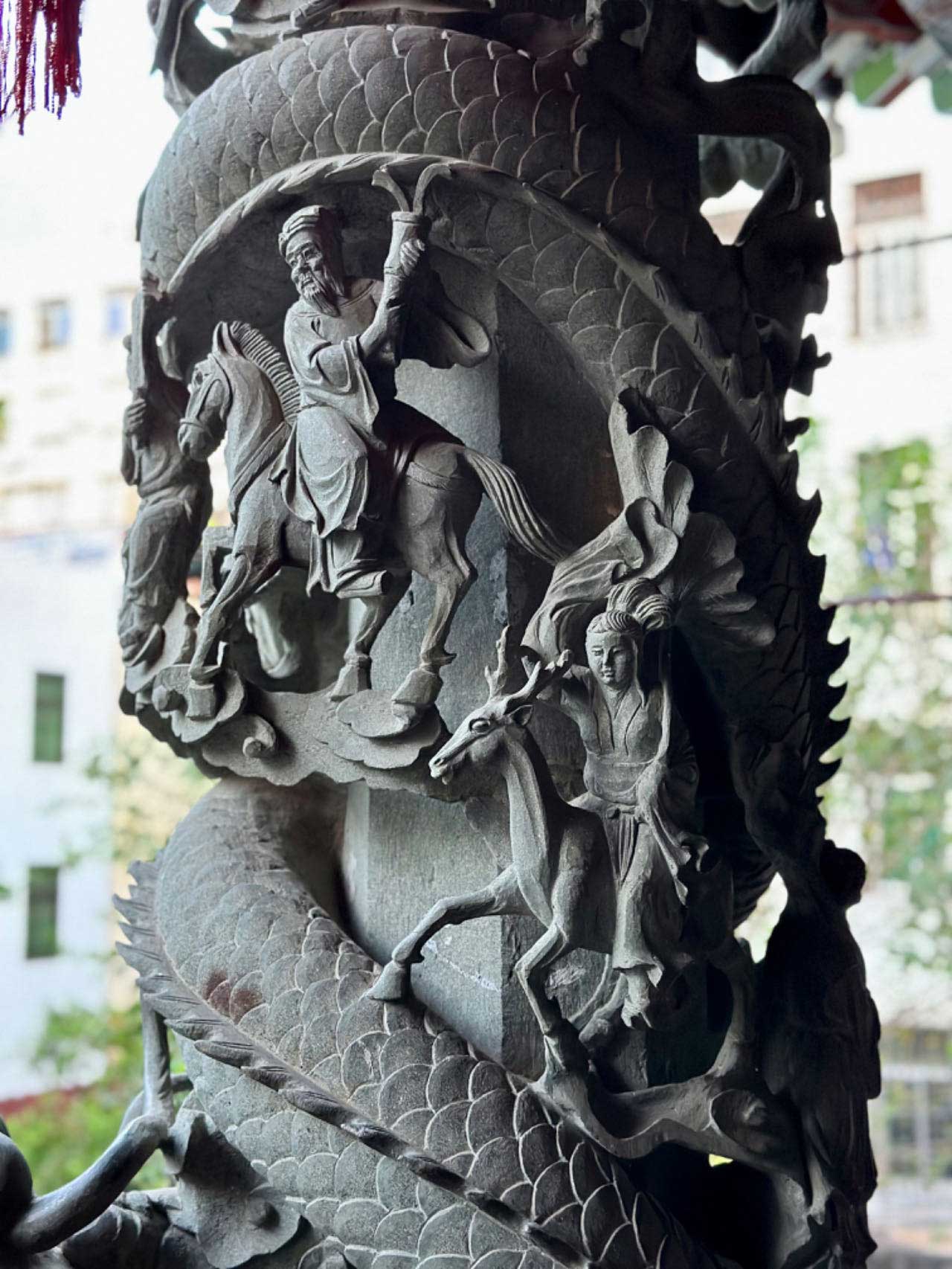
As you walk up the stone steps, you’ll see historical figures like Qiu Jun, Hai Rui, Zhong Fang, Tang Zhou, Xue Yuan, Chen Shi, Xie Bao, and Wu Dian. These figures carved on the stone railings give you a sense of connecting with the past.
The Fudi Pavilion
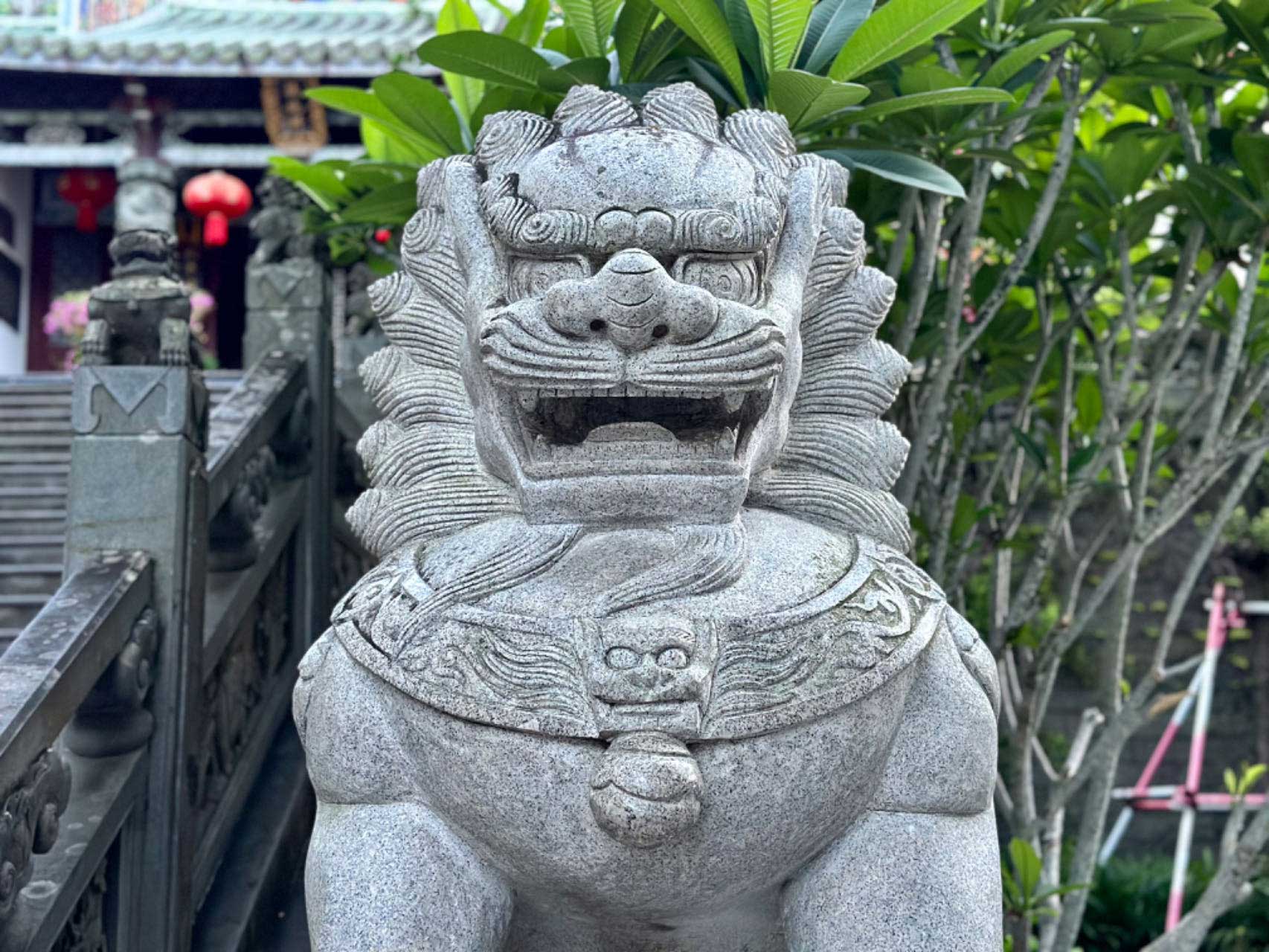
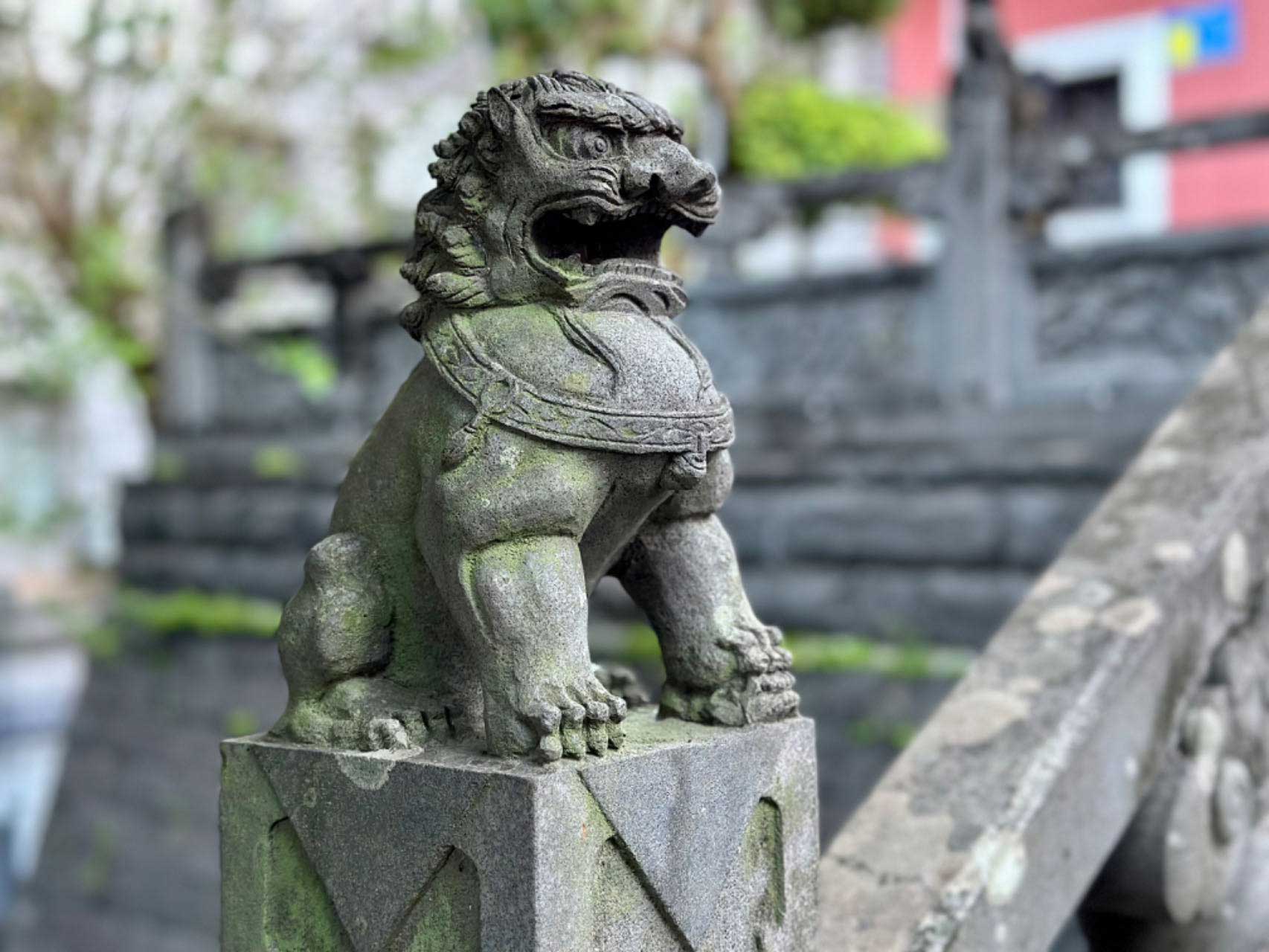
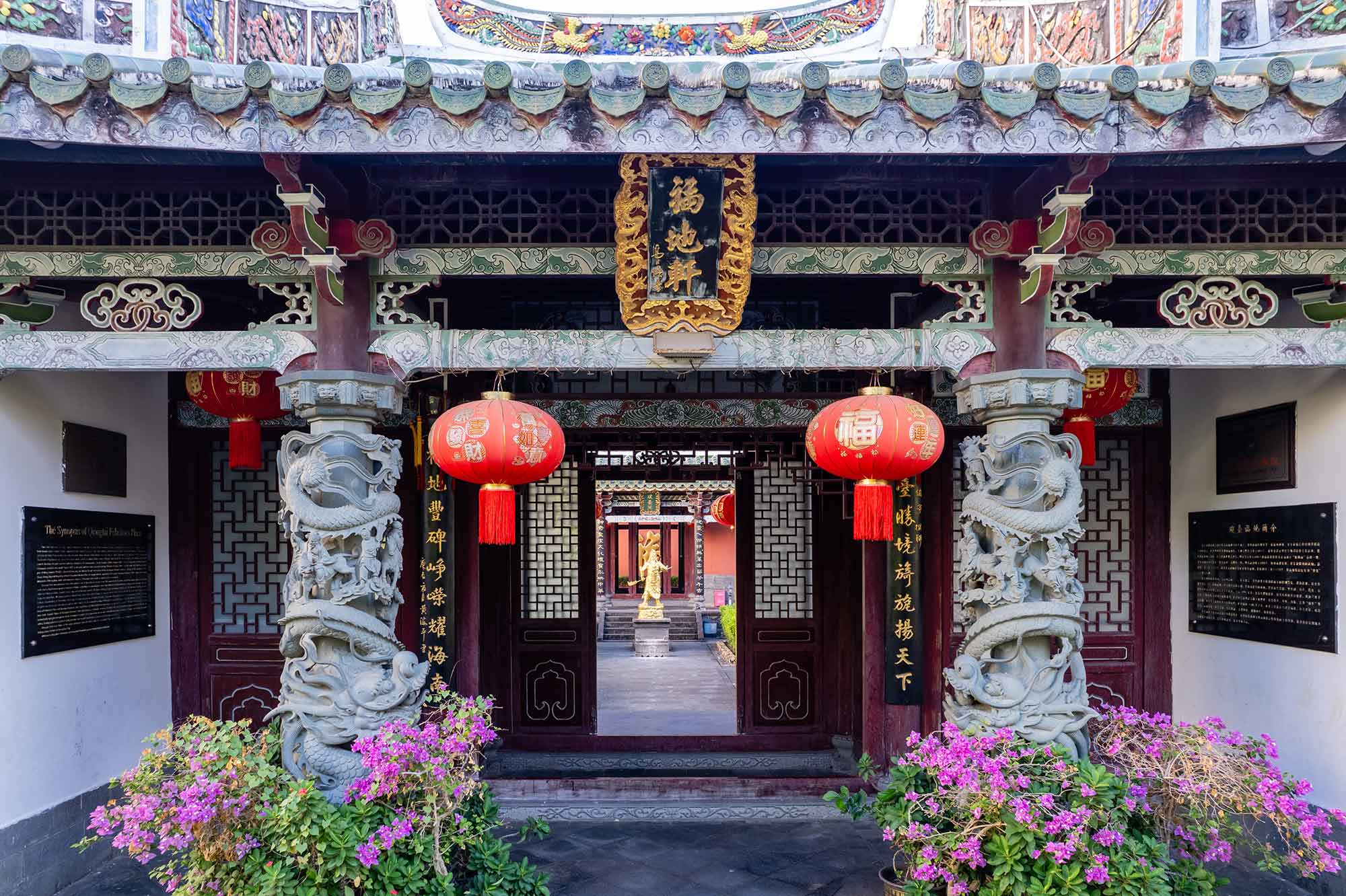
The Fudi Pavilion stands out as one of the most important ancient buildings in Haikou and Hainan. Its architecture, with dragon-decorated walls and lion-guarded railings, has a timeless quality. Outside the pavilion, two stone tortoises carry steles from the Qianlong era, labelled “Qiongtai” and “Fudi,” adding to the historical feel of the place.
The Qiongtai Pavilion
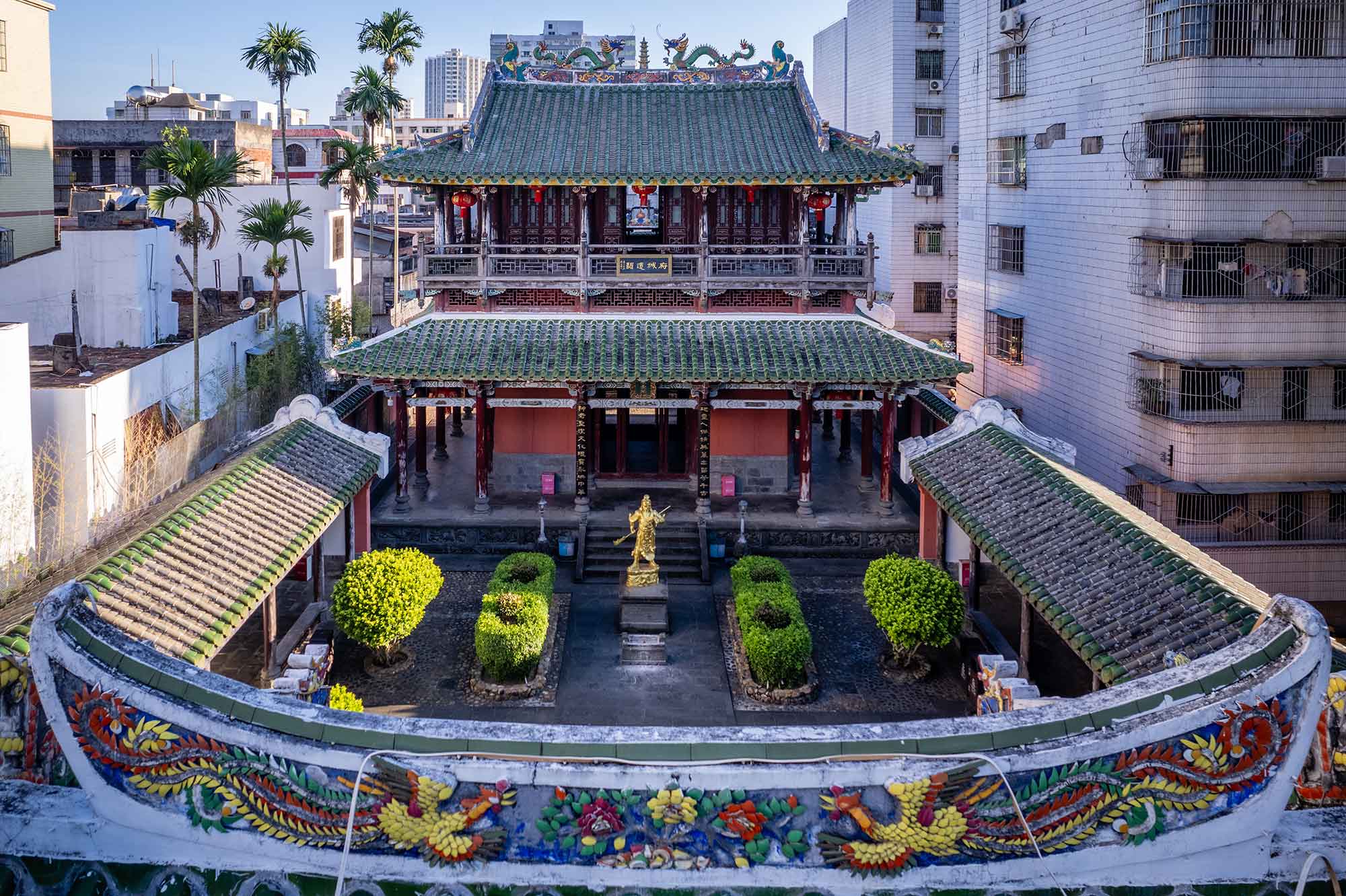
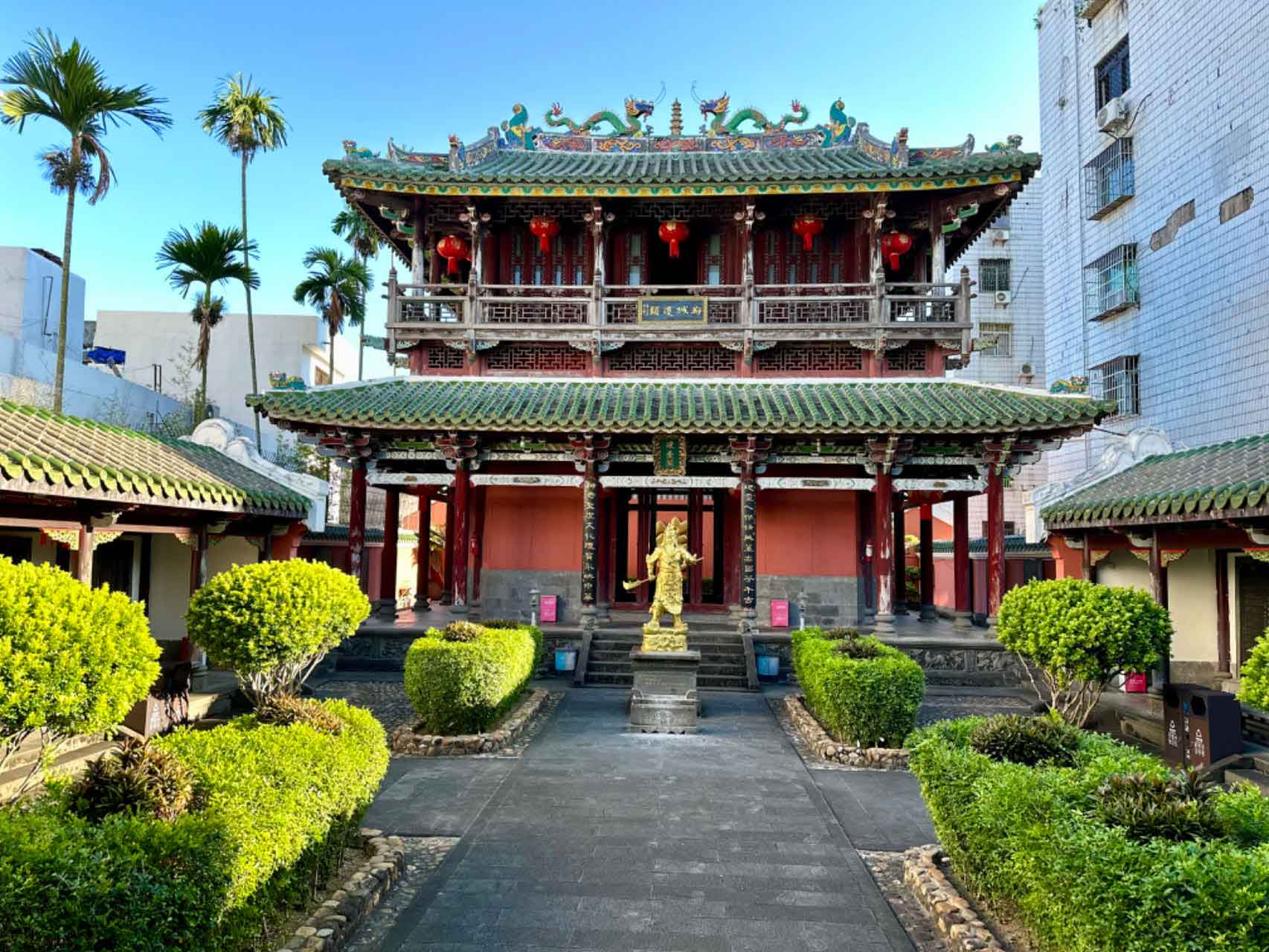
Behind the Fudi Pavilion is the Qiongtai Pavilion, the central part of this complex. It features glazed tiles, high curved eaves, and lush plants, offering a great view of the surroundings from its top.
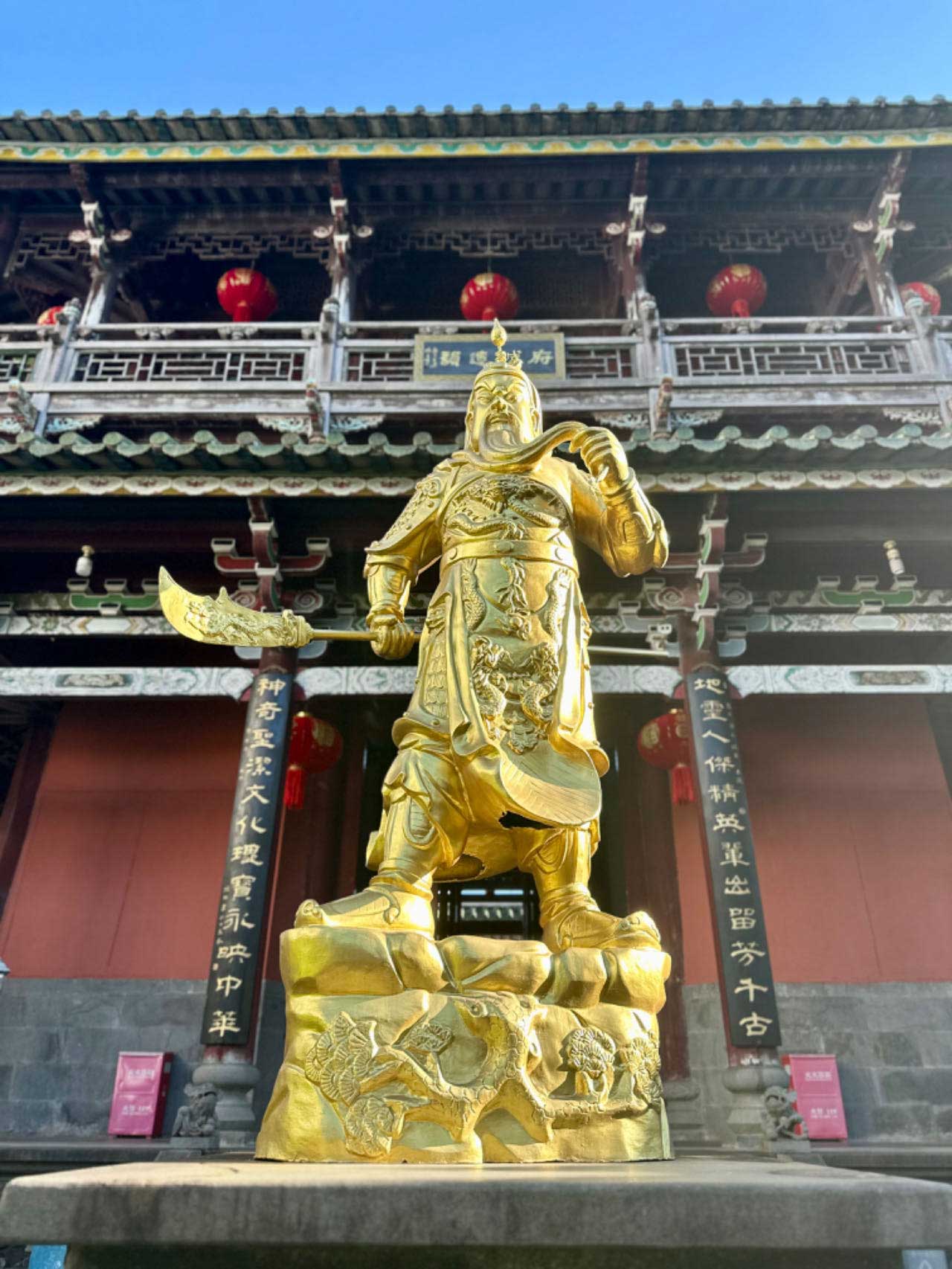
The Guandi Temple
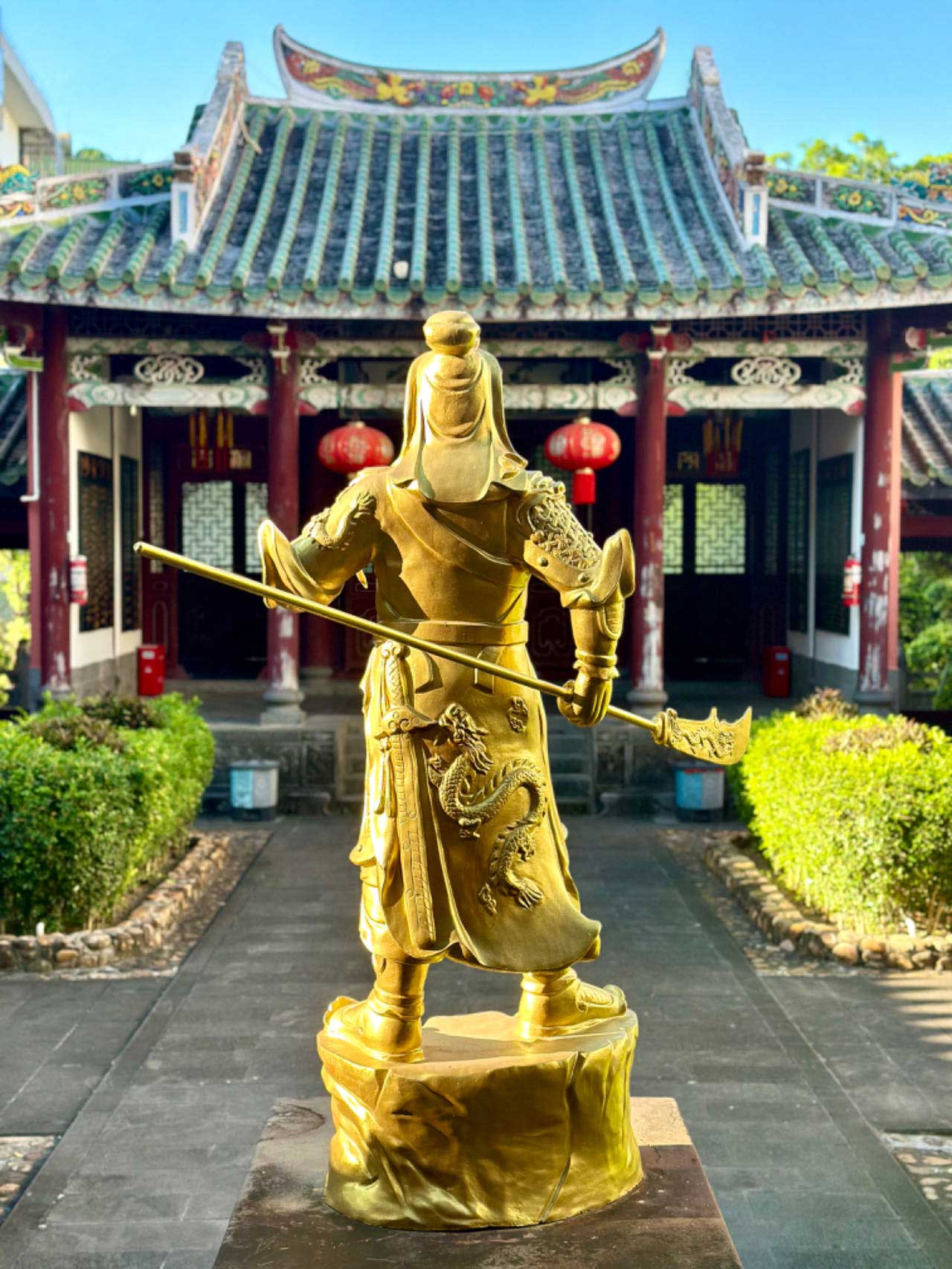
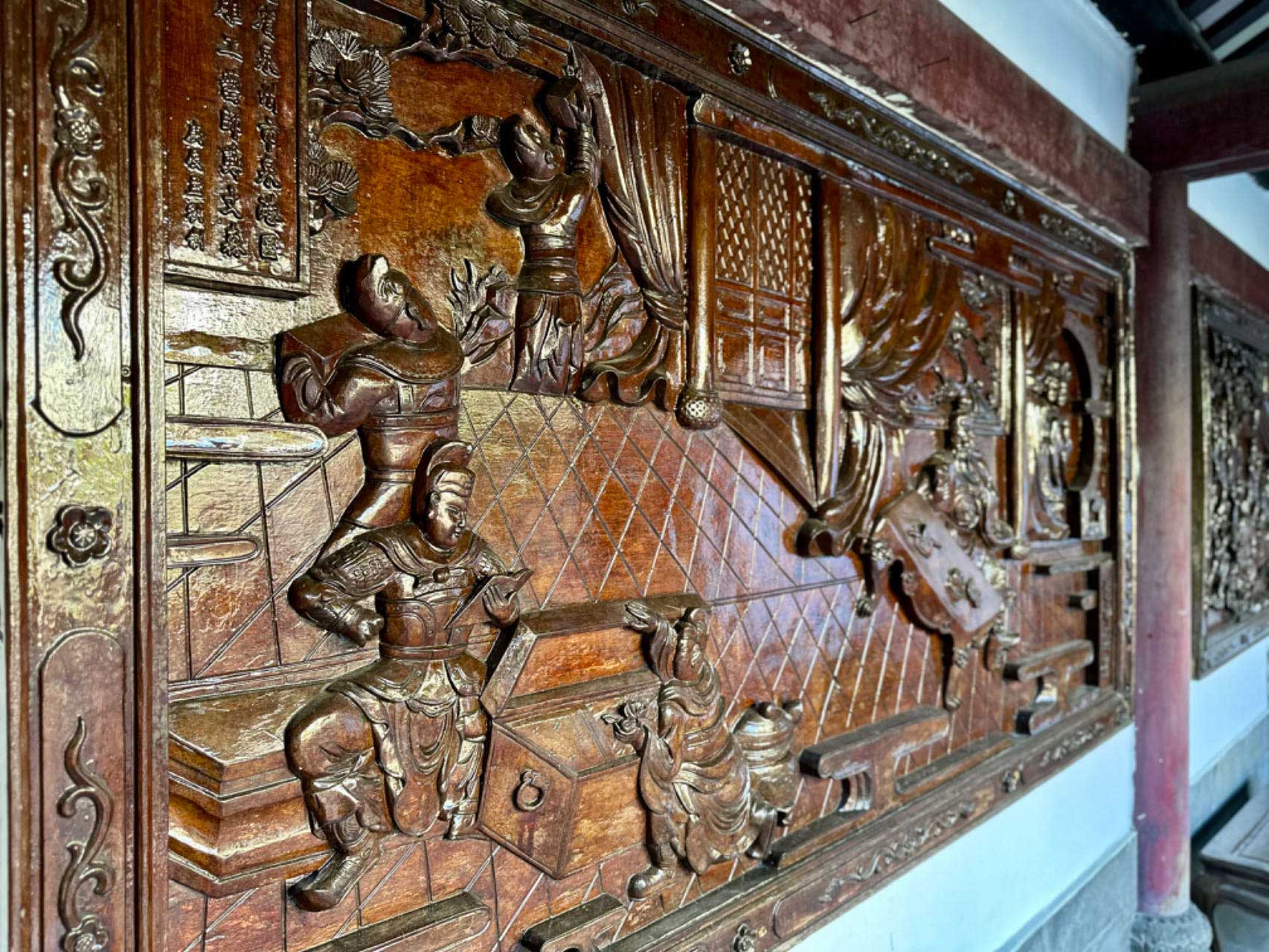
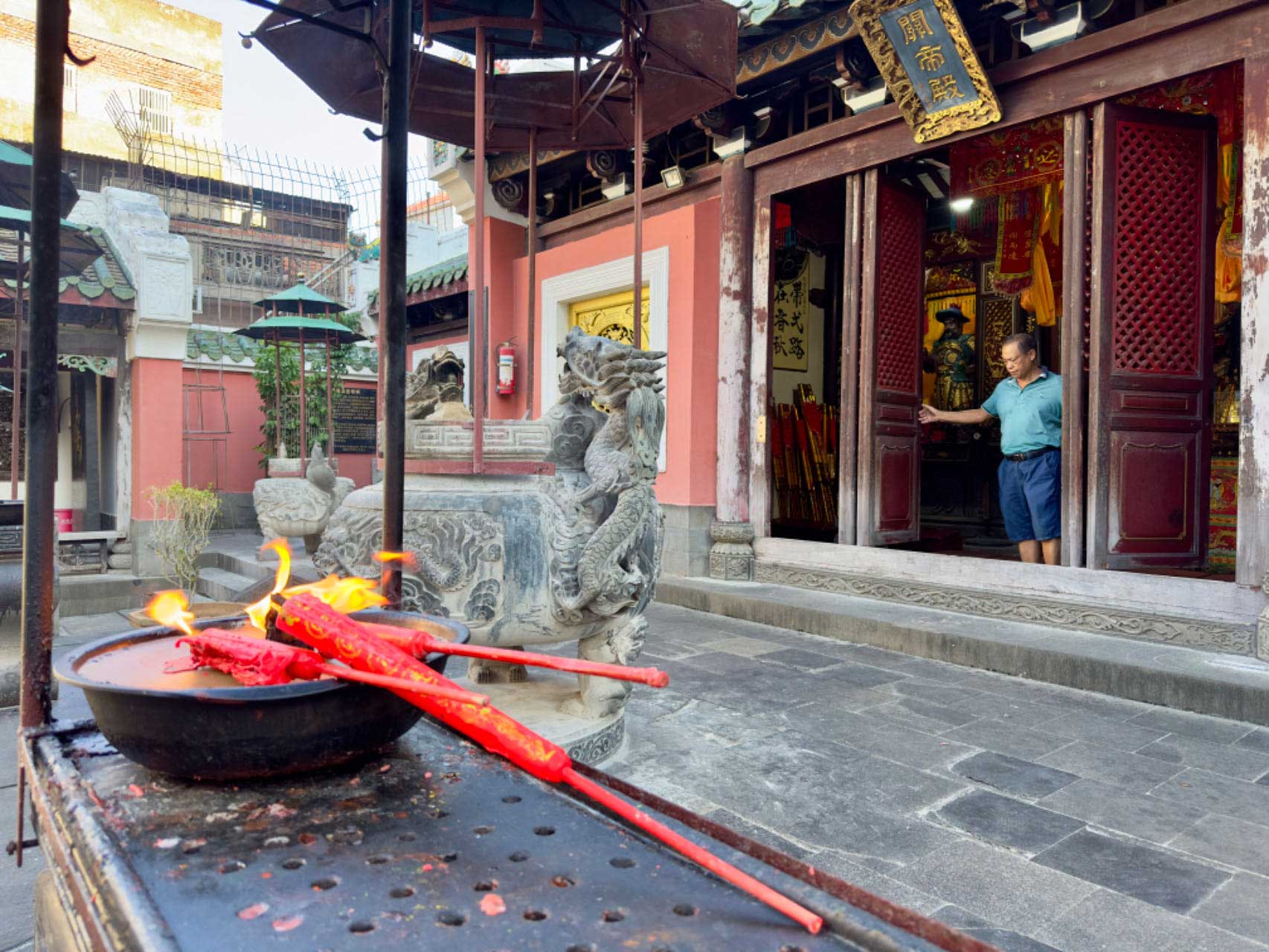
The Guandi Temple is the largest of its kind in Hainan, dedicated to Guan Yu and his attendants Guan Ping and Zhou Cang, all carved from jackfruit wood.
The History of Qiongtai Fudi: A Long Heritage
Qiongtai Fudi has gone through many changes over the centuries. Located on Bao’er Hill, it was once a pirate hideout due to its vantage point offering views of Leizhou Peninsula. Later, Qing soldiers drove out the pirates and set up camp here.
Stories and Changes
One local story tells of a giant python that lived in a banyan tree. Soldiers reportedly poured boiling water into the hole to kill it, ate it, and then mysteriously died. Over time, the site hosted a Japanese-built school, a police station under the Nationalists, and a command post for artillery troops and government offices after liberation.
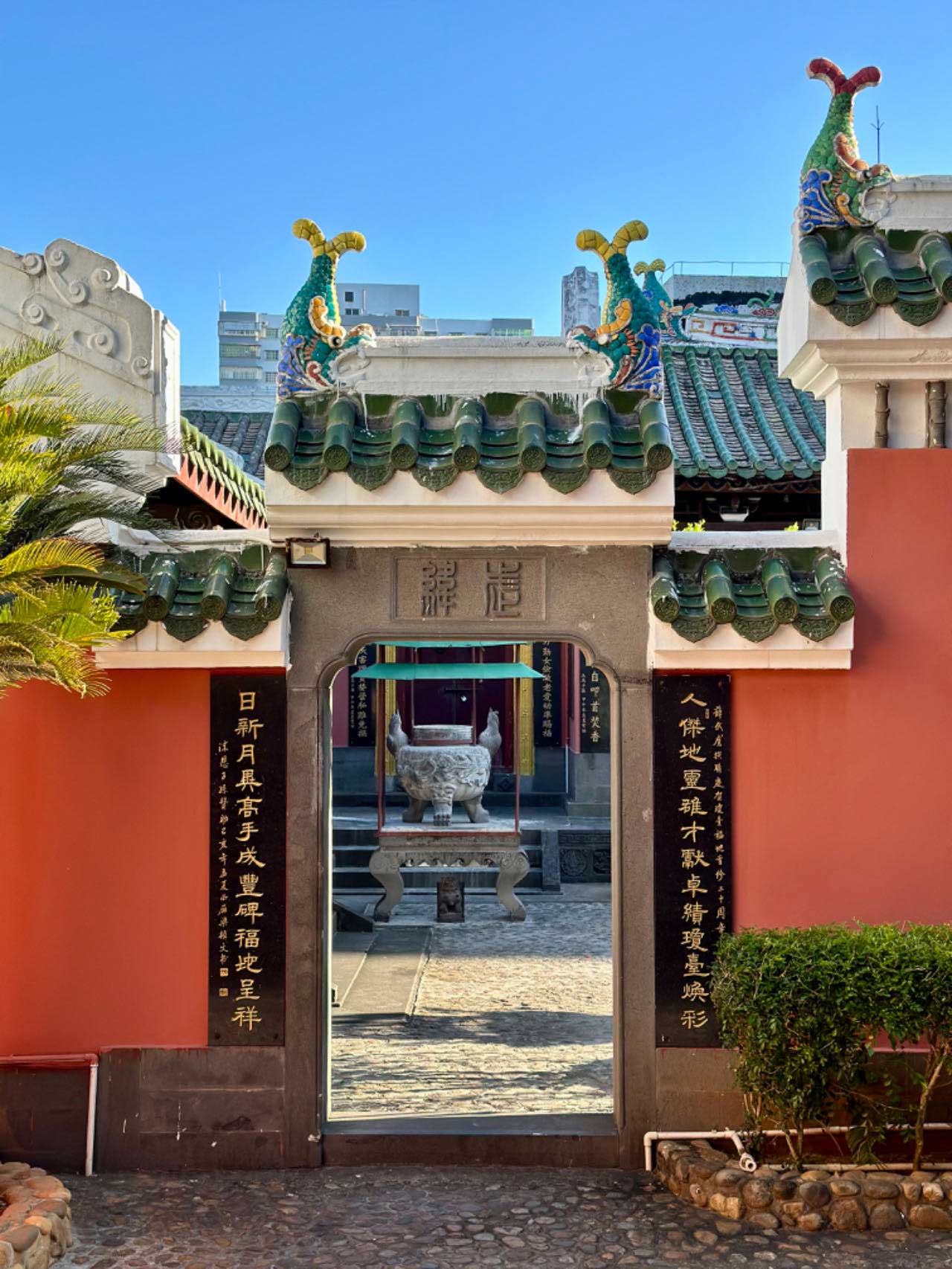
The 1999 Rebuild
In 1999, Qiongtai Fudi was rebuilt, transforming from five major buildings — including a theatre stage, worship pavilion, Wenchang Tower, Shengmu Shrine, and Guandi Temple — to its current three: Fudi Pavilion, Qiongtai Pavilion, and Guandi Temple. The rebuilders cleverly included the year “1999” in the architecture: the long Guandi Alley symbolizes “1,” and the three-tiered stone steps of Qiongtai Fudi, each with nine steps, represent “999.”
A Quiet Haven in the City
Despite all the changes and quiet evolution, Qiongtai Fudi’s blue bricks, grey tiles, and elegant structures still retain a sense of history. The echoes of the past within these ancient walls continue to welcome visitors, reminding them of the area’s rich heritage.
This peaceful spot offers a moment of calm amidst the busy city, allowing visitors to appreciate its historical significance.
Address: 绣衣坊 (Xiù Yī Fāng) copy and paste into WeChat maps.
Related article: Discover more from historical Haikou