
First Paleolithic Open-Air Site Discovered in Hainan

According to experts, the Nanhuo River site reshapes our understanding of early human activity in southern China.

In a newly announced archaeological development, Chinese researchers have confirmed the discovery of the first Paleolithic open-air site on Hainan Island. Known as the Nanhuo River Site, this location in Baisha Li Autonomous County sheds new light on the deep prehistory of Hainan and offers fresh insights into early human adaptation and cultural exchange across East and Southeast Asia.
A Landmark Discovery

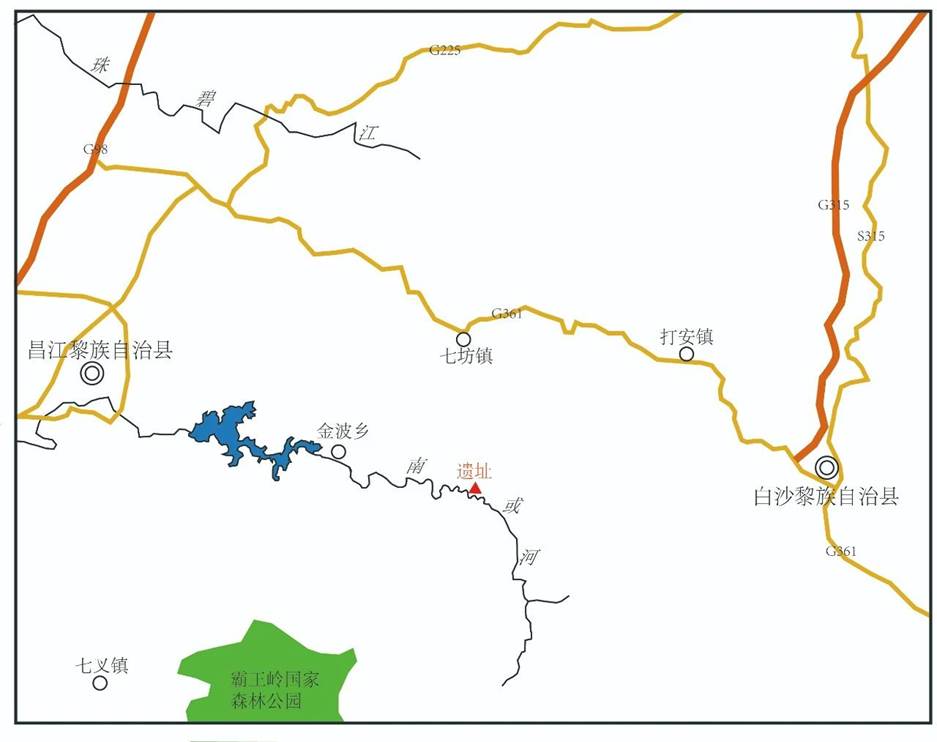
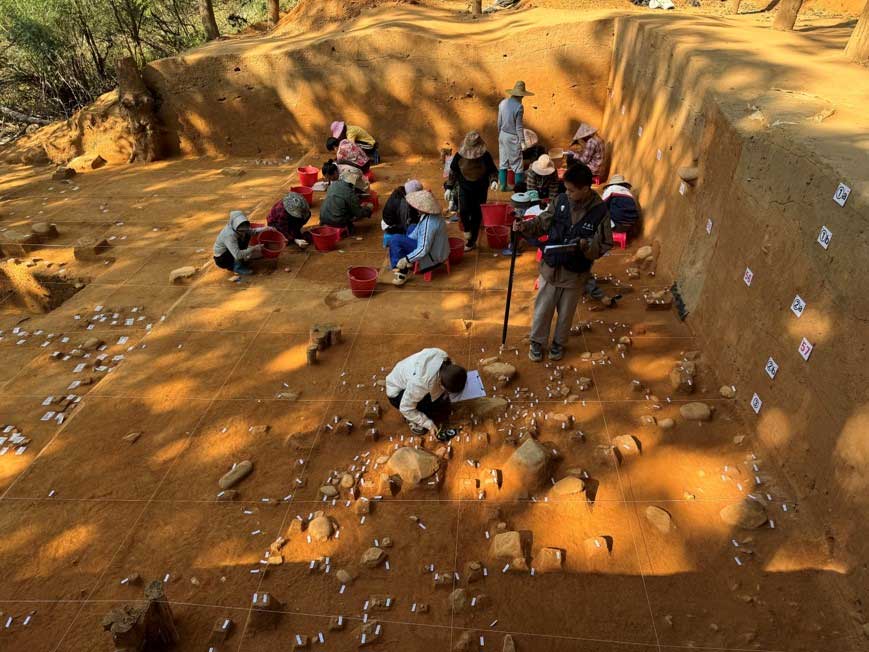
Unearthed during field surveys and trial excavations in 2023 and formally excavated from September to December 2024, the Nanhuo River Site is situated on the north bank of the Nanhuo River in Jinbo Township.
First Paleolithic Open-Air Site Discovered in Hainan (9)

This site represents the most comprehensive Paleolithic site ever found on Hainan, an island once believed to have limited prehistoric occupation.

Until now, Hainan’s archaeological record from the Paleolithic period was relatively sparse, with scattered cave sites like Qiantie Cave (possibly dating back 65,000–55,000 years) offering the main window into its ancient past.

The Nanhuo River Site fills a critical gap, providing rare and extensive evidence of open-air settlement and stone tool production, activities that were previously undocumented in this setting.

Excavation and Artifacts
First Paleolithic Open-Air Site Discovered in Hainan (8)
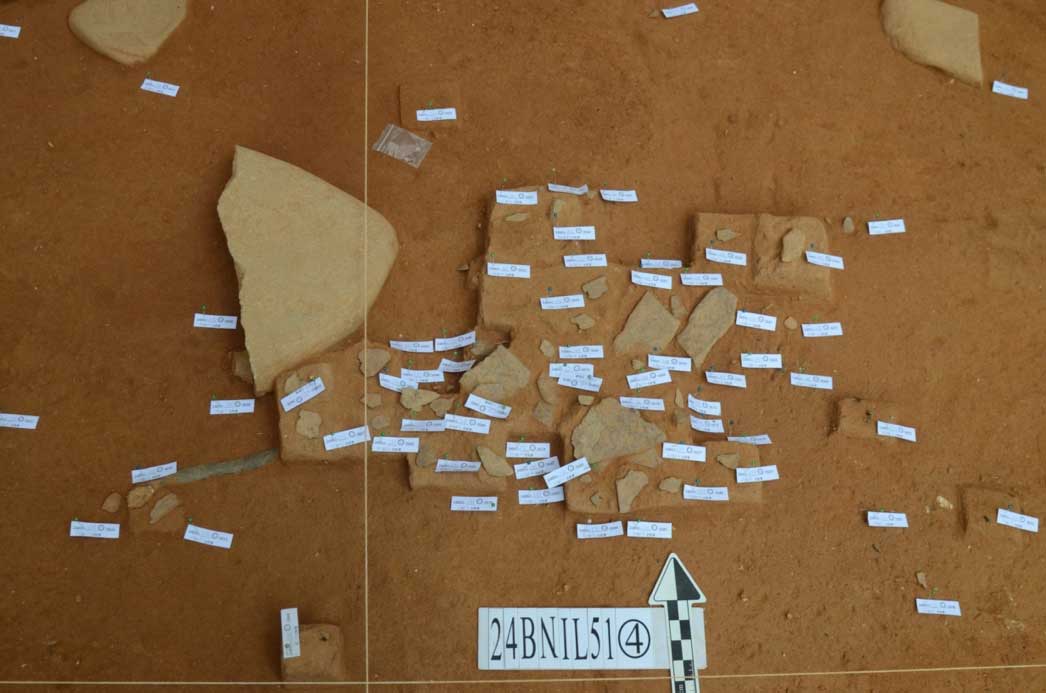
Stone tool knapping scene found in Layer ④. Image provided by the Institute of Vertebrate Paleontology and Paleoanthropology, Chinese Academy of Sciences.

The joint excavation effort, which was led by the Institute of Vertebrate Paleontology and Paleoanthropology (IVPP) of the Chinese Academy of Sciences, along with the Hainan Provincial Institute of Cultural Relics and Archaeology and Sun Yat-sen University, yielded a trove of artifacts:

  • 6,000 catalogued stone tools and over 20,000 additional flakes and tool fragments.
  • Significant concentrations of charcoal and fruit shells, indicating food preparation and fire use.
  • Clear evidence of on-site tool manufacture, including cores, flakes, and production debris.
  • Stratified deposits up to 4 meters deep, preserving a well-defined cultural sequence.
First Paleolithic Open-Air Site Discovered in Hainan (7)
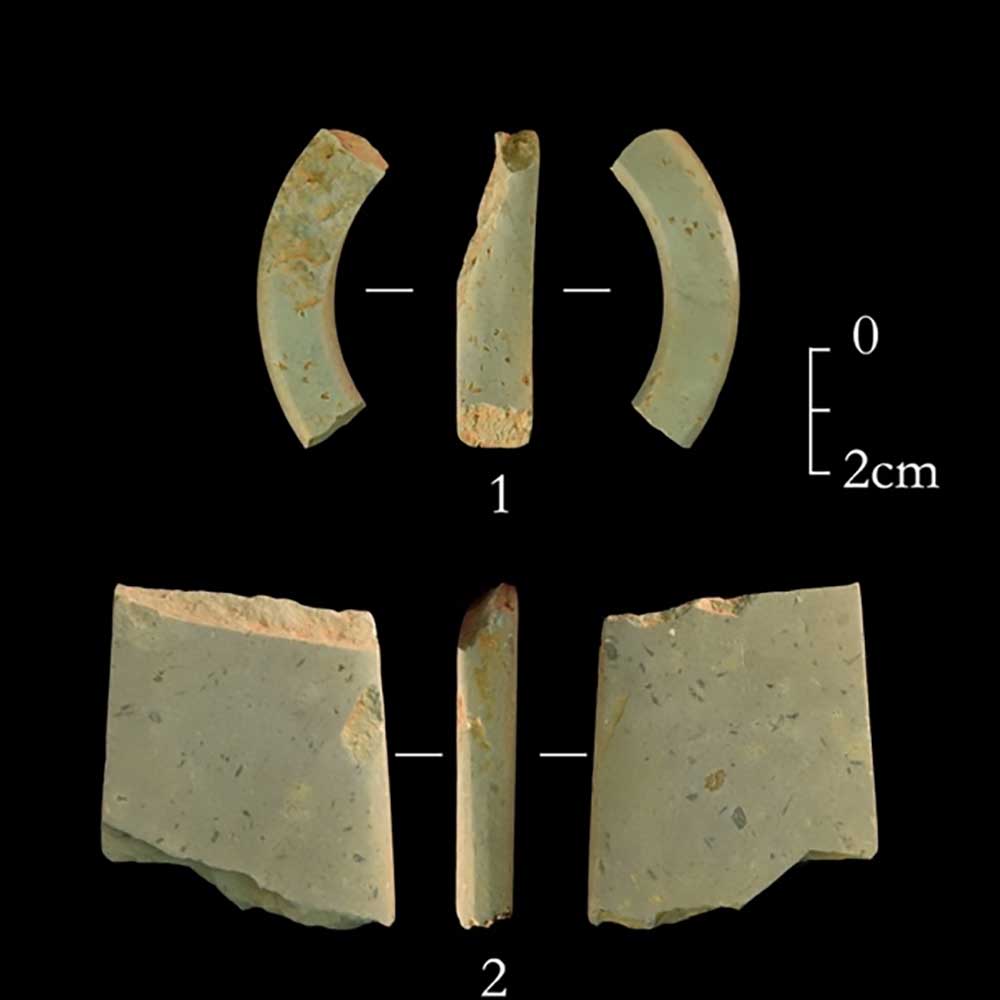
Ground stone tools found in Layer ②a. Image provided by the Institute of Vertebrate Paleontology and Paleoanthropology, Chinese Academy of Sciences.

Preliminary dating using Optically Stimulated Luminescence (OSL) places the site at (a preliminary) 10,000 years old, a pivotal moment in human prehistory as populations in southern China transitioned from Paleolithic lifeways toward Neolithic experimentation with plant cultivation and more permanent settlement.

A Distinctive Technological Signature

First Paleolithic Open-Air Site Discovered in Hainan (3)

The stone tools recovered at Nanhuo River belong to the pebble tool” tradition, a category of early stone technology known for its simplicity and adaptability. These tools, choppers, scrapers, points, and blades were shaped from locally sourced quartzite, sandstone, and volcanic rocks.
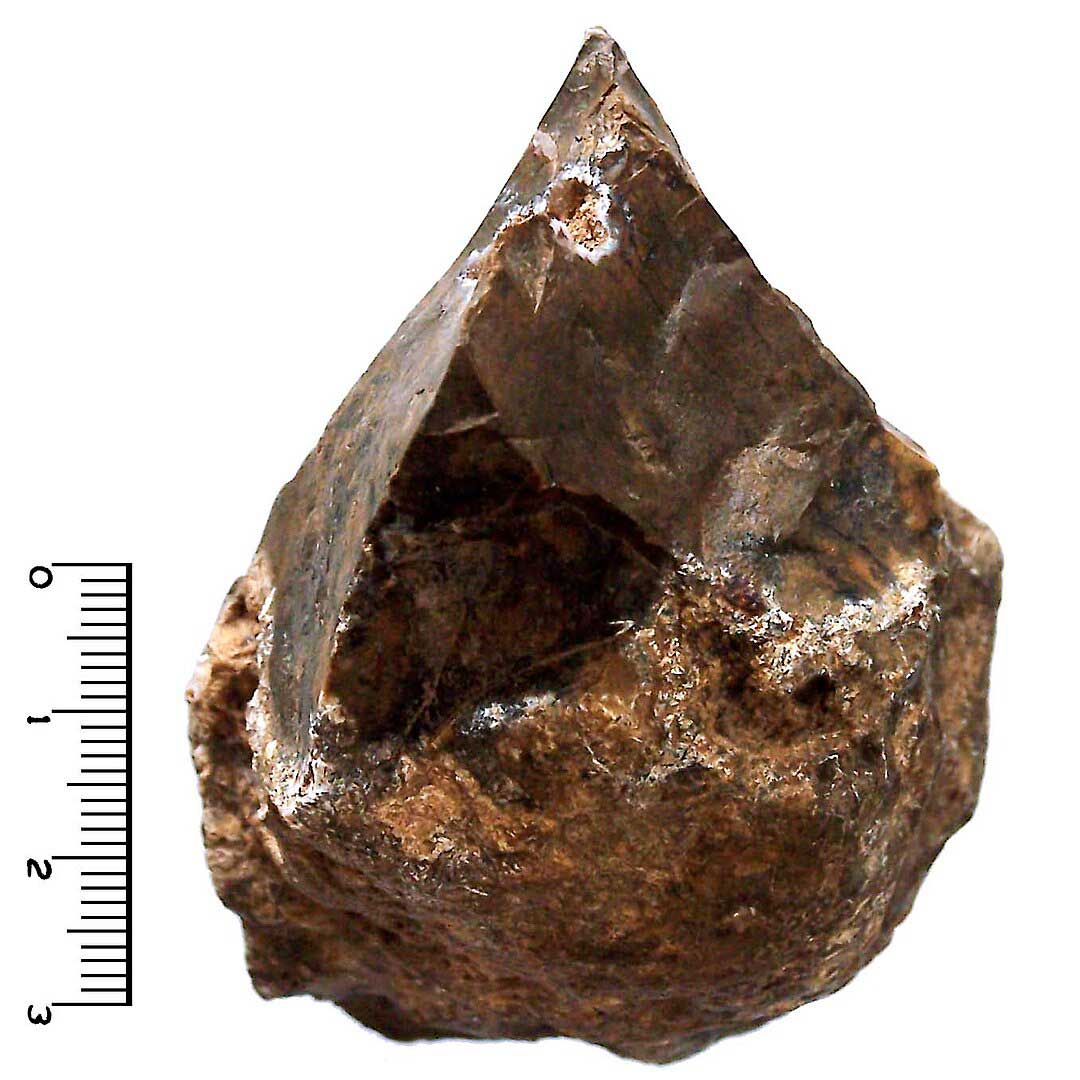
A pebble tool (sometimes called a gravel tool) is one of the earliest and simplest types of stone tools made by humans and their ancestors.

Imagine picking up a rounded stone (a pebble) from a riverbed and striking it with another stone to chip off a few flakes from one side. This creates a sharp edge that can be used for cutting, chopping, or scraping. The rest of the pebble is left mostly unworked, so the tool still looks a lot like the original stone, just with a sharper edge.

These tools are called “pebble tools” because they are made from natural pebbles, and their main types are choppers (with a sharp edge on one side) and chopping tools (with edges on both sides). 

Early humans used them for basic tasks like cutting meat, breaking bones, chopping plants, or digging for roots. They are some of the oldest known tools, dating back more than 2 million years in Africa, and were also widely used in early China and other parts of Asia.

Regional Context and Broader Implications

The Nanhuo River discovery stands out not just for its scale and preservation, but also for its broader archaeological significance:

First Paleolithic Open-Air Site Discovered in Hainan
  • Largest and best-preserved open-air Paleolithic site on Hainan.
  • Evidence of a cluster of related settlements along the Nanhuo River basin, suggesting a stable and possibly semi-permanent human presence.
  • Serves as a cultural bridge linking southern China with mainland and insular Southeast Asia.
  • Offers rich material for studying the evolution of toolmaking, subsistence strategies, and human-environment interaction at the close of the Pleistocene.

In this light, the Nanhuo River Site repositions Hainan from a peripheral player to a strategic node in the prehistoric migration and interaction networks of East Asia.

A Revised Prehistory for Hainan

The significance of this discovery grows even sharper when viewed against the backdrop of other Paleolithic sites on Hainan. For decades, caves such as Qiantie, Luobi, and Hunyaling offered fragmented glimpses of early habitation.

The Nanhuo River Site complements these earlier finds by demonstrating that open-air activity areas, where people lived, made tools, processed food, and used fire, were part of the island’s prehistoric landscape.

For now, the Nanhuo River Site stands as a testament to the resilience, adaptability, and ingenuity of early humans in one of East Asia’s most overlooked regions.

Related article: The Legacy of Hai Rui: A Glimpse into Historical Haikou

Hai Rui’s Tomb in Haikou: A Journey Through History
Explore the rich history of Hai Rui, a revered figure of the Ming Dynasty, and his enduring legacy in Haikou. From his humble life to the significance of his tomb …
www.tropicalhainan.com
SourceSource

- Follow Us on WeChat -

spot_img

Related articles:

Hainan’s 2026 Investment Opportunity List Shows What the Free Trade Port Wants Built Next

Hainan’s 2026 Investment Opportunity List shows what the Free Trade Port wants built next, from ports and digital trade to medical platforms and future industries …

Explainer: Apostille vs Consular Authentication for Hainan Work Permit Documents

Apostille has replaced Chinese consular authentication for relevant documents from Convention countries, but notarisation, translation and validity rules can still apply ...

Lost Your Passport in China: The Emergency Document You Should Know About

Lost your passport in China? If your embassy, consulate, or relevant home-country institution in China cannot reissue a travel document, China has an Exit-Entry Permit for Foreigners …

Hainan’s Free Trade Port Is Moving From Incentives to Usability

Hainan’s new services plan points to a shift in how foreign operators may use the FTP: banking, permits, policy access and talent recognition …

Get weekly email updates for new articles published!

Follow Us on WeChat

spot_img

Latest Articles ...

How Hainan’s 30% rule is beginning to shape business decisions for companies using the FTP’s customs route into mainland China ...
Typhoon Season 2026 in Hainan: What residents need to know about storm forecasts, El Niño impacts, ferry suspensions, airport disruptions, warning levels, and how to prepare for typhoons from July to October ...
How international graduates can stay in China after graduation through Hainan’s startup residence route, and why it does not allow paid work ...
What spouses on S visas in China can and cannot legally do, including work, tutoring, remote work, volunteering, tax, and permit risks ...
spot_img

Why Foreigners Lose Access to Their Chinese Bank Accounts

Frozen accounts, blocked cards, restricted access. Most expats in China don't think about their bank account until they can't access it …

China’s Green Card: How Rare Is It, and What It Takes to Get One

Between 2004 and 2017, China issued just over 10,000 permanent residency permits to foreign nationals. This guide explains the four eligibility routes, the real criteria, and your honest odds of qualifying …

Why Your Passport Doesn’t Work: A Foreigner’s Guide to China’s ID-Only Systems

Your passport is legally valid for trains, hotels, SIM cards and payment accounts in China. The problem isn't the rules, it's the systems built on top of them …

China’s 2026 Work Permit Salary Rules: Who Actually Needs to Worry?

China’s work permit salary thresholds have raised concerns among foreign professionals. This explainer clarifies the 6× and 4× rules, why the figures appear high, and who is actually affected ...
spot_img

Looking for an international pre-school in Haikou?

Flora's International Preschool has three preschools in the Haikou area. Our schools follow a European curriculum

Continue Reading ...

Hainan’s 2026 Investment Opportunity List Shows What the Free Trade Port Wants Built Next

Hainan’s 2026 Investment Opportunity List shows what the Free Trade Port wants built next, from ports and digital trade to medical platforms and future industries …

Explainer: Apostille vs Consular Authentication for Hainan Work Permit Documents

Apostille has replaced Chinese consular authentication for relevant documents from Convention countries, but notarisation, translation and validity rules can still apply ...

Lost Your Passport in China: The Emergency Document You Should Know About

Lost your passport in China? If your embassy, consulate, or relevant home-country institution in China cannot reissue a travel document, China has an Exit-Entry Permit for Foreigners …

Get weekly email updates for new articles published!

Never miss another important notice or event. Be informed of what you need to know, when you need to know it.