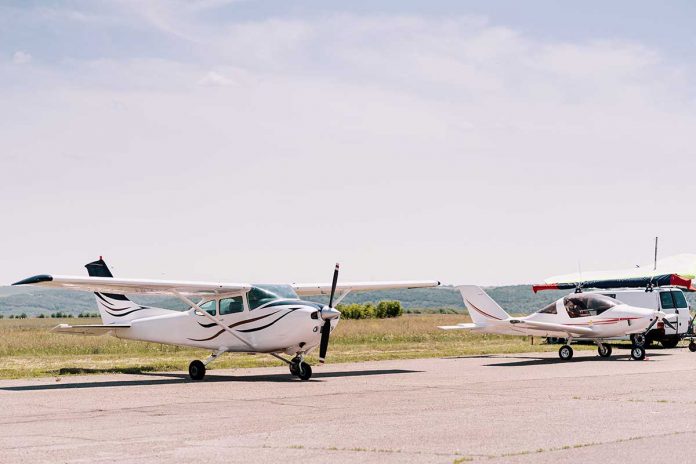
Hainan Province has launched an ambitious “Low-Altitude Economy Development Three-Year Action Plan (2024-2026),” outlining significant advancements for its low-altitude aviation sector. By 2026, the plan aims to establish nine general aviation airports, designate over 300 low-altitude routes, and develop eight major low-altitude applications. These efforts are projected to drive the province’s low-altitude economy to a total output of over 30 billion RMB.
Key Highlights of the Action Plan
500 Low-Altitude Aircraft Takeoff and Landing Sites Planned
Hainan’s action plan emphasizes innovation and integration, aligning with a strategy that links low-altitude services with tourism, transportation, and marine applications. The province aims to foster new technologies, business models, and industries within the low-altitude sector, facilitating the development of both manufacturing and service industries.
A significant component of this strategy is the construction of a comprehensive network of low-altitude flight routes. The plan includes optimizing the current north-south airways while introducing three new east-west routes and three inbound/outbound connections between Hainan and the mainland. This network, referred to as “three vertical, three horizontal, three outbound,” will form the backbone of Hainan’s low-altitude infrastructure.
To support the growing needs of the low-altitude economy, over 300 low-altitude air routes will be created. These routes will address diverse scenarios, including cultural tourism, commercial transport, logistics, and marine management. In addition, the plan outlines upgrades for existing general aviation airports, as well as the construction of five new airports in Danzhou Heqing, Baisha Yuanmen, Lingao Manao, Qiongzhong, and Wanning, with preliminary work planned for new airports in Wenchang, Baoting, and Wuzhishan.
An essential part of the plan involves developing 500 low-altitude aircraft takeoff and landing sites. Priority will be given to key locations such as tourist hotspots, logistics hubs, and transportation centers. These sites will facilitate air mobility for both commercial and residential use, with an emphasis on integrating low-altitude facilities into both new and existing infrastructure.
Expanding Low-Altitude Application Scenarios
The action plan envisions the development of urban air mobility through pilot programs for eVTOL (electric vertical takeoff and landing) aircraft. Cities such as Haikou, Sanya, and Danzhou will be testing intra-city and inter-city manned routes, aiming to establish efficient aerial transportation networks. These initiatives are expected to improve personal mobility and logistics capabilities, particularly through the integration of drones for delivery services.
Industries such as medical transport, which will benefit from dedicated routes for the delivery of blood, serum, and pharmaceuticals, are also prioritized. In addition, Hainan plans to leverage its unique coastal and tropical resources by deploying low-altitude aircraft for tourism, cross-sea transportation, marine management, and emergency response operations.
Key Application Areas:

Tourism: Hainan aims to expand its low-altitude tourism industry by offering scenic air tours using helicopters and eVTOLs. Popular routes will be developed along the island’s coastal highways, providing tourists with new ways to experience the island from the air.
Cross-sea Transportation: Hainan will trial eVTOL routes for transporting people and goods between Haikou, Zhanjiang, Xuwen, and other nearby destinations. This will provide faster, more efficient ways to handle cross-sea transport for goods like Hainan’s tropical fruits and other products that require timely delivery.
Marine Management: Hainan plans to deploy drones and other low-altitude aircraft to enhance maritime patrols, rescue operations, and emissions monitoring. These technologies will also be applied in the fishing industry, where they will help with fish population surveys and monitoring illegal activities such as unregulated fishing.
Agriculture: Hainan’s agricultural sector will benefit from drone technology to improve the cultivation and maintenance of tropical crops such as rubber, coconut, and mango. Drones will assist in pest control, fertilization, growth monitoring, and harvesting, thereby improving agricultural productivity.
Driving Low-Altitude Innovation
Hainan’s comprehensive approach to low-altitude development underscores the province’s commitment to creating a sustainable and profitable low-altitude economy. By expanding urban air mobility, integrating drone technology into everyday life, and improving cross-sea logistics solutions, Hainan is positioning itself as a leader in low-altitude innovation within China.
The province’s strategy aligns with broader national goals for innovation and technological advancement, with the goal that the development of its low-altitude economy boosts local industries and attracts national attention. As the plan unfolds over the next two years, Hainan aims to transform into a hub for low-altitude technologies, ranging from drones and eVTOLs to general aviation services.
By 2026, it is hoped that Hainan’s low-altitude economy will enhance tourism and transportation, offering a model for integrating advanced technology into regional development and unlocking new economic opportunities.
Related article: More from Tech News