

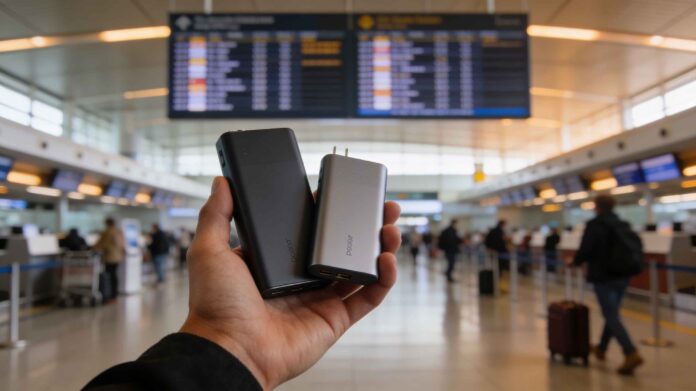
If you travel regularly to or from China, read this before your next flight:
- New ICAO safety specifications on power banks took effect on 27 March 2026
- On international flights, you are now limited to two power banks per passenger
- Charging them in-flight is prohibited
- Overhead bin storage is not permitted
- The rules for domestic flights within China are different, and worth understanding separately
Flying in or out of China with multiple power banks, travellers used to pass through security without issue. That is changing, but exactly how it is changing depends on whether you are flying internationally or within China.
The two situations are governed by different rules, and it is worth understanding each one clearly before you travel.
Here is what you actually need to know.
What changed on 27 March 2026
The International Civil Aviation Organization (ICAO), the United Nations specialized agency that develops global aviation safety standards, issued new specifications for lithium battery power banks on passenger flights. These specifications took effect on 27 March 2026 within ICAO’s framework.
What that means in practice:
ICAO sets international standards that member states, including China, then implement through their own regulators and airlines. The standards do not automatically bind every flight everywhere on the same day. National regulators decide when and how to adopt them. For China, that means the Civil Aviation Administration of China (CAAC).
On international flights: three rules now apply
For international flights operating under ICAO’s new specifications, the following applies:
One: A maximum of two power banks per passenger.
ICAO’s announcement states explicitly that power banks are now limited to two per passenger. No distinction is made based on ticket class or frequent flyer status.
Two: No charging devices from a power bank during the flight.
ICAO states that passengers are prohibited from recharging from power banks during flights. Several major Chinese airlines, including China Eastern and Hainan Airlines, already require power banks to be switched off and not used during the flight, making this consistent with existing carrier policy.
Three: Power banks must not go in the overhead bin.
ICAO guidance states that power banks should be kept in the seat pocket or under the seat in front of you, not in overhead compartments. The reasoning is practical: if a lithium battery begins to overheat, cabin crew need to be able to reach it immediately.
On domestic flights within China: a different set of rules
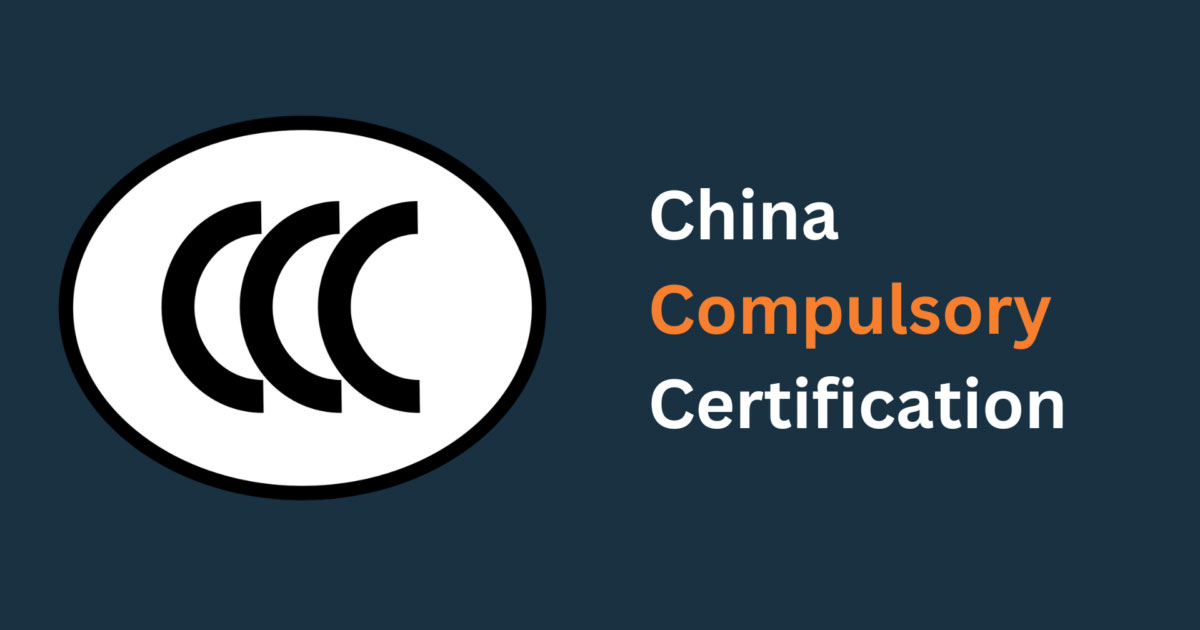
For domestic travel within China, two requirements apply. First, 3C certification, your power bank must carry a visible CCC mark or it may be refused at security regardless of quantity.
Second, quantity, while CAAC has not issued a formal directive adopting the ICAO two-unit limit for domestic flights, security staff routinely apply a two-power-bank personal use limit in practice. Travelling with two or fewer certified devices is the safe position for both domestic and international travel.
What this means practically:
if you are flying domestically within China, the question at security is less likely to be how many power banks you have, and more likely to be whether they are certified. Check that your power bank carries a visible 3C mark. If it does not, it may be refused.
The prohibition on power banks in checked luggage applies to both domestic and international flights and has not changed.
This is a long-standing dangerous goods rule:
Spare lithium batteries, including power banks, must be carried in cabin baggage only. They cannot go in the hold under any circumstances.
The watt-hour question
The 2026 ICAO update does not change the existing capacity thresholds that have governed power bank carriage for years. Current guidance continues to apply the following framework:
- Under 100Wh: generally permitted in carry-on without special approval. Most standard consumer power banks fall into this category.
- 100Wh to 160Wh: generally permitted with prior airline approval.
- Over 160Wh: not permitted on passenger aircraft.
If you are unsure of your power bank’s watt-hour rating, look for it on the label. Many airline and safety rules expect the capacity to be clearly marked. Devices without legible capacity markings are likely to be refused or confiscated at security.
What this means if you are based in China
Many foreign residents in China fly frequently, regional trips, flights home, business travel across the country and the region. The practical implications depend on which type of flight you are taking.
For international departures:
The two-power-bank limit is the new standard. While major Chinese airlines typically follow ICAO standards, check with your specific carrier for enforcement timelines. Travelling with two or fewer is the safe position to take now.
For domestic departures:
3C certification is the immediate priority. Check your devices before you travel. If you arrive at security with more power banks than can be accommodated under the applicable rules, airport staff may require you to remove or discard the excess before boarding, so it is considerably safer to pack correctly before you leave home.
On all flights, international and domestic:
Power banks cannot go in checked baggage. This rule is not new, but it is worth restating clearly.
Related article: Practical Guide to Chinese AI Tools: Chat, Images, Video, and Work (2026)