
The tech behind China’s space station and how it compares with the ISS

The tech behind China’s space station, Tiangong, Heavenly Palace and how it compares with the ISS.

Tiangong-1 edited

In April, China launched the core module for its new space station, Tiangong, 天宫 which means Heavenly Palace in Chinese.

Tiangong-2 edited

It’s a brand new, modular, research space craft with a lot of exciting features and it’s expected to be up and running by the end of 2022.

The international space station (ISS), is expected to retire in 2024 which will leave the Tiangong the only permanent space station in low earth orbit.

So, what’s on China’s space station, and how does it compare with the ISS?

The first thing to know about China’s Tiangong space station is that China is building it all by itself.

Since 2011, the US has excluded China from working with NASSA, and as a result China’s astronauts have not set foot on the international space station.

This exclusion may however have turned out to be in China’s favour as it gave them the ambition and political will to move forward with their own space station endeavours.

Tiangong-3 edited

In October 2003 China sent its first astronauts to space, making it only the third country after the US and Russia to achieve this.

Less than a decade later China successfully launched two test modules, the Tiangong-1 (2011) and Tiangong-2 (2016) space labs which are the basis for any space station design.
Tiangong-4 edited

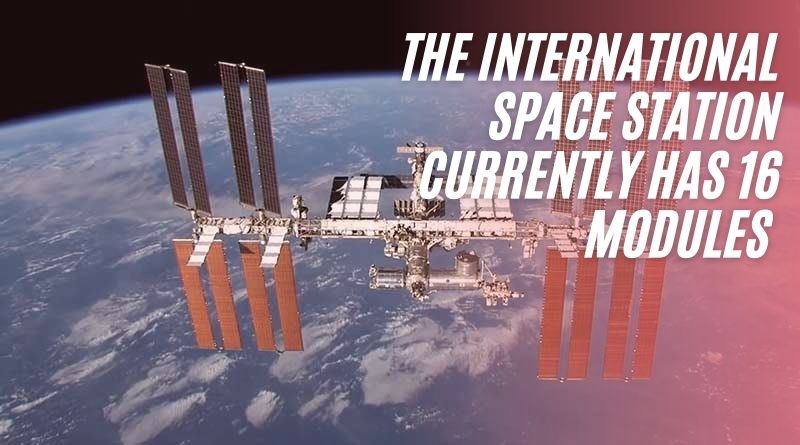
The ISS is currently comprised of 16 modules whereas the Tiangong only has one, but eventually will be made up of three.

At the moment the Tiangong can accommodate three astronauts while there are usually six on the ISS, and in July 2009 it was home to a record thirteen astronauts at one time. The Tiangong has the potential to reach that capacity as well, simply by adding more modules.

While the Tiangong may be smaller, according to the China Manned Space Agency (CMSA), it is equipped with more advanced technology.

Tiangong-5 edited

One of those technologies is the system that helps power the Tiangong with solar panels. The electricity generated from the panels not just keep the lights on but also powers the space station’s propulsion technology.

Even though Tiangong still uses regular fuel like the ISS, according to the CMSA it doesn’t have to use as much to stay in orbit which offers significant weight savings. The Tiangong’s propulsion system is reported to be five times more efficient and powerful than the one on the ISS (which consumes about nine tonnes of fuel annually to stay in orbit).

Tiangong-6 edited

Another piece of equipment that will be unique to the Tiangong is a space telescope called the Xuntian Space Telescope 巡天, which means Heavenly Cruiser in Chinese, and it will orbit parallel to the space station.

The Xuntian is currently under development and will feature a 2 meter (6.6 foot) diameter primary mirror and is expected to have a field of view 300 times larger than the Hubble Space Telescope.

This will allow the telescope to image up to 40 percent of the sky using its 2.5 gigapixel camera over ten years.

Xuntian is planned for launch in 2024 and will be able to refuel and be serviced by directly docking with the Tiangong, unlike the Hubble Space Telescope, which, because it orbits on its own, requires astronauts to launch from earth for repairs.

It’s expected that the Xuntian Space Telescope will eventually also be utilised by other countries, as the CMSA has stated that the new space station has been designed for collaborations.

Zhou Jianping, Chief designer of China’s Manned Space Engineering Project said they have already collaborated with the U.N. Office for Outer Space Affairs, and have chosen nine projects on Tiangong with scientists from 17 countries.

This doesn’t mean that other countries are standing still however. NASSA has already announced plans to launch an outpost that will orbit the moon, and Russia has indicated that it could launch its own space station by 2030.

Related article: China “three child” birth policy formally introduced into law!
- Follow Us on WeChat -

spot_img

Related articles:

How Hainan’s 30% Rule Is Beginning to Shape Business Decisions

How Hainan’s 30% rule is beginning to shape business decisions for companies using the FTP’s customs route into mainland China ...

Typhoon Season 2026, What Hainan Residents Can Expect in the Coming Months

Typhoon Season 2026 in Hainan: What residents need to know about storm forecasts, El Niño impacts, ferry suspensions, airport disruptions, warning levels, and how to prepare for typhoons from July to October ...

Want to Stay in China After Graduation? Hainan Has a Startup Route

How international graduates can stay in China after graduation through Hainan’s startup residence route, and why it does not allow paid work ...

A Spouse on an S Visa: What They Can and Cannot Legally Do in China

What spouses on S visas in China can and cannot legally do, including work, tutoring, remote work, volunteering, tax, and permit risks ...

Get weekly email updates for new articles published!

Follow Us on WeChat

spot_img

Latest Articles ...

A complete guide, how to apply online for a provisional driving permit in Hainan as a foreign national, including the application steps, required documents, and the online learning module you must complete ...
Foreign employees in China may have a Housing Provident Fund account they have never checked. The balance, employer contributions included, can be withdrawn in full when you leave. Here is how to claim it before you go …
You contributed 8% of your salary to a Chinese pension account every month. Many expats leave without claiming it. Here is a breakdown of what you are owed and the window you cannot afford to miss ...
Changing jobs in Hainan follows a legal sequence with defined deadlines at the key steps. Here is what the official rules and related official guidance say about work permit cancellation, the gap period, and when you can legally start work …
spot_img

China’s Green Card: How Rare Is It, and What It Takes to Get One

Between 2004 and 2017, China issued just over 10,000 permanent residency permits to foreign nationals. This guide explains the four eligibility routes, the real criteria, and your honest odds of qualifying …

Why Your Passport Doesn’t Work: A Foreigner’s Guide to China’s ID-Only Systems

Your passport is legally valid for trains, hotels, SIM cards and payment accounts in China. The problem isn't the rules, it's the systems built on top of them …

China’s 2026 Work Permit Salary Rules: Who Actually Needs to Worry?

China’s work permit salary thresholds have raised concerns among foreign professionals. This explainer clarifies the 6× and 4× rules, why the figures appear high, and who is actually affected ...

Change Jobs in China Without Losing Your Legal Status

A practical guide to changing employers in China without losing your work permit or residence status, with timelines, documents, and common risks explained ...
spot_img

Looking for an international pre-school in Haikou?

Flora's International Preschool has three preschools in the Haikou area. Our schools follow a European curriculum

Continue Reading ...

How Hainan’s 30% Rule Is Beginning to Shape Business Decisions

How Hainan’s 30% rule is beginning to shape business decisions for companies using the FTP’s customs route into mainland China ...

Typhoon Season 2026, What Hainan Residents Can Expect in the Coming Months

Typhoon Season 2026 in Hainan: What residents need to know about storm forecasts, El Niño impacts, ferry suspensions, airport disruptions, warning levels, and how to prepare for typhoons from July to October ...

Want to Stay in China After Graduation? Hainan Has a Startup Route

How international graduates can stay in China after graduation through Hainan’s startup residence route, and why it does not allow paid work ...

Get weekly email updates for new articles published!

Never miss another important notice or event. Be informed of what you need to know, when you need to know it.