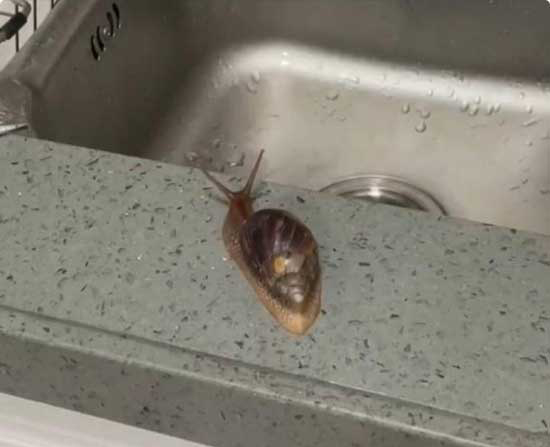
On May 6th, a woman living on the second floor in Huizhou, Guangdong, posted a video on social media. She mentioned that on a rainy day, she forgot to close the windows and when she returned home, she found two large snails had crawled into her kitchen, with one even making its way into her cup.
A user in the comment section cautioned:
“Absolutely do not touch or eat these snails, and the cup should be disposed of too!”
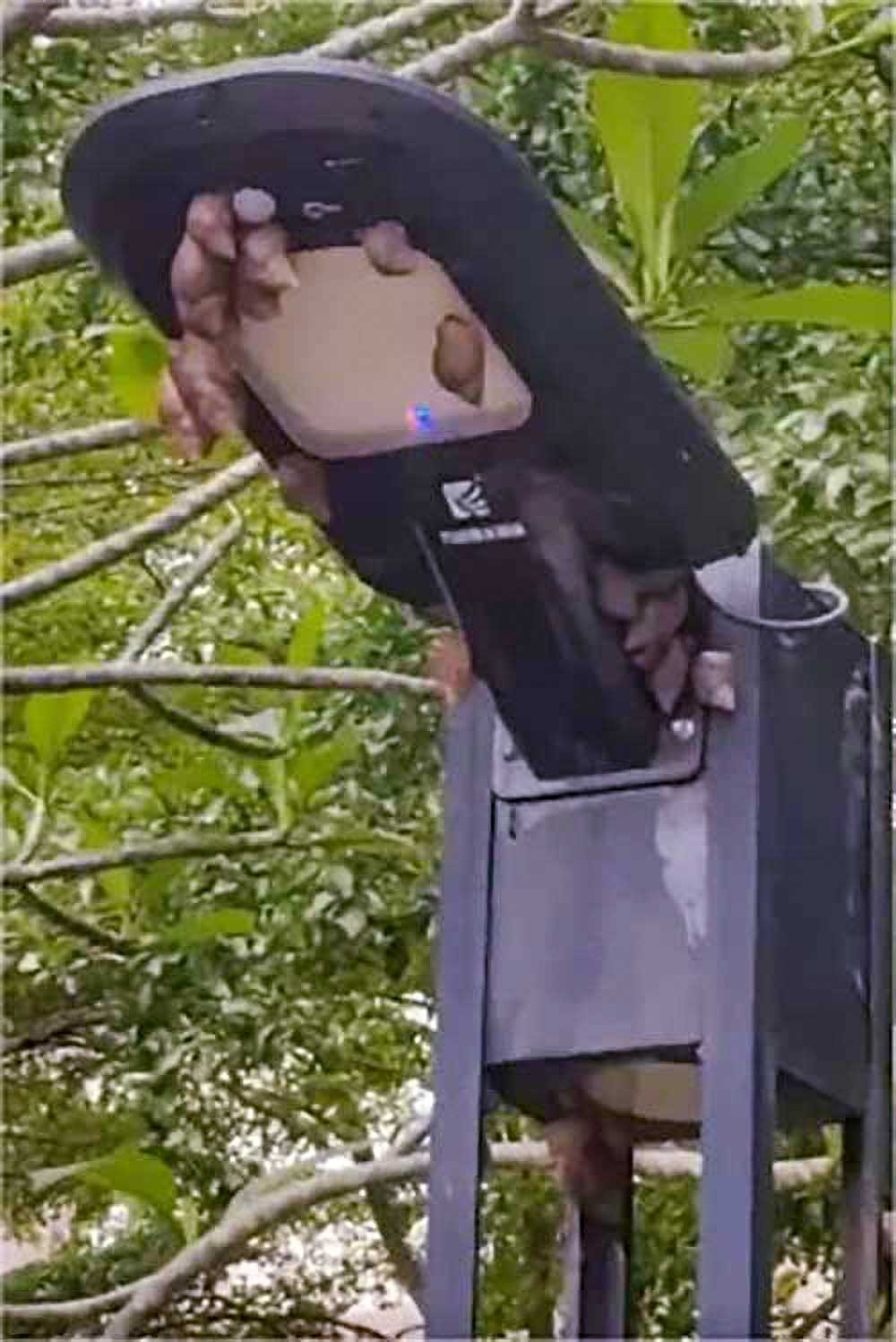
The thread began with someone posting a video of snails in Guangdong seeking shelter from the rain. The video showed several snails “hanging upside down” under streetlamps to avoid getting wet.
So, is this over abundance of caution justified, are the snails really so dangerous?
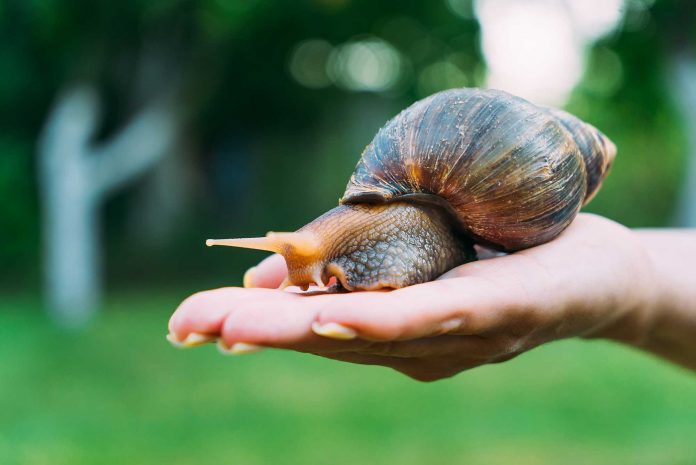
The snails in question are Achatina fulcia, one of over 60 species of Giant African Land snails. It’s one of the most invasive species of snail in the world and not native to China.
Its homeland is in East Africa, where it’s known as the world’s largest snail. These giant snails typically seek shelter in cool, damp areas, such as under grass, trees, moist walls, or in damp gutters where leaves decompose.
However, they cannot survive in water. So, when heavy rain falls, low-lying, moist areas become flooded, prompting them to move from their hiding places to dry ground. This is when they are most active.
The African Giant Snail is one of the top 100 worst invasive species globally and has wreaked havoc in many tropical and subtropical regions worldwide.
In China, they have quietly expanded their “territories” to Fujian, Guangdong, Guangxi, Yunnan, Hainan, and other places.
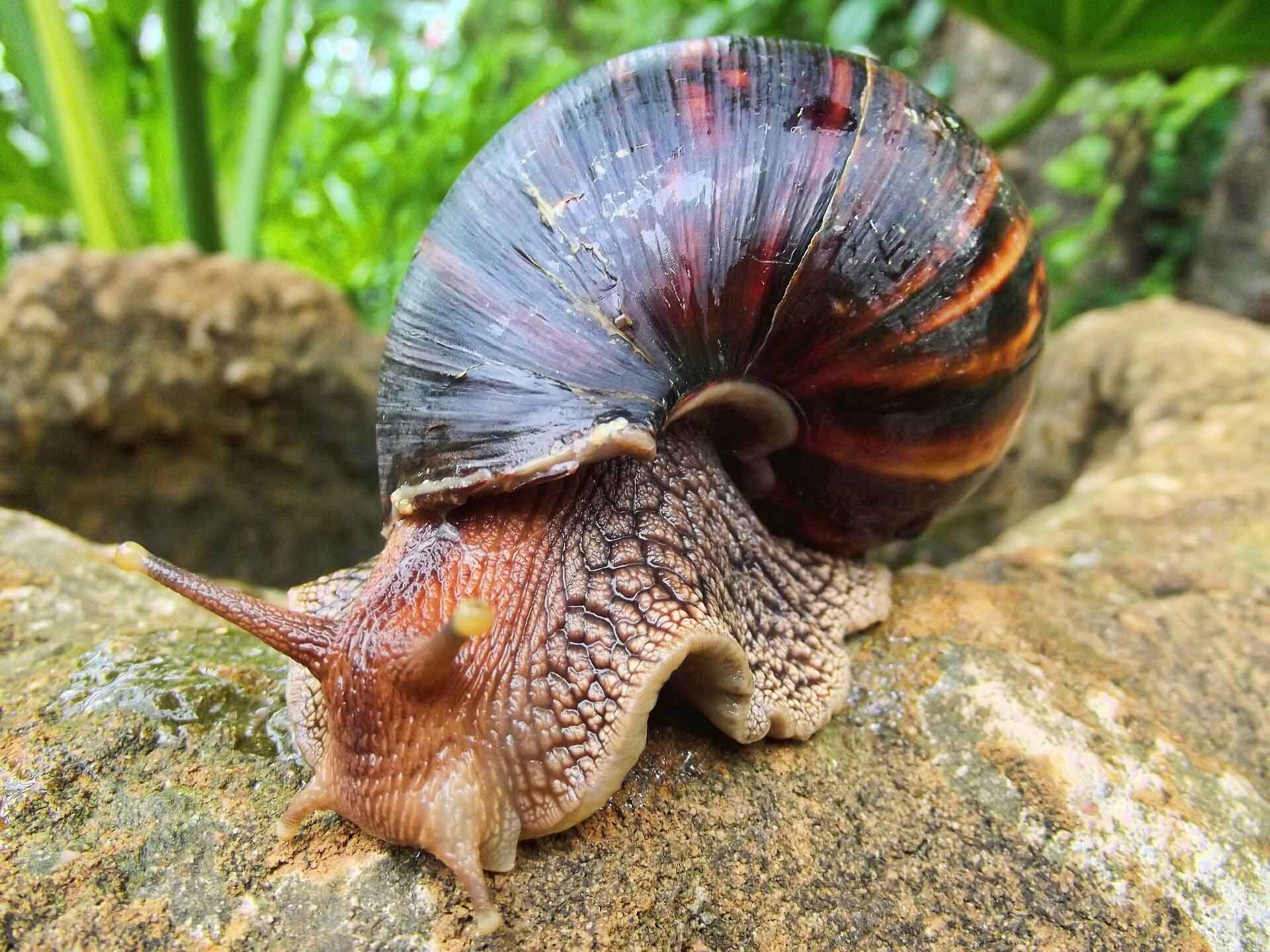
The African Giant Snail thrive in areas inhabited by various rodents and often ingest rodent faeces, carrying a variety of bacteria. Pathogens like Leptospira and Burkholderia pseudomallei are commonly found on them. These pathogens can cause diseases such as leptospirosis and melioidosis respectively.
While African Giant Snails are not inherently toxic, they can carry and transmit parasites such as the rat lungworm. These minute worms, if ingested, enter the circulatory system and travel to the brain, where they can lead to eosinophilic meningitis.
It is believed that dogs have died as a result of consuming the snail and being infected by the rat lungworm
At this point, you might be thinking, “I won’t touch or eat them, so I should be fine, right?”
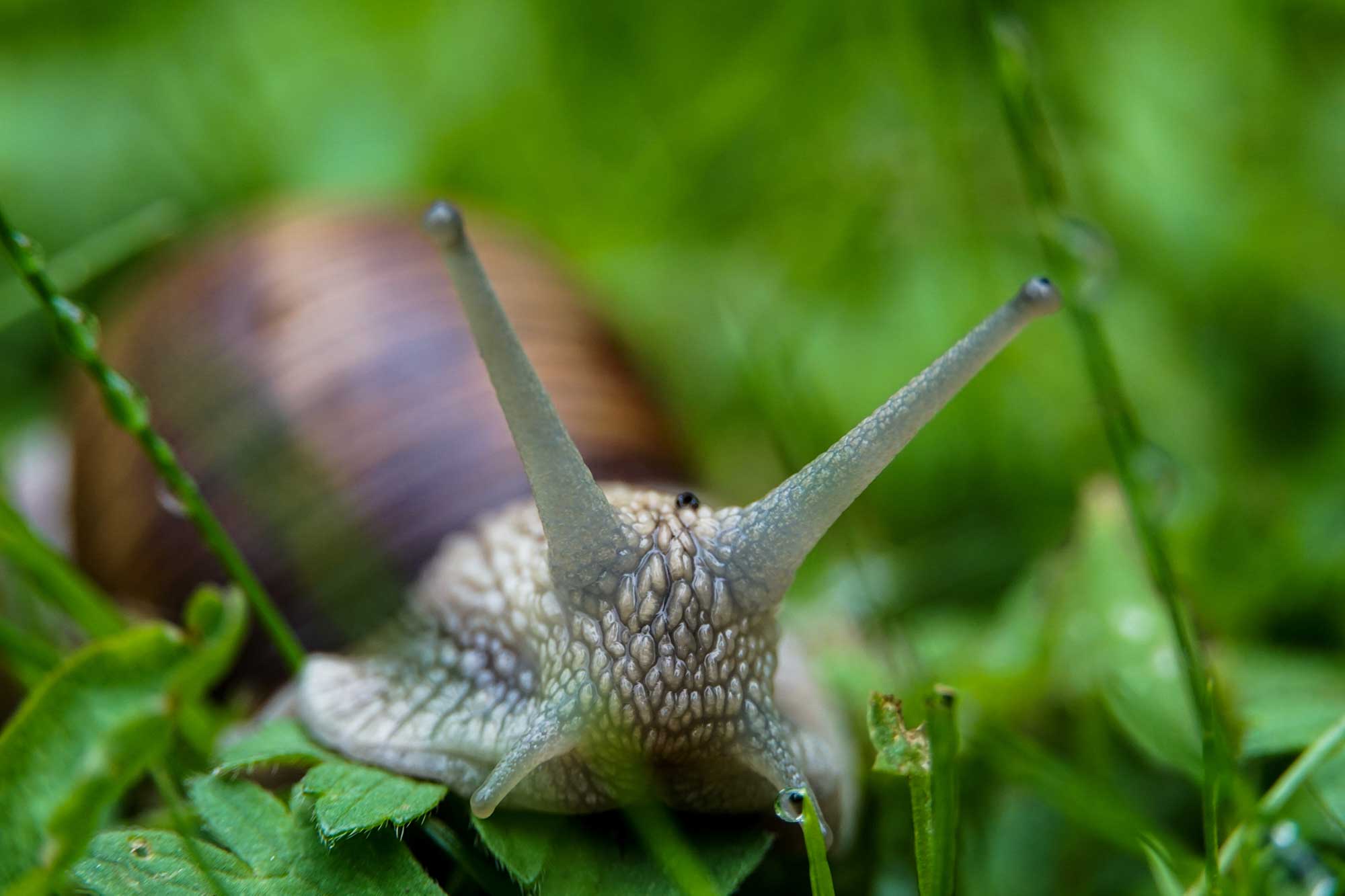
Well, the snails leave behind mucus while crawling, which itself carries pathogens. The larvae of the rat lungworm can survive in their faeces for a considerable period of time. Pathogens may remain on vegetables, fruits, towels, toilet seats, etc., where African Giant Snails have crawled.
If you encounter African Giant Snails around your home, it’s advisable to handle them “humanely.” Sprinkling some table salt on them will cause dehydration and eventual death.
Don’t feel guilty about it, they are one of the most dangerous pests in agriculture. They’re also known as “garden killers” as they pose a threat to over 500 plant species and more than 20 crops. Their faeces and mucus can also cause biological contamination.

African Giant Snails are sometimes kept as pets, (because ….. why not?) particularly in countries where it is legal to do so. They are considered relatively low maintenance and can be interesting to observe. However, there are important considerations to keep in mind:
Legality: In some countries, such as the U.S., it is illegal to own African Giant Snails due to their status as an invasive species and potential to carry diseases. In the U.K., while it is legal to keep them as pets, it is illegal to release them into the wild.
Ethics: Given the potential ecological impact and health risks associated with these snails, it’s important to consider the ethical implications of keeping them as pets.
Care: These snails require a specific diet, a secure habitat, and careful handling to prevent the spread of diseases.
Reproduction: If you keep Achatina, you need to be aware that they are going to produce lots of offspring, and you will need to dispose of them sensibly and humanely
Here are some interesting facts about the African Giant Snail:
Size: The shells of Giant African land snails can be as big as a man’s fist, measuring up to 8 inches long and nearly 5 inches in diameter.
Spread: These snails have spread around the world, often due to pet owners who are unaware of the potential ecological impact.
Diet: They have a wide diet and can eat over 500 kinds of plants, including lichens, algae, and fungi. They also feed on stucco, concrete, and paint to get the calcium they need for their shells.
Parasites: They can carry dangerous parasites like the rat lungworm, which can cause eosinophilic meningitis in humans.
Habitat: They are native to East Africa but have adapted to various climates and environments, including urban areas.
Activity: They are nocturnal creatures, active at night for travelling, feeding, and mating.
Lifespan: They usually live between 5-7 years, but can live up to 10 years in optimal conditions.
Weight: Adult snails usually weigh around 32g.
Invasive Species: They are considered one of the top invasive species in the world.
Reproduction: Giant African snails are hermaphrodites.
These snails are interesting creatures, but they can also cause significant damage when introduced to foreign habitats
Related article: Hainan in Daylight Side of Solar Flare Eruptions