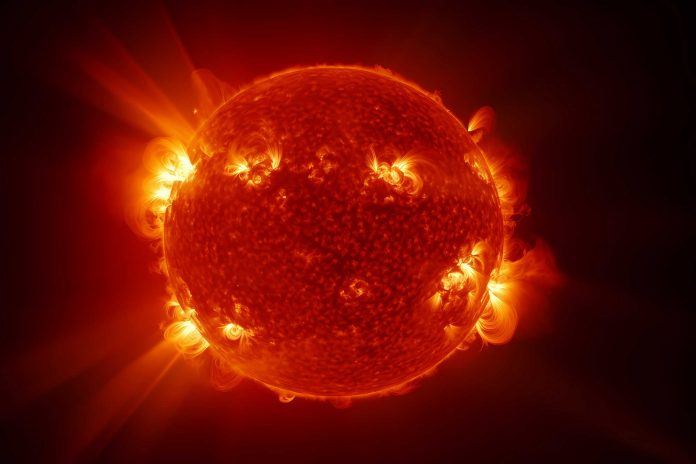
Hainan in Daylight Side of Solar Flare Eruptions

On the afternoon of May 5th, the National Space Weather Monitoring and Early Warning Centre issued an alert regarding solar flares. At 14:01 Beijing time on May 5th, 2024, the Sun unleashed a powerful solar flare (X1.3 level) while China was experiencing daylight hours.

This flare affected the ionosphere above China, with predictions suggesting the possibility of further M-level or even X-level flares in the next few days.

Solar Flares: Unleashing the Sun’s Powerful Energy Bursts

Solar flares, as intense energy eruptions from the Sun’s surface, are categorized into five levels: A, B, C, M, and X. Among these, A represents the lowest energy level, while solar flares in May were of the maximum level, X.

The 25th solar cycle activity peak, occurring between January and October 2024, marks the “solar activity maximum period.” This signifies that the Sun will reach the pinnacle of its current activity cycle in 2024, which aligns with the timing of the solar cycle, which typically lasts around 11 years.

How Solar flares can disrupt communications
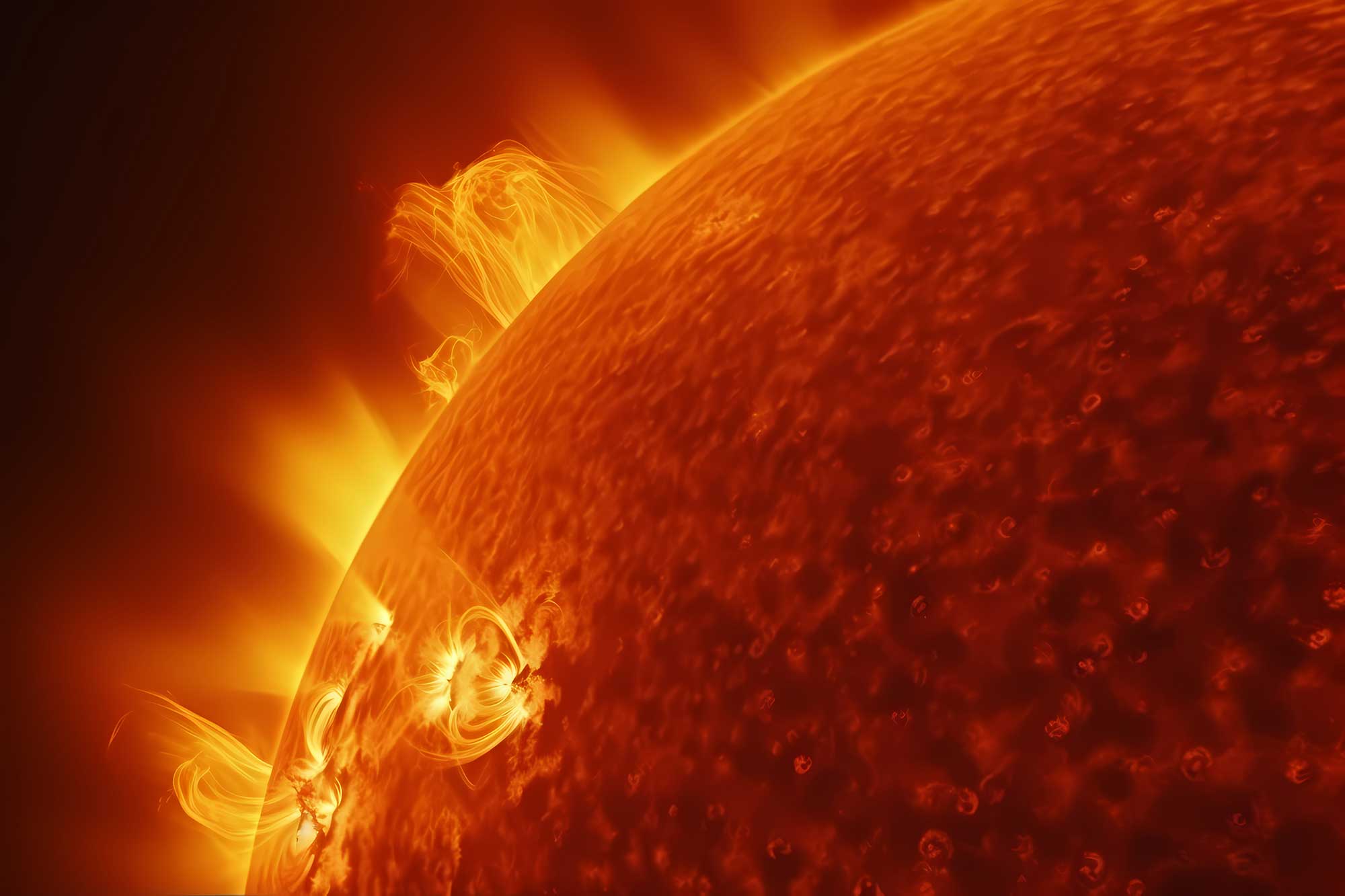
Hainan in Daylight Side of Solar Flare Eruptions
Solar flares are intense bursts of energy from the Sun’s surface that can disrupt communication and power grids

Ionospheric Disturbances: Solar flares can cause ionospheric disturbances, leading to fluctuations in the density and composition of the ionosphere. This can affect the propagation of radio waves, altering the transmission characteristics of communication signals.

Signal Degradation: Solar flare-induced ionospheric changes can cause signal degradation, leading to increased noise levels, signal fading, or loss of signal integrity.

Satellite Interference: Solar flares can produce energetic particles that can interfere with satellite electronics, leading to potential disruptions in satellite-based communication systems.

Previous Solar Flare Event

Previously, a coronal mass ejection (CME) caused by a very intense solar flare, cut out radio communications in China in February 2011.

It’s worth noting that on May 3rd at 10:22, a strong solar flare (X1.6 level) erupted, also affecting the ionosphere above China.

Understanding Solar Flares and Their Impact

According to Chen Anqin, Chief Forecaster at the National Space Weather Monitoring and Early Warning Centre, while the direct effects of solar flares may seem relatively minor, associated phenomena like coronal mass ejections can trigger geomagnetic storms, posing risks to power grids and satellite operations.

The Bright Side of Geomagnetic Storms

Despite the potential disruptions caused by geomagnetic storms, there are silver linings. These storms can lead to the captivating spectacle of auroras, visible even in regions further south than usual during particularly intense storms.

Here are some interesting facts about solar flares, that you probably didn’t know:

Solar flares are powerful radiation flashes caused by the release of magnetic energy, such as from a sunspot.

The term “solar storm” refers to a large-scale magnetic eruption, often causing a coronal mass ejection (CME) and associated solar flare, accelerating charged particles in the solar atmosphere to very high velocities.

Solar flares some of the greatest explosive events in our Solar System.

Solar flares can persist for a few minutes to several hours and are seen as bright spots on the Sun.

Particles (such as electrons, protons, and heavier particles) are accelerated by flares.

These eruptions, have an explosive force comparable to billions of nuclear bombs.

Large streams of charged plasma that are released during solar flares typically travel at speeds of several million miles per hour.

Satellites and electrical power networks may be affected by geomagnetic storms brought on by CMEs that strike the Earth.

According to some analysts, a significant solar storm could possibly produce more economic damage than the worst hurricane, by a factor of over 20.

Related article: Navigating Hainan Island’s Rainfall Risks: Understanding Mudslides and Flash Floods

Navigating Hainan Island's Rainfall Risks: Understanding Mudslides and Flash Floods

SourceSource

Latest Forum Discussions

- Follow Us on WeChat -

spot_img

Related articles:

From Lecheng to Production: How Hainan Is Building a Medical Innovation Pipeline

Hainan is exploring whether Lecheng’s medical-access advantage can become the foundation of a new Free Trade Port industry. One drug has already moved from Lecheng use to production in Haikou, while new policies aim to help more innovative medicines and medical devices follow a similar pathway ...

How Hainan Is Turning Aircraft Maintenance Into a Free Trade Port Industry

The future of aviation business in Hainan is beginning to take shape in Haikou. Foreign airline maintenance, engine overhaul, parts supply and aircraft dismantling are now operating around the airport, with a major bonded-zone expansion planned to support the next stage of growth ...

Hainan’s Next Economic Bet: Aerospace, Data and Specialised Technology Industries

Hainan’s technology ambitions have been known for years. In 2026, parts of that strategy are finally moving into operation across aerospace, data, semiconductors and deep-sea technology ...

Hainan Is Planning an Entirely New Transport Layer Between the Roads and Conventional Aviation

Hainan is planning a new low-altitude transport layer above its roads, from cargo drones to passenger eVTOLs. What will that look like over the next five years?

Get weekly email updates for new articles published!

Follow Us on WeChat

spot_img

Latest Articles ...

Where will the business opportunities lie in Hainan’s logistics sector over the next five years? The 2030 plan points to freight, cold chain, air cargo, shipping services and logistics technology …
Haikou has direct flights across Southeast Asia and selected long-haul routes. Compare destinations, operating days, frequencies and intermediate stops ...
Hainan’s 2030 service-sector plan sets targets for trade, finance, logistics and modern services, with distinct roles for Haikou, Sanya and Yangpu ...
Hainan-registered companies exported RMB 22.23 billion to ten ASEAN markets in H1 2026, turning a RMB 3.19 billion deficit into a RMB 12.01 billion surplus …
spot_img

How to Claim Your Housing Provident Fund Before You Leave China

Foreign employees in China may have a Housing Provident Fund account they have never checked. The balance, employer contributions included, can be withdrawn in full when you leave. Here is how to claim it before you go …

Leaving China? Here’s the Pension Money Most Expats Never Claim

You contributed 8% of your salary to a Chinese pension account every month. Many expats leave without claiming it. Here is a breakdown of what you are owed and the window you cannot afford to miss ...

Why Your Name Doesn’t Match Across Chinese Systems, and What to Do About It

Your name exists in five different systems in China. Zero automated checks and they don't talk to each other. Here's what happens when they disagree ...

Why Foreigners Lose Access to Their Chinese Bank Accounts

Frozen accounts, blocked cards, restricted access. Most expats in China don't think about their bank account until they can't access it …
spot_img

Looking for an international pre-school in Haikou?

Flora's International Preschool has three preschools in the Haikou area. Our schools follow a European curriculum

Continue Reading ...

From Lecheng to Production: How Hainan Is Building a Medical Innovation Pipeline

Hainan is exploring whether Lecheng’s medical-access advantage can become the foundation of a new Free Trade Port industry. One drug has already moved from Lecheng use to production in Haikou, while new policies aim to help more innovative medicines and medical devices follow a similar pathway ...

How Hainan Is Turning Aircraft Maintenance Into a Free Trade Port Industry

The future of aviation business in Hainan is beginning to take shape in Haikou. Foreign airline maintenance, engine overhaul, parts supply and aircraft dismantling are now operating around the airport, with a major bonded-zone expansion planned to support the next stage of growth ...

Hainan’s Next Economic Bet: Aerospace, Data and Specialised Technology Industries

Hainan’s technology ambitions have been known for years. In 2026, parts of that strategy are finally moving into operation across aerospace, data, semiconductors and deep-sea technology ...

Get weekly email updates for new articles published!

Never miss another important notice or event. Be informed of what you need to know, when you need to know it.