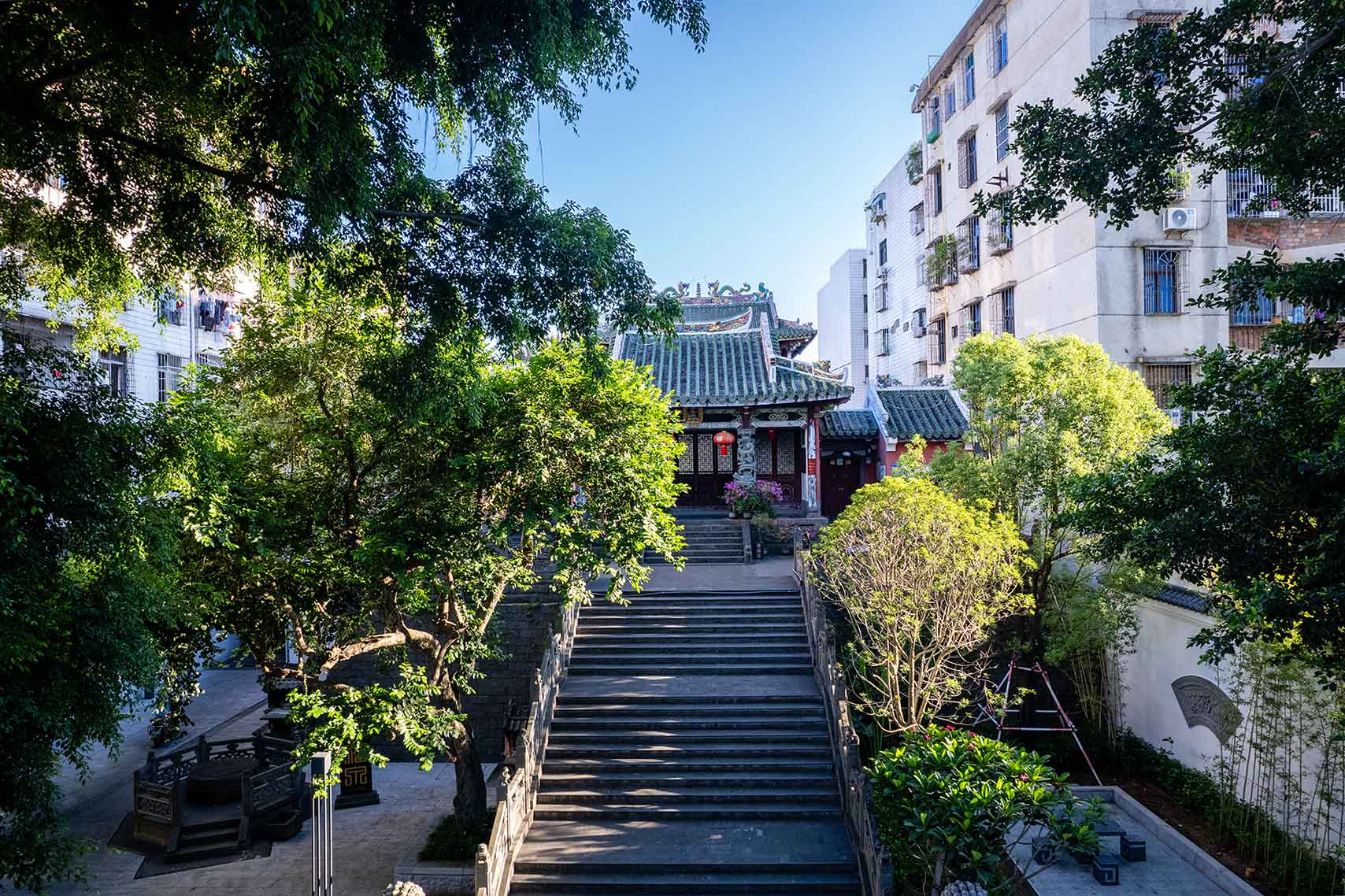

The Ancient Drum Tower of Fucheng
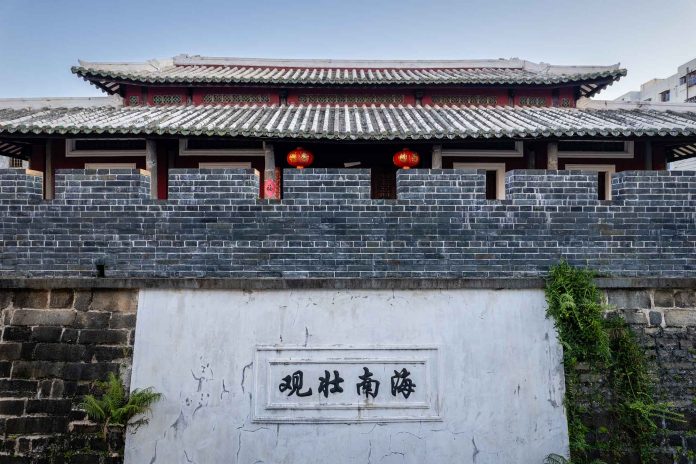
Tucked away along the narrow lanes of Fucheng stands one of Haikou’s most enduring historic structures, the Drum Tower. Although easily overlooked amid the dense urban landscape, the stone archway and wooden pavilion rising above it still preserve the form of the southern gate of the old walled prefectural capital of Qiongzhou.
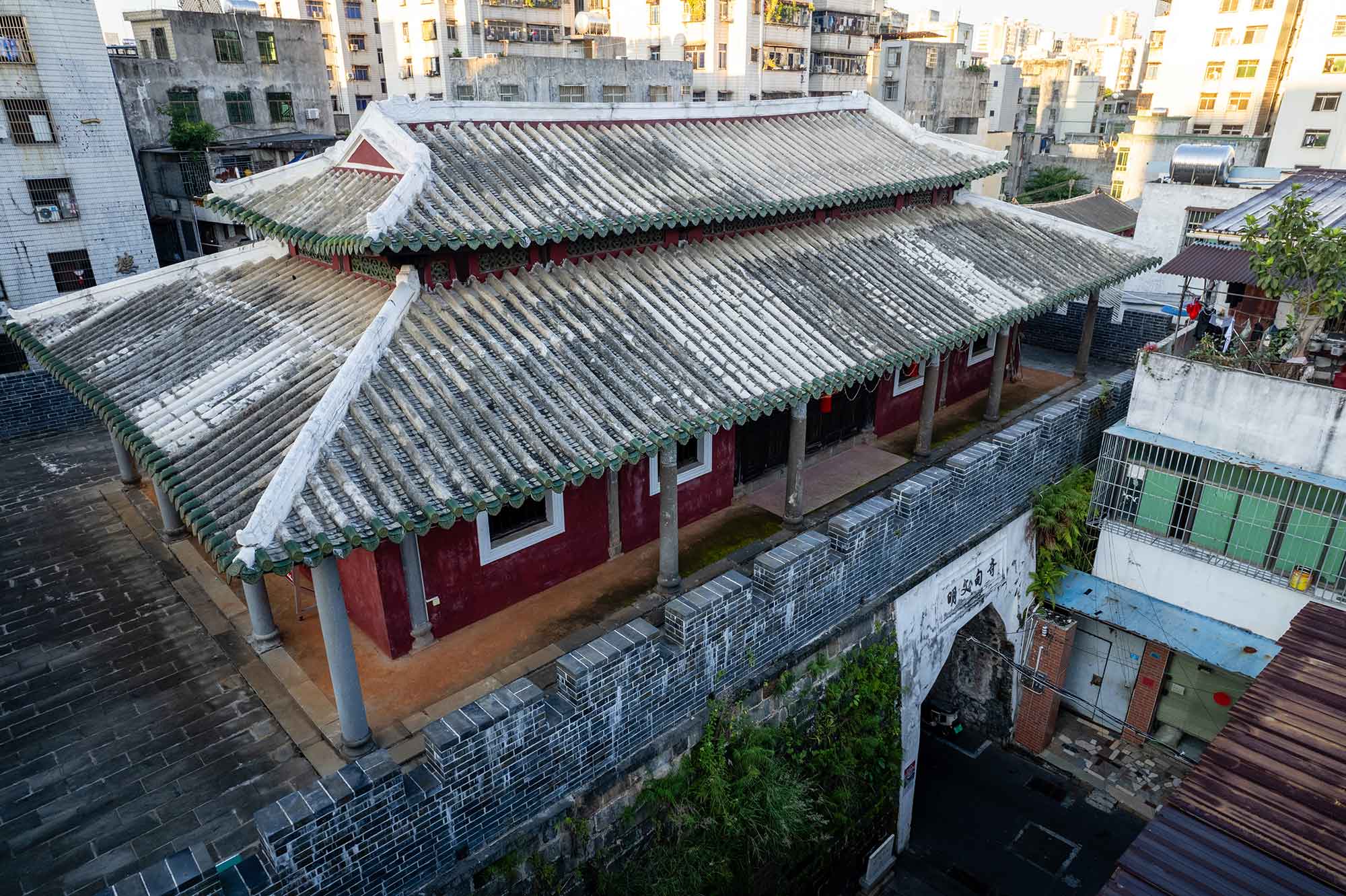
While modernity has overtaken much of the area, the Drum Tower’s archway still evokes memories of a time when Fucheng was a significant political, cultural, and military hub.
Fucheng as the Capital of Old Qiongzhou
Before the 20th century, Fucheng (府城) was not just a neighbourhood, it was the administrative capital of the old Qiongzhou Prefecture (琼州府).
Historical Significance
The Drum Tower was first constructed in 1372 during the fifth year of the Hongwu reign by Wang You, the Ming dynasty military commander responsible for rebuilding Qiongzhou’s city walls and defensive system.
Fucheng had been established earlier in 972 during the Northern Song dynasty and developed over the centuries into Hainan’s principal political, cultural and military centre. During the Ming dynasty its walls stretched more than four kilometres and were over nine metres high and six metres thick.
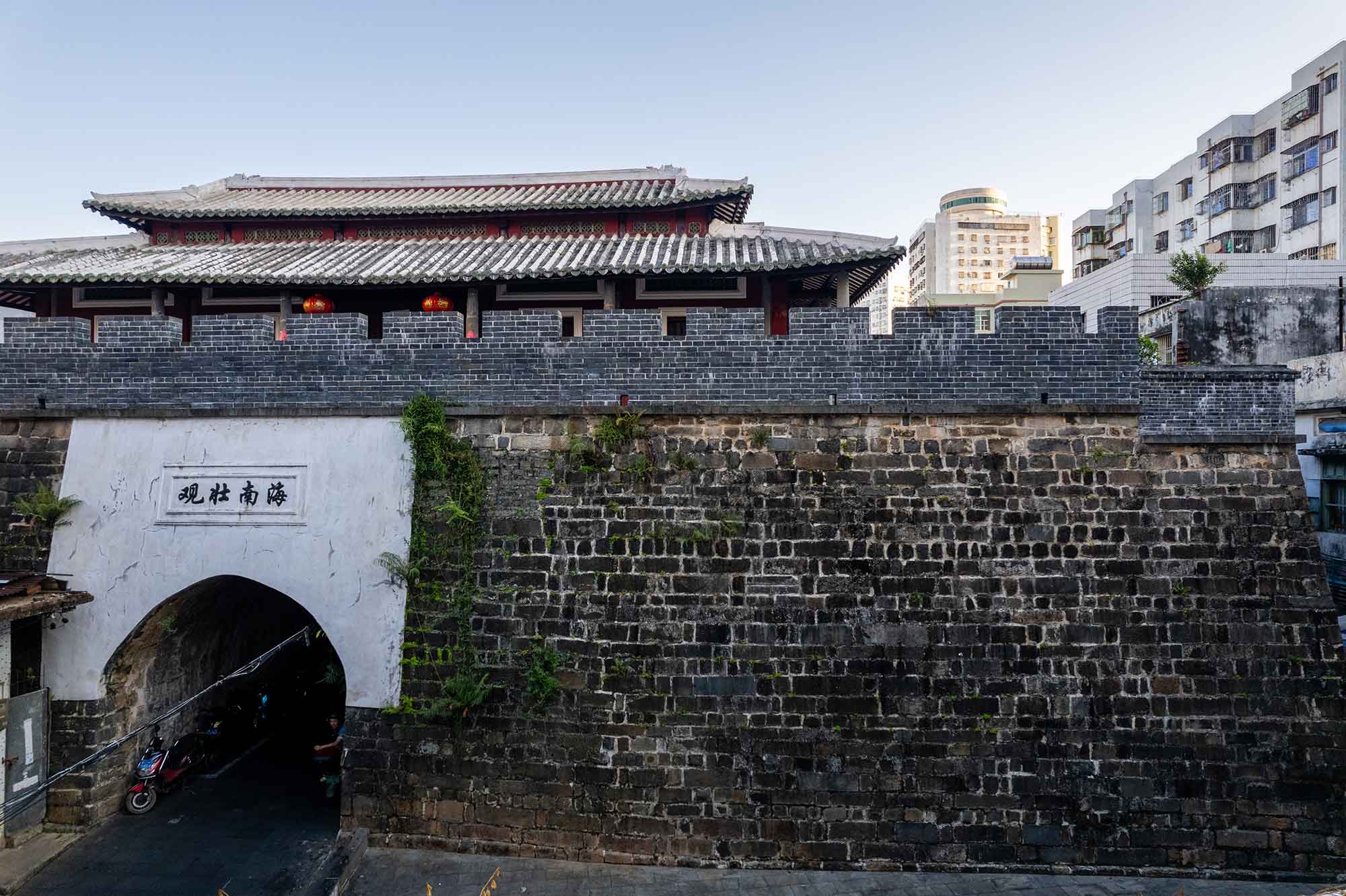
Only fragments of that fortified city survive today including parts of the east and west gates and the Drum Tower on the southern wall.
Drum Tower Street
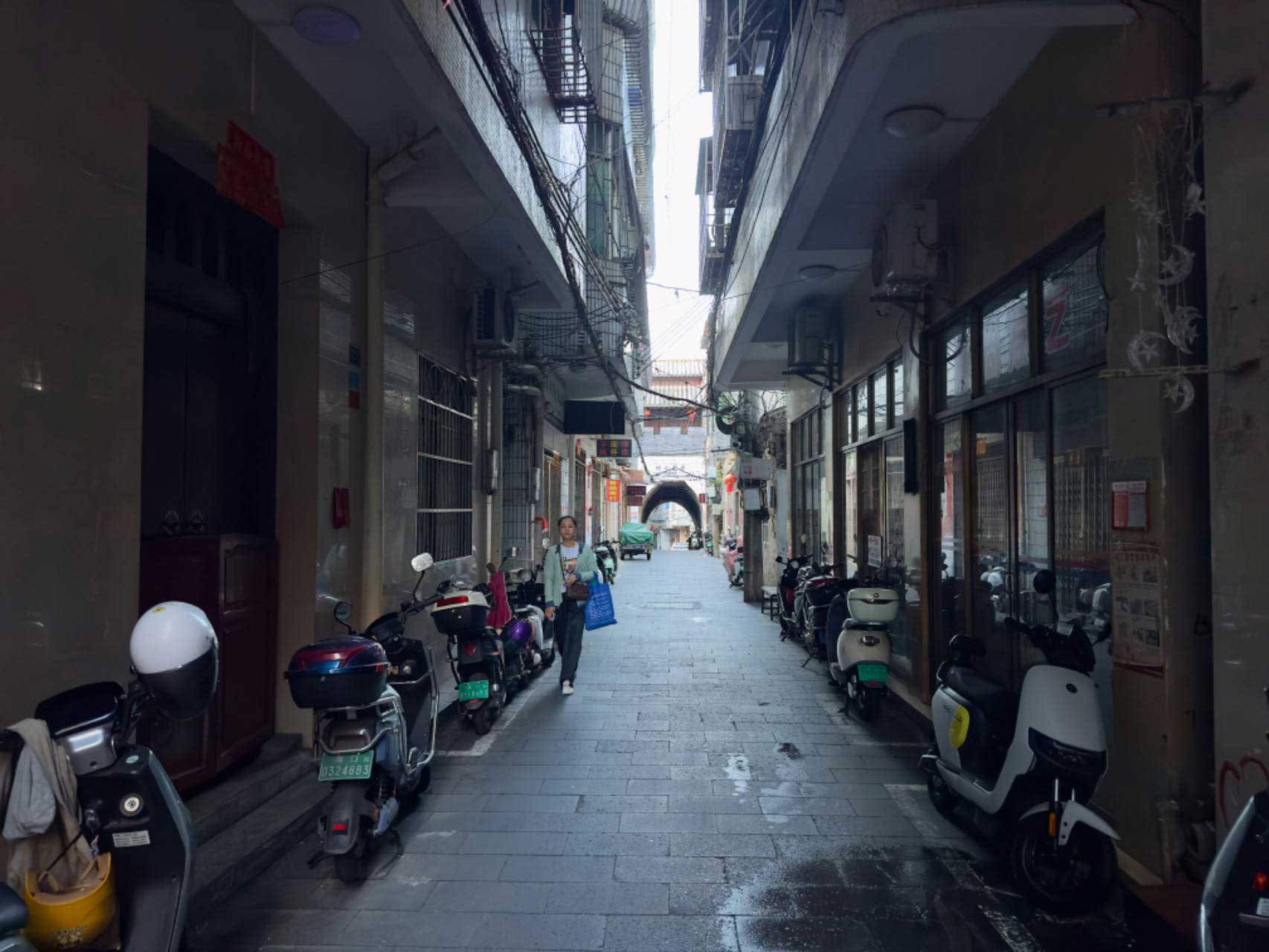
Drum Tower Street takes its name from the structure that marks its southern end. The building has been known by several names in its long history. It was originally referred to as the Chao Tower and after being rebuilt in 1788 by the Qing scholar official Wu Dian it became known as the Wenming Tower.
The present form of the upper pavilion dates largely from this eighteenth century reconstruction while the stone gate structure below retains its Ming dynasty character. The Drum Tower stands in today’s Qiongshan District near Zhongjie Road and close to the historic Qiongtai Fudi complex which once formed the administrative and cultural heart of the prefectural city.
Architecture and Functions
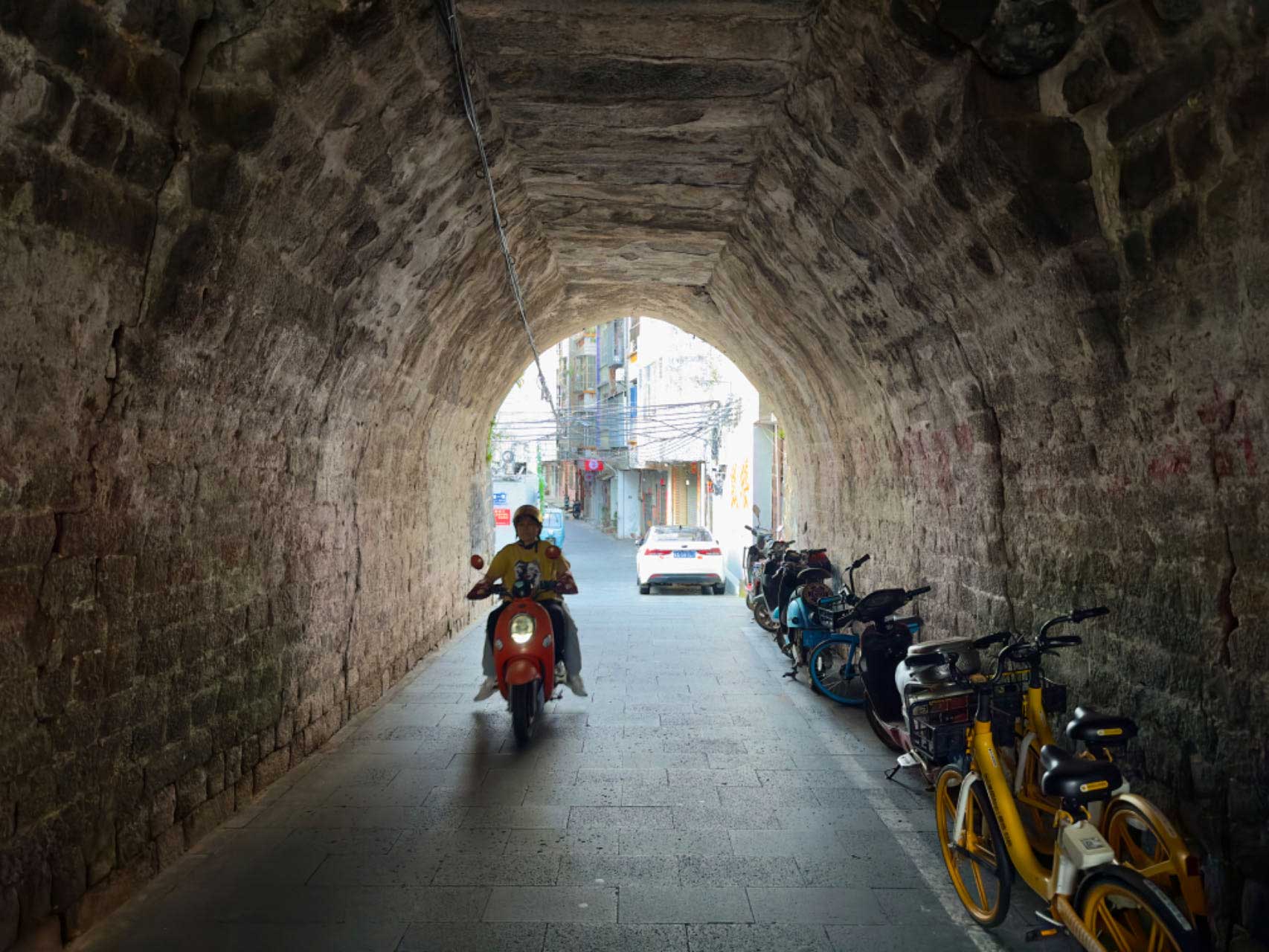
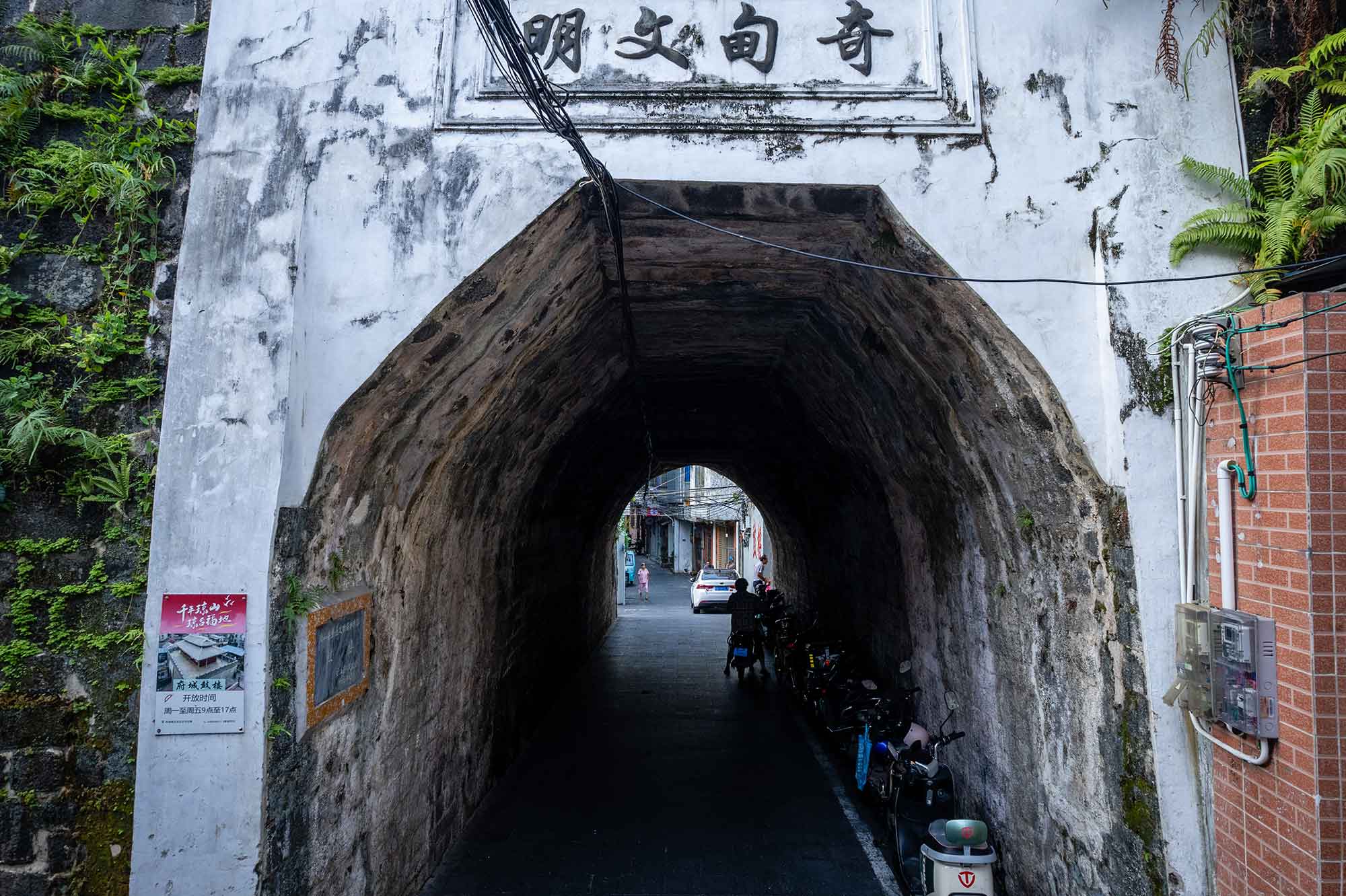
The structure combines a deep stone gate passage with a timber pavilion above. The archway running north to south is over ten metres long and reflects the standard dimensions of fortified city gates in the Ming and Qing periods. It once carried the central axis of Fucheng, linking the southern approach to the markets and government offices within the walls.
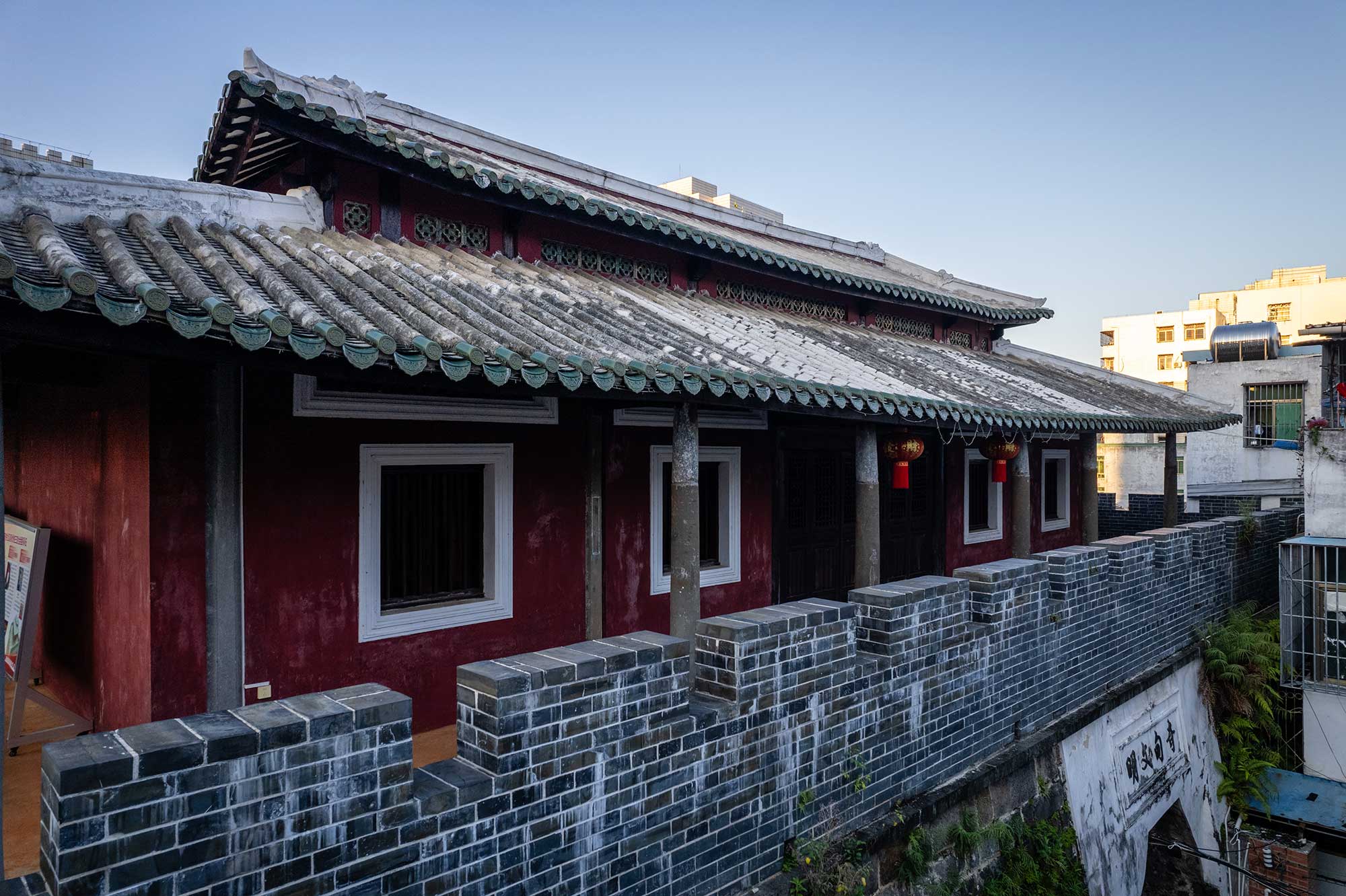
The tower served multiple roles throughout its history. It functioned as a lookout point for military defense and for observing water levels during seasonal floods. It also accommodated ceremonial duties including receiving officials, keeping time and sounding alarms. As the city evolved the pavilion gradually became a civic landmark and a place where scholars gathered and where inscriptions and poems were composed.
Traces of History
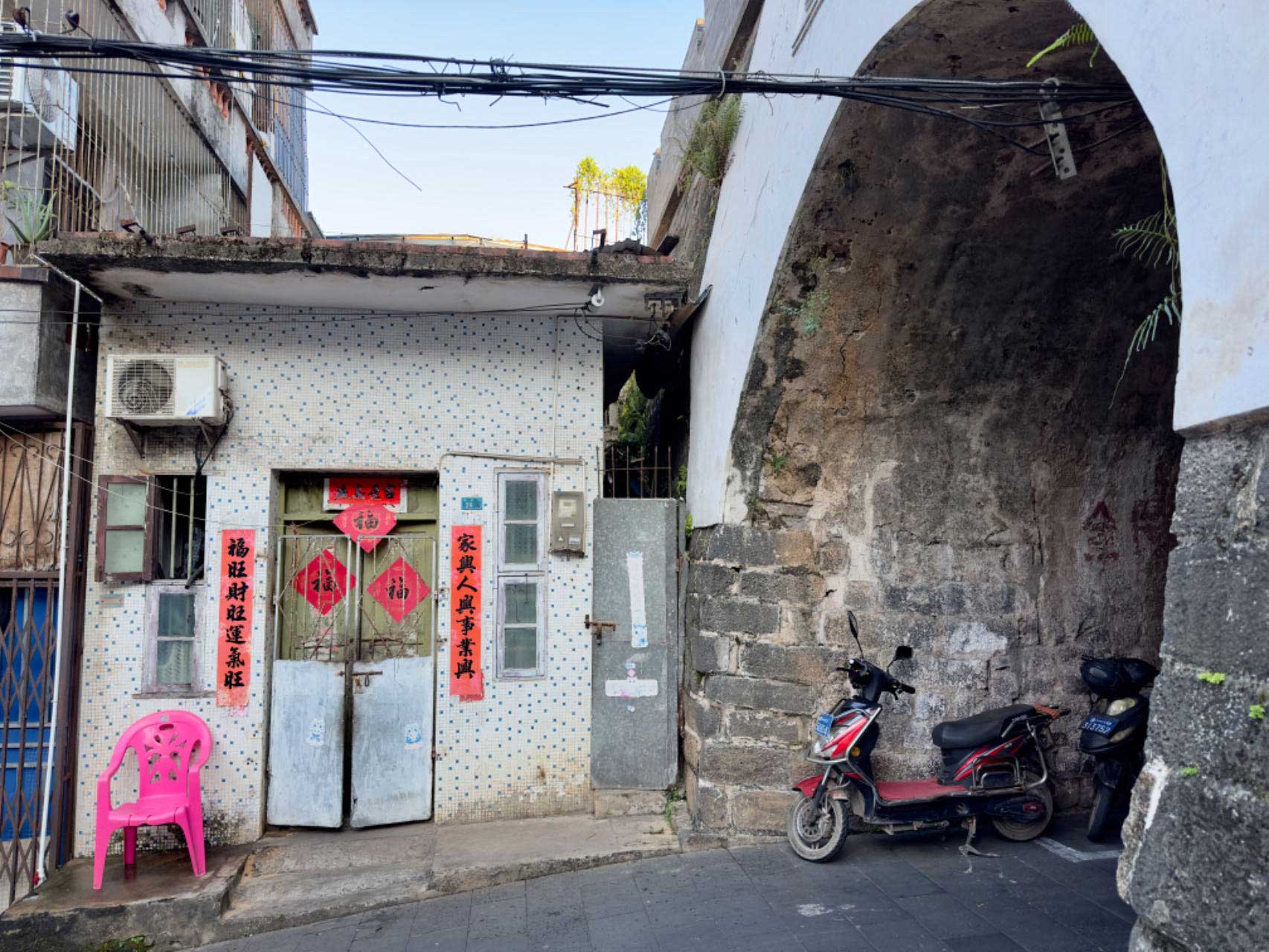
Visitors entering the passage today may still observe the worn stone paving and the depth of the gate structure that once contributed to the defensive strength of the city wall. The pavilion above bears inscriptions written by Wu Dian including Magnificent View of Hainan on the southern face and Civilization of Qidian on the northern face. A weathered stone stele inside commemorates the Qing reconstruction.
Faded Grandeur
Although the Drum Tower retains its distinctive silhouette it has endured long periods of neglect. Overgrown vegetation, weathering and makeshift rooms added in the twentieth century reflect the changing fortunes of Fucheng as the old walled city gave way to modern urban growth.
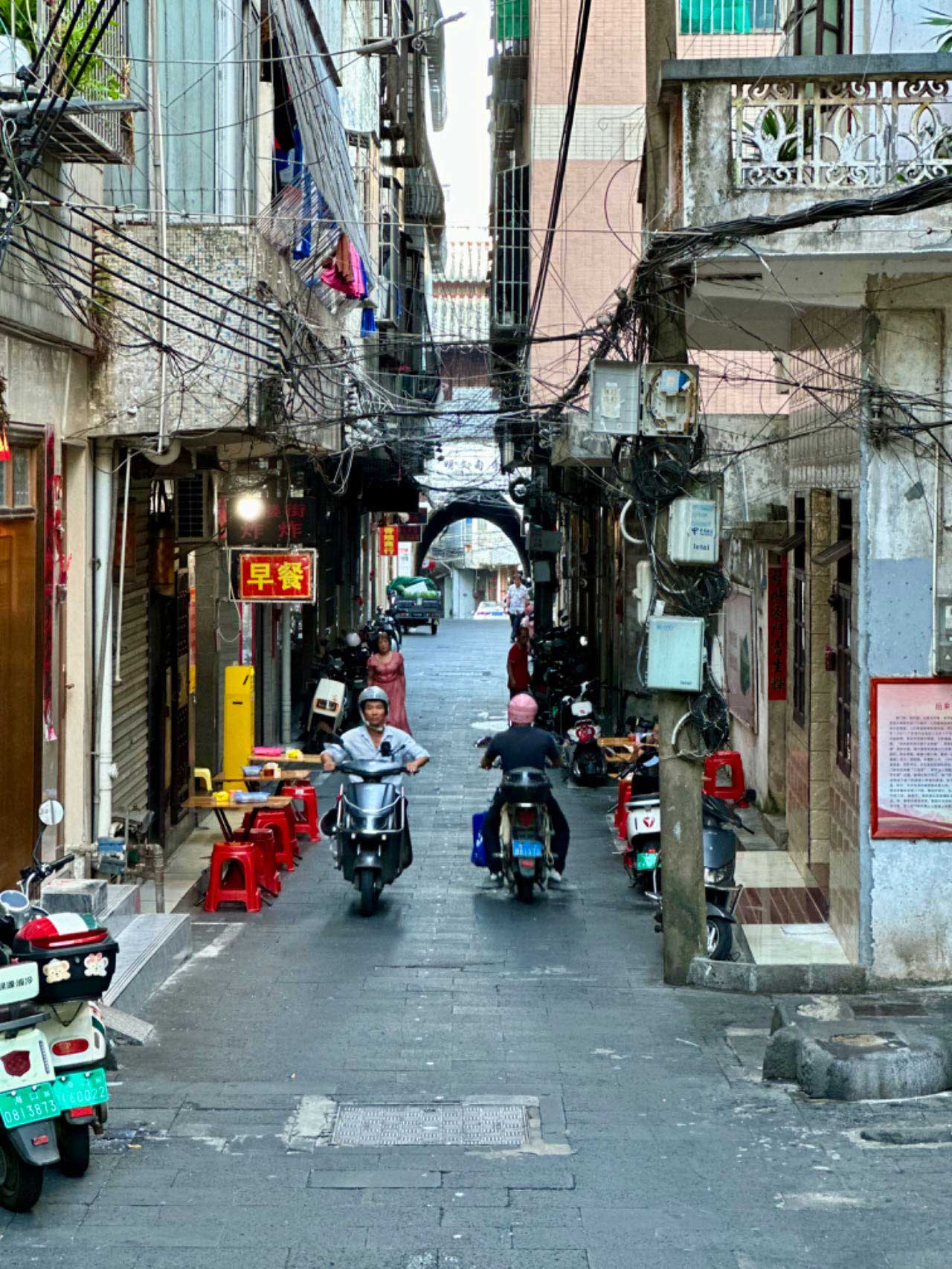
Yet despite these transformations the Drum Tower still conveys a quiet dignity. The view from the pavilion, though now crowded with rooftops and narrow lanes, recalls the broader vistas once described by Qing dynasty poet Wang Maozeng.
A Surviving Fragment of Old Fucheng
More than six centuries after its Ming dynasty construction this surviving stretch of the southern wall and the Drum Tower itself stand as one of the last remaining architectural witnesses to the old prefectural capital. It remains an important link to Haikou’s urban past and a reminder of the city’s long and layered history.
Address: 府城鼓楼 (copy and paste into WeChat maps)
Related article: Discover more from historical Haikou