Edible Electronics Revolution from Digestible Sensors to Nutritious Drones

Conventional electronics often rely on non-biodegradable materials, hazardous chemicals, and complex disposal processes, leading to significant environmental and health concerns. With an increasing focus on sustainability and safety, the field of edible electronics has emerged, aiming to create ingestible and bioresorbable electronic devices that align with green technology principles and help mitigate electronic waste.

In a groundbreaking fusion of food science and robotics, researchers are pioneering the development of edible electronic devices. This cutting-edge field promises to revolutionize healthcare, emergency response, and environmental sustainability.

This first one sounds like its straight out of Willy Wonka & the Chocolate Factory.

Led by Professor Dario Floreano’s ROBOFOOD project, researchers have created drones with edible wings made of rice cakes glued together with edible oils and chocolate, capable of providing sustenance and meeting nutritional needs in emergencies, along with digestible sensors that monitor gut conditions without requiring retrieval.

Such innovations are being designed for emergency rescue operations, providing both tools and nutrition.

Byte-Sized Innovation: Rechargeable Editable Battery
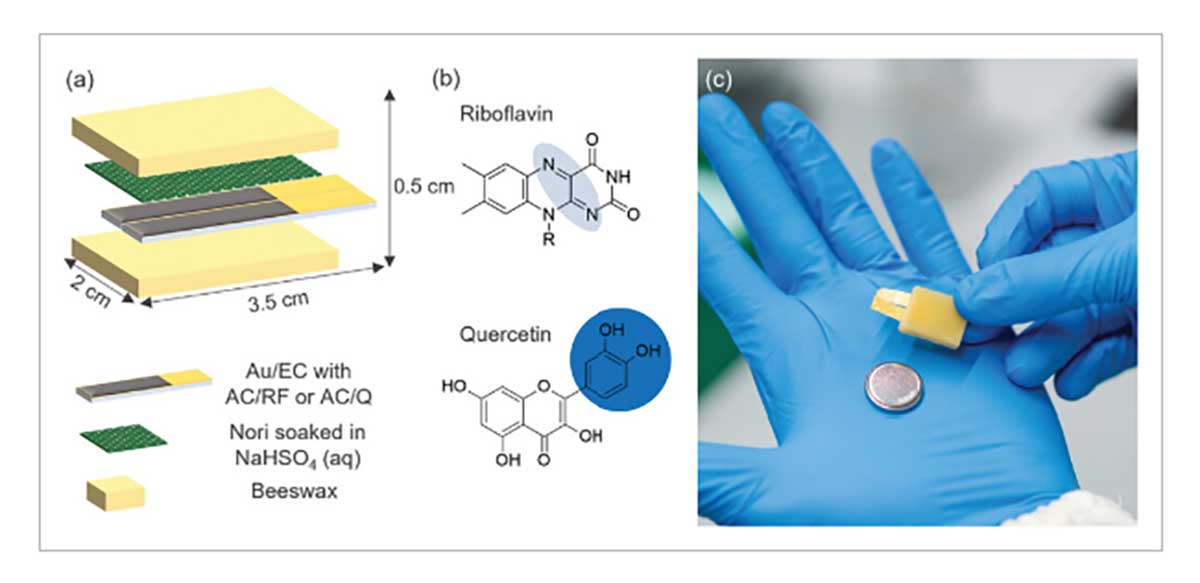
Edible rechargeable coplanar battery dimension compared with a CR2032 cell

Complementing this, Dr. Mario Caironi’s ELFO project has developed the first rechargeable edible battery from common food ingredients, capable of powering swallowable medical devices.

These innovations aim to reduce electronic waste and create fully edible, functional robots and electronics, transforming sci-fi concepts into practical solutions for healthcare and crisis scenarios.

Edible Supercapacitors: Powering the Future from Within
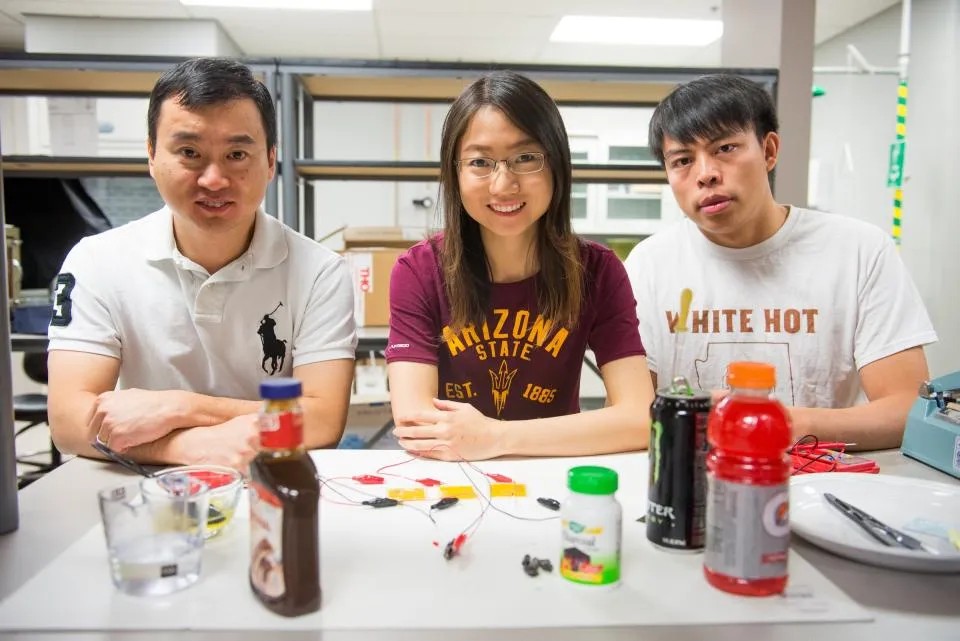
Hanqing Jiang (left) and his students, Wenwen Xu and Xu Wang, with their supercapacitor materials

Professor Hanqing Jiang from Arizona State University (ASU) has made significant strides in creating edible supercapacitors using everyday food ingredients. These devices, crafted from seaweed, cheese, and edible gold and silver foil, can store electrical energy and potentially power ingestible electronic devices.

We use food to function like electronics, says Hanqing Jiang, a professor of mechanical engineering who led the research, heading up a team of students. And everything works pretty well. The whole structure is kind of a sandwich.

The team mix egg white with carbon pellets then add water and more egg white. They apply the mixture to a bit of edible gold foil. They then layer together a slice of cheese and a sheet of gelatin with the egg-and carbon-covered gold foil.

On top of that they add a square of dried seaweed, (think roll sushi), which has been soaked with drops of energy drink. They stack more of the same materials together, and seal them in a sealing machine.

This innovation opens up new possibilities for internal health monitoring and drug delivery systems.

Digestible pH Capsules: Real-Time Stomach Monitoring
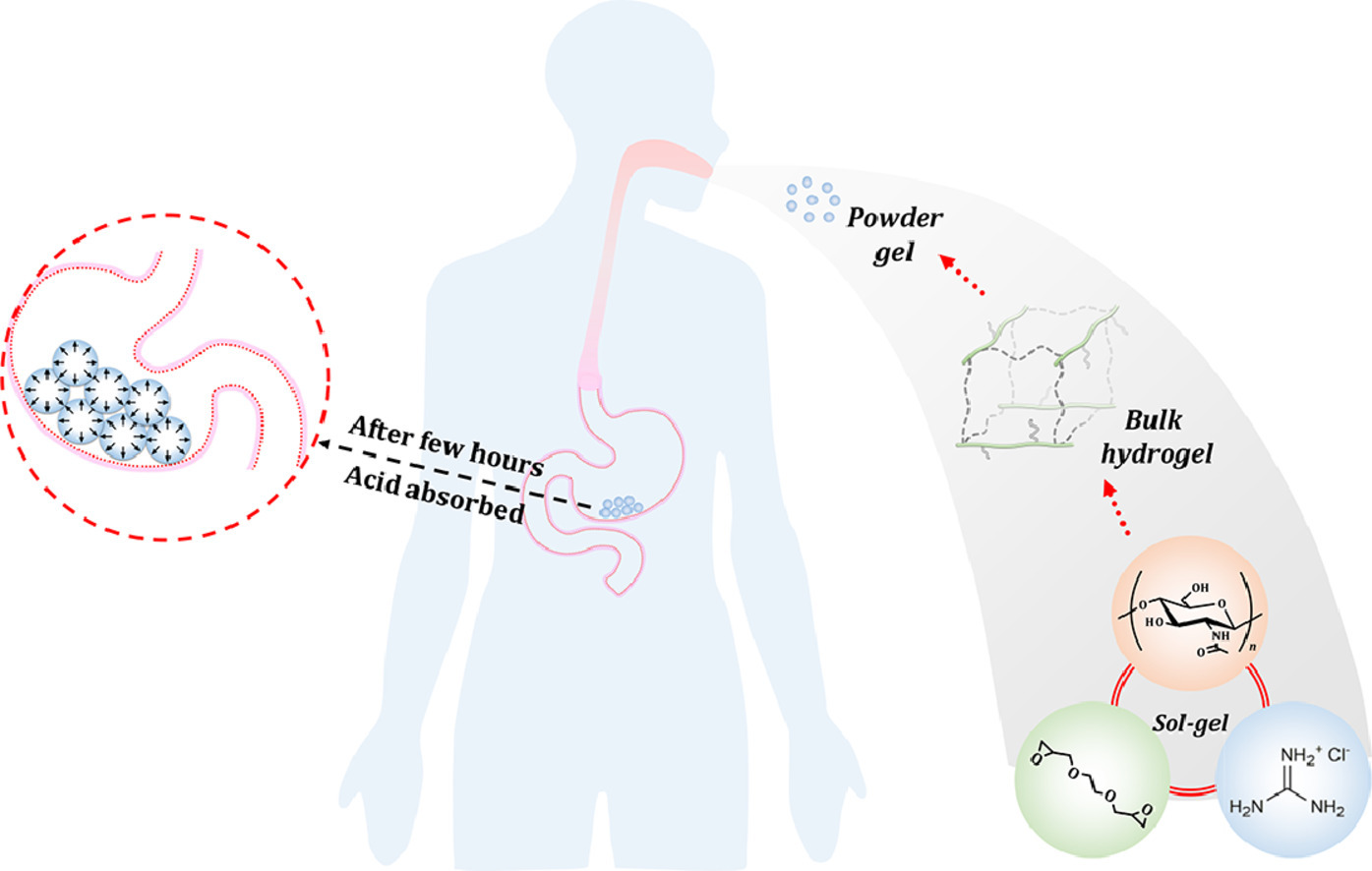
The hydrogel had similar modulus to daily foods which was able to discharge by normal excretion.
The hydrogel had similar modulus to daily foods which was able to discharge by normal excretion

Building on their supercapacitor research, Jiang Hanqing’s team has developed an edible pH capsule capable of monitoring stomach acid levels in real-time. Once swallowed, this capsule enters the stomach and transmits data wirelessly before being naturally digested. This technology is expected to revolutionize the diagnosis and treatment of gastrointestinal disorders.

Edible Hydrogel Electronics: Long-Term Health Tracking

Schematic-illustration-of-the-design-of-stretchable-hydrogel-electronics-and-devices
Schematic illustration of the design of stretchable hydrogel electronics and devices

Researchers at MIT have created edible hydrogel electronic devices that can monitor core body signs for up to 30 days. This breakthrough, published in Nature Communications, brings us closer to realizing “edible jelly electronics” – a concept that could transform long-term health monitoring and personalized medicine.

Functional electronic components such as conductors, microchips, transducers, resistors, and capacitors are embedded inside or attached on the surface of the hydrogel.

Drug-delivery channels and reservoirs are patterned in the hydrogel matrix, and they can diffuse drugs out of the hydrogel to give programmable and sustained release of drugs.

As research continues, we can expect to see more applications of edible electronics in fields such as food safety, environmental monitoring, and even space exploration. With this emerging field, the future of edible electronics looks exciting if not exactly delicious.

Related article: Chang’e-7 China’s 2026 Moon Mission to Find Water Ice

Chang’e-7 China’s 2026 Moon Mission to Find Water Ice – TropicalHainan.com

China’s Chang’e-7 mission, set for 2026, aims to revolutionize lunar exploration with its innovative flying robot technology designed to search for water ice at the Moon’s south pole.
www.tropicalhainan.com

- Follow Us on WeChat -

spot_img

Related articles:

Explainer: Apostille vs Consular Authentication for Hainan Work Permit Documents

Apostille has replaced Chinese consular authentication for relevant documents from Convention countries, but notarisation, translation and validity rules can still apply ...

Lost Your Passport in China: The Emergency Document You Should Know About

Lost your passport in China? If your embassy, consulate, or relevant home-country institution in China cannot reissue a travel document, China has an Exit-Entry Permit for Foreigners …

Hainan’s Free Trade Port Is Moving From Incentives to Usability

Hainan’s new services plan points to a shift in how foreign operators may use the FTP: banking, permits, policy access and talent recognition …

How Hainan’s 30% Rule Is Beginning to Shape Business Decisions

How Hainan’s 30% rule is beginning to shape business decisions for companies using the FTP’s customs route into mainland China ...

Get weekly email updates for new articles published!

Follow Us on WeChat

spot_img

Latest Articles ...

Typhoon Season 2026 in Hainan: What residents need to know about storm forecasts, El Niño impacts, ferry suspensions, airport disruptions, warning levels, and how to prepare for typhoons from July to October ...
How international graduates can stay in China after graduation through Hainan’s startup residence route, and why it does not allow paid work ...
What spouses on S visas in China can and cannot legally do, including work, tutoring, remote work, volunteering, tax, and permit risks ...
A complete guide, how to apply online for a provisional driving permit in Hainan as a foreign national, including the application steps, required documents, and the online learning module you must complete ...
spot_img

China’s Green Card: How Rare Is It, and What It Takes to Get One

Between 2004 and 2017, China issued just over 10,000 permanent residency permits to foreign nationals. This guide explains the four eligibility routes, the real criteria, and your honest odds of qualifying …

Why Your Passport Doesn’t Work: A Foreigner’s Guide to China’s ID-Only Systems

Your passport is legally valid for trains, hotels, SIM cards and payment accounts in China. The problem isn't the rules, it's the systems built on top of them …

China’s 2026 Work Permit Salary Rules: Who Actually Needs to Worry?

China’s work permit salary thresholds have raised concerns among foreign professionals. This explainer clarifies the 6× and 4× rules, why the figures appear high, and who is actually affected ...

Change Jobs in China Without Losing Your Legal Status

A practical guide to changing employers in China without losing your work permit or residence status, with timelines, documents, and common risks explained ...
spot_img

Looking for an international pre-school in Haikou?

Flora's International Preschool has three preschools in the Haikou area. Our schools follow a European curriculum

Continue Reading ...

Explainer: Apostille vs Consular Authentication for Hainan Work Permit Documents

Apostille has replaced Chinese consular authentication for relevant documents from Convention countries, but notarisation, translation and validity rules can still apply ...

Lost Your Passport in China: The Emergency Document You Should Know About

Lost your passport in China? If your embassy, consulate, or relevant home-country institution in China cannot reissue a travel document, China has an Exit-Entry Permit for Foreigners …

Hainan’s Free Trade Port Is Moving From Incentives to Usability

Hainan’s new services plan points to a shift in how foreign operators may use the FTP: banking, permits, policy access and talent recognition …

Get weekly email updates for new articles published!

Never miss another important notice or event. Be informed of what you need to know, when you need to know it.