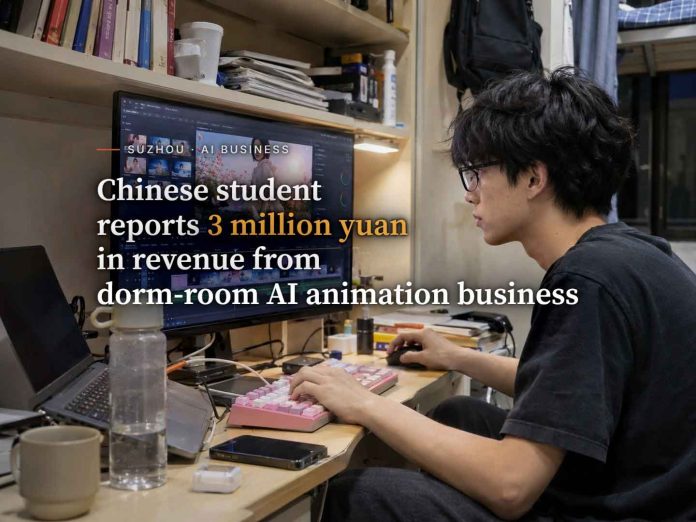
Xiao Tianle, a third-year engineering student at Soochow University, says his online team has taken in more than 3 million yuan in revenue in under a year making AI animated dramas that have drawn 2 billion views, and corporate records confirm he registered a one-person company in August 2026.
Xiao Tianle built his business from a dormitory desk at Soochow University. The third-year engineering student says his team has taken in more than 3 million yuan (about US$450,000) in revenue in under a year. The product is animated short dramas made with artificial intelligence.
AI-generated animated short dramas (AI漫剧, manju) are short, serialised programmes made with AI-assisted scripts, pictures, animation and voices, then released on China’s short-video platforms. Xiao started in November 2025, when these tools were taking off in China.
The team, more than ten people, all working online, has since produced hundreds of dramas. Xiao told the Yangtze Evening Post about the business in an interview published on 7 November 2026. Together they have drawn more than 2 billion plays, he said. One hit alone was played 1.5 billion times, more views than China has people, and earned over 2 million yuan.
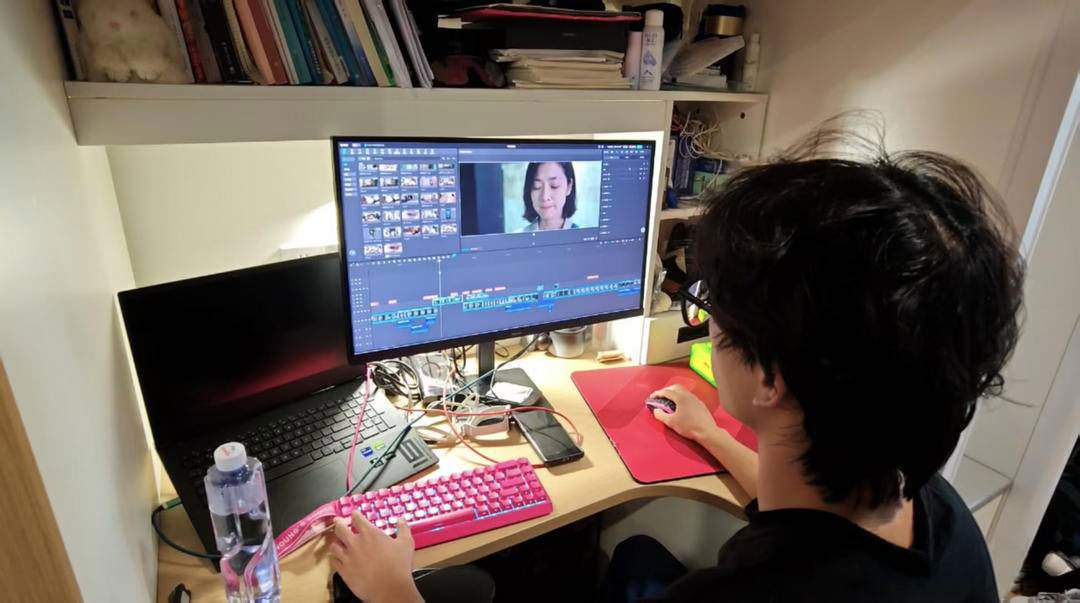
The first success was smaller. Xiao and four classmates made three dramas in seven days, he recalled; one took off and earned more than 200,000 yuan (about US$30,000).
The work is less magical than the tools make it look, he says. Scripts drafted by AI often come out flat, with weak conflict, so the team rewrites them and breaks them into storyboards. Generated frames arrive with warped limbs and strange expressions; every frame and every shot transition is then talked through and adjusted repeatedly online.
“What decides whether a drama keeps its audience is never how strong the model is,” he told the newspaper. “It is the core of the story, the rhythm of the narration and the language of the camera, and all of these need human aesthetic judgement. AI is a handy tool, but what is truly scarce will always be people who can tell stories and are willing to polish the details.”
The business grew in stages. At first the team took contract work. The team’s output landed collaborations with companies including Tencent, China Mobile and Mango TV. Contract work came with thin margins and no creative control, he said. In April 2026 Xiao began experimenting with self-distribution, original dramas of his own, alongside the contract work.
In late August 2026 he registered a one-person company, Suzhou Zaoying Shizhong Artificial Intelligence Technology (苏州造影时钟人工智能科技有限公司), in the city’s Wujiang district. Corporate registration records list the company as established on 31 August 2026 with registered capital of 1 million yuan and Xiao as its legal representative.
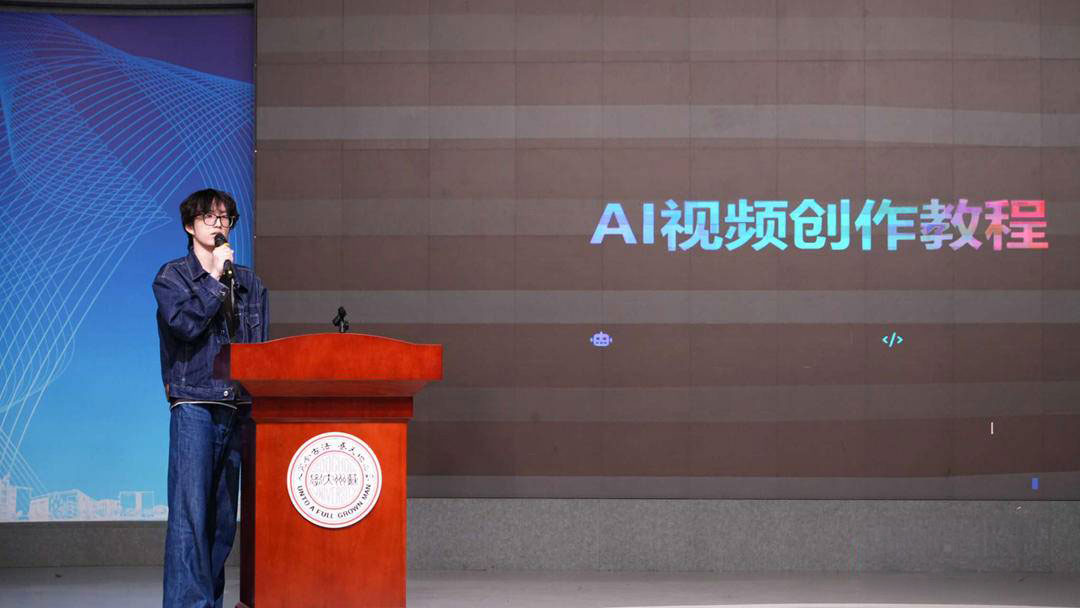
Xiao told his story at a campus event for one-person company founders on 20 October 2026. The story reached a national audience after the Yangtze Evening Post feature. By the evening of 8 November 2026, a Weibo hashtag about his 3-million-yuan business had reached the platform’s hot-search top ten.
The figures are Xiao’s own and have not been independently audited. He is also open about the obstacles. Platform review rules are changeable and strict, careful work can sink unseen in a flood of similar dramas, and the computing power behind every frame has to be paid for. The newspaper itself notes that a breakout hit involves luck, and that steady judgement is what keeps a team going.
The story shows how far AI content tools have moved into everyday commerce. A student with a laptop can operate like a small animation studio, and must compete in a market he describes as increasingly crowded.
Xiao’s next deadline is his graduation. He says he will settle in Suzhou, study directing and screenwriting and hire more staff. His stated aim is to make a film good enough for cinema release. That means winning the “dragon seal” (龙标), the on-screen certification mark of the public-screening permit every film shown in Chinese cinemas must carry. He wants to leave a story on the big screen, not just in the short-video feed.
Related article: Starting a one-person AI firm in Hainan? Here’s what the support really offers