Li Minority culture on Hainan Island, an in-depth guide, part 1 introduction

Li Minority people’s culture Hainan Island China, introduction

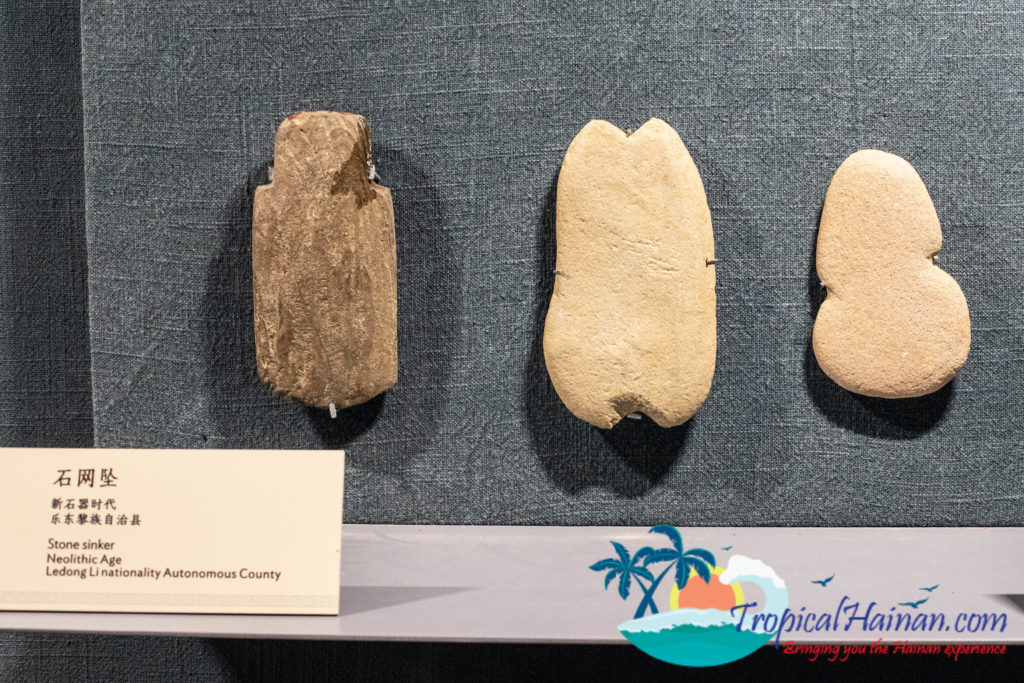
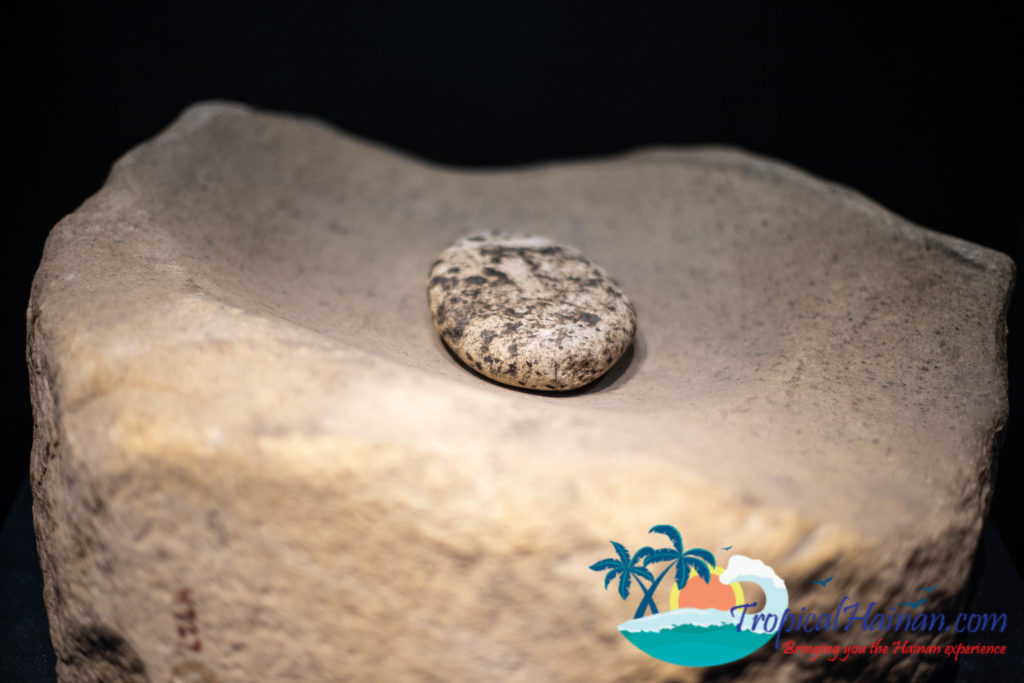
It’s not known when exactly the Li Minority people arrived in Hainan Island, but human activity here can be traced back 20,000 years. In June 2006 archaeologists unearthed three Palaeolithic tools (early phase of the Stone Age), next to the Xinchongdong cultural relics site in Changjiang Li Autonomous County proving that human activity on the island was at least that old.

An introduction to Li Minority culture on Hainan Island China (3)
Stone Age tools on display at the Hainan Minority Museum, Wuzhishan
An introduction to Li Minority culture on Hainan Island China (3)
Stone Age tools on display at the Hainan Minority Museum, Wuzhishan
An introduction to Li Minority culture on Hainan Island China (3)
Stone Age tools on display at the Hainan Minority Museum, Wuzhishan

It is widely held that the Li Minority were the earliest settlers on Hainan Island.

Historical records show that they were living and thriving on the island more than 7,000 years ago. In the pre Qin period (221 BC to 206 BCE), they were known as “Diaoti”, “Dan’er”, and “Chuanxiong” people. In the Han Dynasty (206 BCE–220 CE), they were called “Li” and “Man”. In the Sui Dynasty (581-618 CE) they were called “Li” and “Liao” and in the Song Dynasty (960-1279 CE) they were simply called “Li” the name which remains used to present day.

An introduction to Li Minority culture on Hainan Island China (1)
Li Minority villagers working together on house building in Ledong County

It’s believed that the Li Nationality originated from a branch of the Baiyue ethnic group. The Baiyue, (Hundred Yue) were various indigenous peoples who inhabited the region stretching along the coastal area from Shandong to southeast China, and as far west as the Sichuan Basin.

Li minority are divided into different groups

Due to differences in language and customs The Li minority are divided into Ha, Qi, Run, Sai and Meifu. All Li people refer to themselves as “Sai”.

In ancient times they resided mainly in the areas of Sanya city, Wuzhishan city, Dongfang city, Ledong county, Changjiang County, Baisha County, Qiongzhong County, Baoting County, and Lingshui County. A smaller number were also scattered throughout Danzhou, Wanning, Qionghai and Tunchang.

An introduction to Li Minority culture on Hainan Island China (1)
A Li woman from the Ha branch in Ledong County

The Ha branch has the largest population, about 700,000, amongst the five branches of the Li people. They are also the most widely spread out covering Ledong Li autonomous county, Dongfang city, Lingshui Li autonomous county, Sanya city, Chiangjiang Li autonomous county, Baisha Li autonomous county, and Danzhou city.

The branch has been further divided into 12 sub-branches, Haying, Baohuai, Luohuo, Zhigong, Zhiqiang, Baoyou, Baoman, Baohuan, Nixia, Hahen, Hari, and Fouxian according to regions, language, tattoos and costumes.

The Qi branch is second to the Ha branch in population. The Sai branch inhabit the border area of Baoting Li-Miao Autonomous County and has the smallest population amongst the five branches.

The Li Minority language

The Li language is considered to be a branch of Zhuang Dong language, itself a branch of the Sino-Tibetan language family.

Relate articles: Li Minority culture on Hainan Island, an in-depth guide, part 2 Li villages

Li Minority culture on Hainan island, an in-dept guide, part 2 Li villages

- Follow Us on WeChat -

spot_img

Related articles:

Hainan’s 2026 Investment Opportunity List Shows What the Free Trade Port Wants Built Next

Hainan’s 2026 Investment Opportunity List shows what the Free Trade Port wants built next, from ports and digital trade to medical platforms and future industries …

Explainer: Apostille vs Consular Authentication for Hainan Work Permit Documents

Apostille has replaced Chinese consular authentication for relevant documents from Convention countries, but notarisation, translation and validity rules can still apply ...

Lost Your Passport in China: The Emergency Document You Should Know About

Lost your passport in China? If your embassy, consulate, or relevant home-country institution in China cannot reissue a travel document, China has an Exit-Entry Permit for Foreigners …

Hainan’s Free Trade Port Is Moving From Incentives to Usability

Hainan’s new services plan points to a shift in how foreign operators may use the FTP: banking, permits, policy access and talent recognition …

Get weekly email updates for new articles published!

Follow Us on WeChat

spot_img

Latest Articles ...

How Hainan’s 30% rule is beginning to shape business decisions for companies using the FTP’s customs route into mainland China ...
Typhoon Season 2026 in Hainan: What residents need to know about storm forecasts, El Niño impacts, ferry suspensions, airport disruptions, warning levels, and how to prepare for typhoons from July to October ...
How international graduates can stay in China after graduation through Hainan’s startup residence route, and why it does not allow paid work ...
What spouses on S visas in China can and cannot legally do, including work, tutoring, remote work, volunteering, tax, and permit risks ...
spot_img

Why Foreigners Lose Access to Their Chinese Bank Accounts

Frozen accounts, blocked cards, restricted access. Most expats in China don't think about their bank account until they can't access it …

China’s Green Card: How Rare Is It, and What It Takes to Get One

Between 2004 and 2017, China issued just over 10,000 permanent residency permits to foreign nationals. This guide explains the four eligibility routes, the real criteria, and your honest odds of qualifying …

Why Your Passport Doesn’t Work: A Foreigner’s Guide to China’s ID-Only Systems

Your passport is legally valid for trains, hotels, SIM cards and payment accounts in China. The problem isn't the rules, it's the systems built on top of them …

China’s 2026 Work Permit Salary Rules: Who Actually Needs to Worry?

China’s work permit salary thresholds have raised concerns among foreign professionals. This explainer clarifies the 6× and 4× rules, why the figures appear high, and who is actually affected ...
spot_img

Looking for an international pre-school in Haikou?

Flora's International Preschool has three preschools in the Haikou area. Our schools follow a European curriculum

Continue Reading ...

Hainan’s 2026 Investment Opportunity List Shows What the Free Trade Port Wants Built Next

Hainan’s 2026 Investment Opportunity List shows what the Free Trade Port wants built next, from ports and digital trade to medical platforms and future industries …

Explainer: Apostille vs Consular Authentication for Hainan Work Permit Documents

Apostille has replaced Chinese consular authentication for relevant documents from Convention countries, but notarisation, translation and validity rules can still apply ...

Lost Your Passport in China: The Emergency Document You Should Know About

Lost your passport in China? If your embassy, consulate, or relevant home-country institution in China cannot reissue a travel document, China has an Exit-Entry Permit for Foreigners …

Get weekly email updates for new articles published!

Never miss another important notice or event. Be informed of what you need to know, when you need to know it.