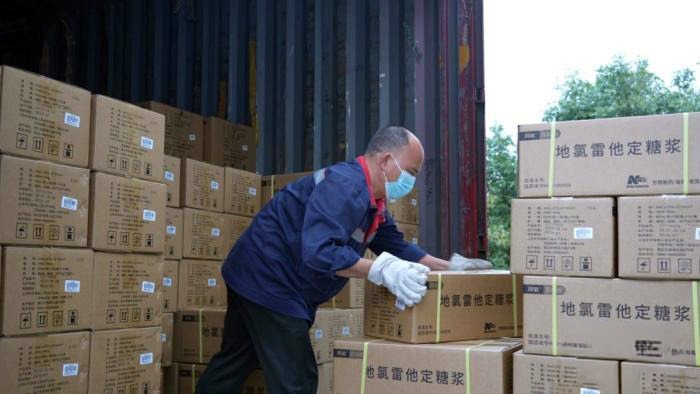
A lorry carrying 539,500 yuan of medicines left the Wante Pharmaceutical factory in Haikou on 3 November. It was bound for a distributor’s warehouse elsewhere on the island. It was the first on-island sale to use the newly extended processing-value-added import-duty exemption.
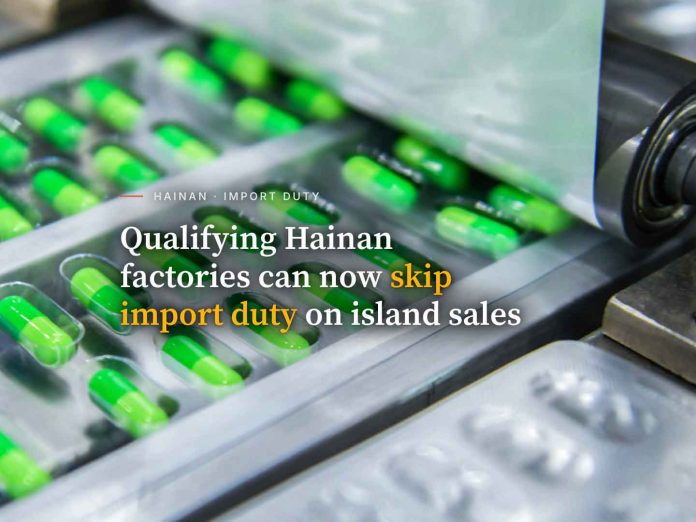
One day earlier, three provincial departments, finance, development and reform, and commerce, issued a joint notice extending the import-duty exemption to qualifying sales within the island. Goods made by qualifying Hainan manufacturers with imported materials and at least 30 per cent local value added can now be sold within the island free of import duty. These sales follow the rules for goods shipped to mainland China. The notice took effect on publication. Import VAT, and consumption tax where it applies, are still due.
The earlier rules left a gap. The whole island became a special customs zone on 18 December 2025. Since then, goods moving to the mainland have crossed a customs “second line”. Import duty may fall due there on goods containing imported materials, unless it was paid earlier or an exemption applies.
Under national rules, manufacturers working in industries on Hainan’s encouraged-industry catalogue escape that duty if their value added on the island reaches 30 per cent. That share is measured against the cost of their imported and domestically bought materials. Until 2 November, that exemption covered only mainland-bound sales, not sales within Hainan. Separate rules already exempted some transfers of zero-tariff goods between eligible businesses on the island.
Wante Pharmaceutical (Hainan), the company behind that first shipment, is Hong Kong-invested. The provincial and Haikou governments brought it to Hainan in 2004, and its main products include loratadine-based allergy medicines. Its factory sits in the Haikou National High-Tech Industrial Development Zone.
One imported ingredient carries a 6 per cent tariff. He Xia, the company’s supply chain manager, told China News Service that processed goods previously qualified for the exemption only when sold to the mainland. Goods sold within Hainan still incurred duty at customs declaration.
Under the new rule, she said, the company declares less often, ships faster and can give up some of the separate warehousing it kept off the island. With guidance from Haikou’s industry and information technology bureau, it completed the first deal one day after the notice was published. The duty waived on that shipment: 2,356 yuan.
On Wante’s first shipment, the 2,356 yuan saving was about 0.44 per cent of the 539,500 yuan sales value. Savings for other manufacturers will depend on their imported materials and tariff rates. But a qualifying factory can now sell qualifying goods to the island’s own shops, clinics and factories with no import duty to pay.
Between the closure in December 2025 and the end of September 2026, 81 companies used the policy to sell 910 million yuan of goods to the mainland. That is 22 more companies than before the closure, spread across 14 cities and counties, according to Zhang Yueqiang, deputy director of Hainan’s commerce department. All of them can now use the exemption for local sales too.
Not every product qualifies. The manufacturer must work in an industry on the encouraged-industry catalogue and be registered in the port as an independent legal entity. Its first application is checked by the city or county government, approved by the provincial commerce department and assessed by Haikou Customs before the company is placed on file.
The 30 per cent is measured by a fixed formula. Goods made with materials subject to import quotas, anti-dumping or other trade-remedy duties, or retaliatory tariffs are excluded, unless every extra tariff on them has been waived. Minor operations such as simple mixing, relabelling or repackaging do not qualify. Exempted sales need a confirmation number from the customs system, under interim rules issued by the General Administration of Customs in July 2025.
Foreign-invested factories follow the same route: for them, eligibility runs through the national Catalogue of Encouraged Industries for Foreign Investment (2025 edition).
The notice untied a second knot, this one for warehouses. Bonded goods that have sat unchanged in Hainan’s special customs zones, bonded logistics centres or bonded warehouses can now move elsewhere on the island under the applicable first-line import rules. Quarantine, inspection and licence checks already done are not repeated.
Some companies are already recalculating. Hainan Zhenge Food turns frozen coconut cream imported from Indonesia into coconut powder. It can now supply downstream buyers on the island and expects shipments to rise by about 30 per cent, its general manager, Huang Wenwei, told China News Service. Wante expects its duty-free sales to the mainland to reach 20 million yuan by mid-to-late December, with nearly 100,000 yuan of duty waived, He said.
Whether the new rule matters more widely will depend on how many companies already using the exemption find customers within Hainan.
Related article: Hainan After Customs Closure: Which Sectors Have Real Commercial Traction?