
The story you think you know
You almost certainly already have a version of this story in your head. For most people it’s Gene Wilder in 1971, warm, slightly strange, the songs lodged permanently somewhere in childhood memory.
For others it’s the 2005 Tim Burton film, darker and more unsettling. Either way, the assumption tends to be the same: this is a children’s story. A sweet one, perhaps a clever one, but fundamentally something for kids.
That assumption is worth examining before you decide whether or not to buy a ticket for the Broadway production opening in Haikou this Friday.
Roald Dahl published the novel in 1964. He was not, by any measure, a writer who made things only for children. His adult fiction is dark and often disturbing. His children’s books, and he knew this perfectly well, were written on two levels simultaneously. The surface story is for the child in the room. The underneath is for the adult sitting next to them. Charlie and the Chocolate Factory is perhaps the purest example of this double construction he ever produced.
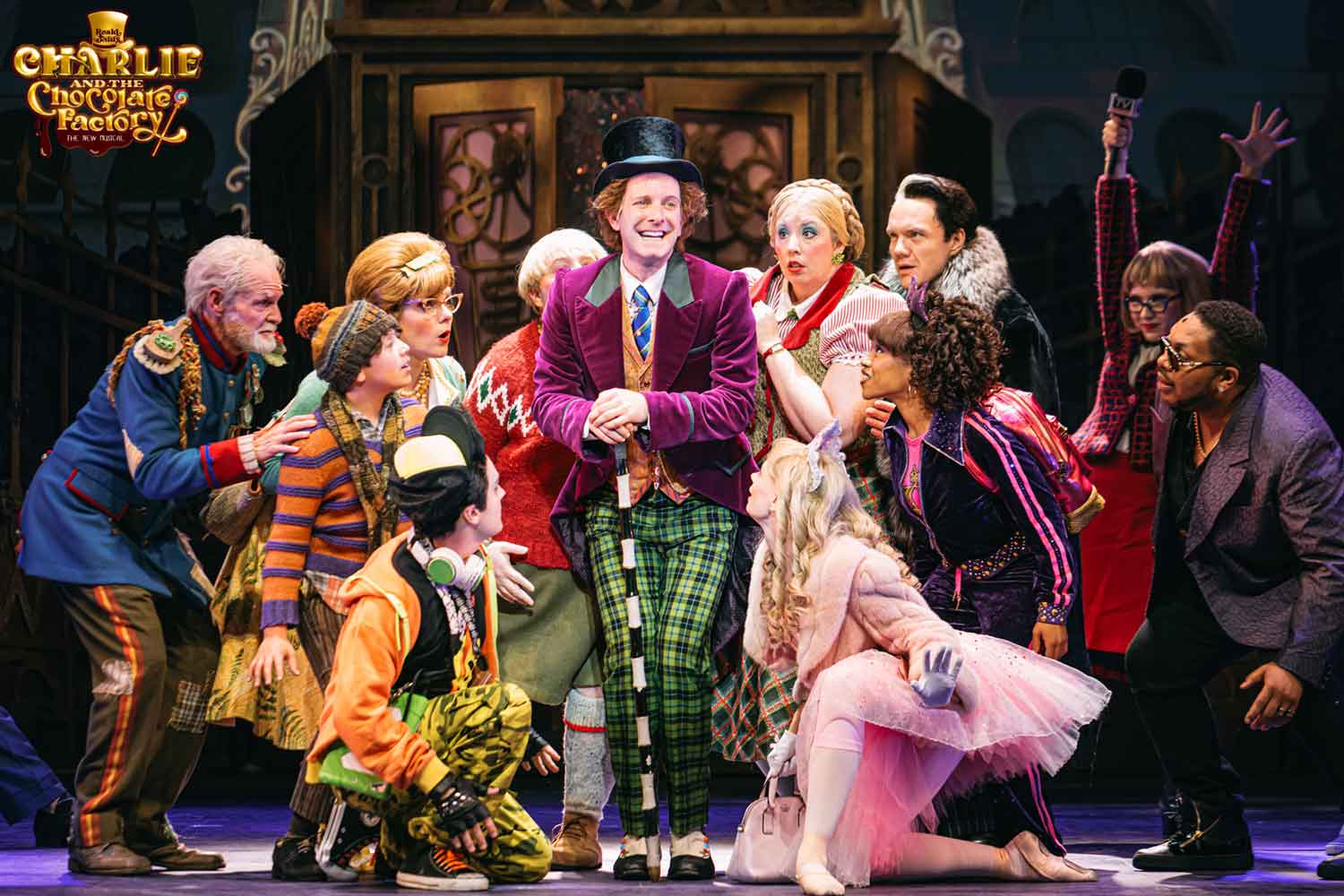
The Broadway musical, which arrives at the Hainan Provincial Song and Dance Theatre for eight performances only, honours both levels. And several of its most powerful moments are ones that children will register without fully understanding, while the adults in the room understand completely.
What the stage version does that neither film ever could
Both film versions of this story are, by necessity, recorded and fixed. What you see on screen is what was captured on a particular day, in a particular way, and it will be identical every time you watch it.
A live theatrical production is none of those things.
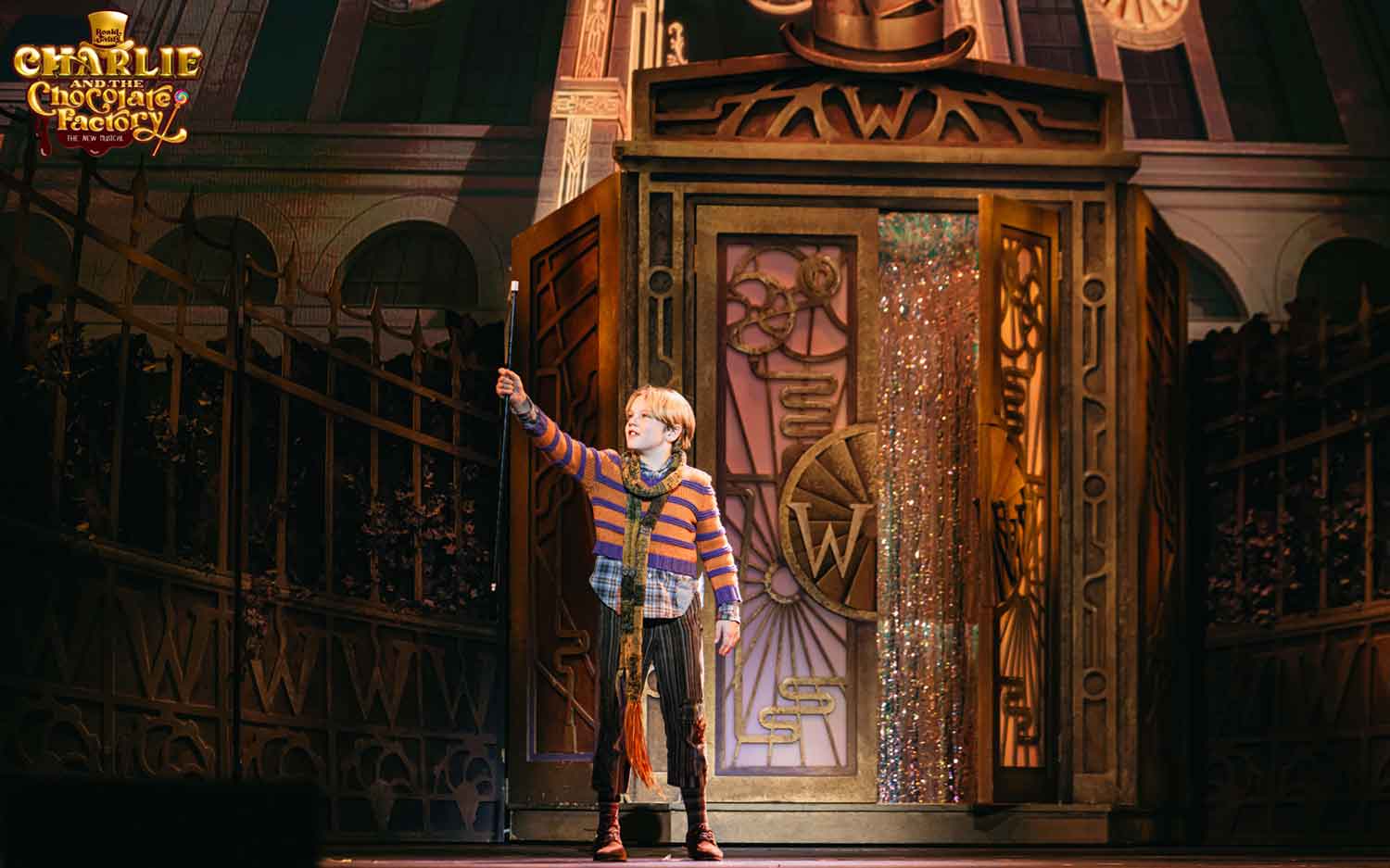
The Broadway musical is performed with a live orchestra, not a recorded soundtrack, not backing tracks, but a full orchestra playing in real time. When the music swells as Wonka’s factory gates open, it is happening in the room with you. The timing shifts fractionally every night. The emotional temperature of each performance is determined by the people on stage and the people in the audience together.
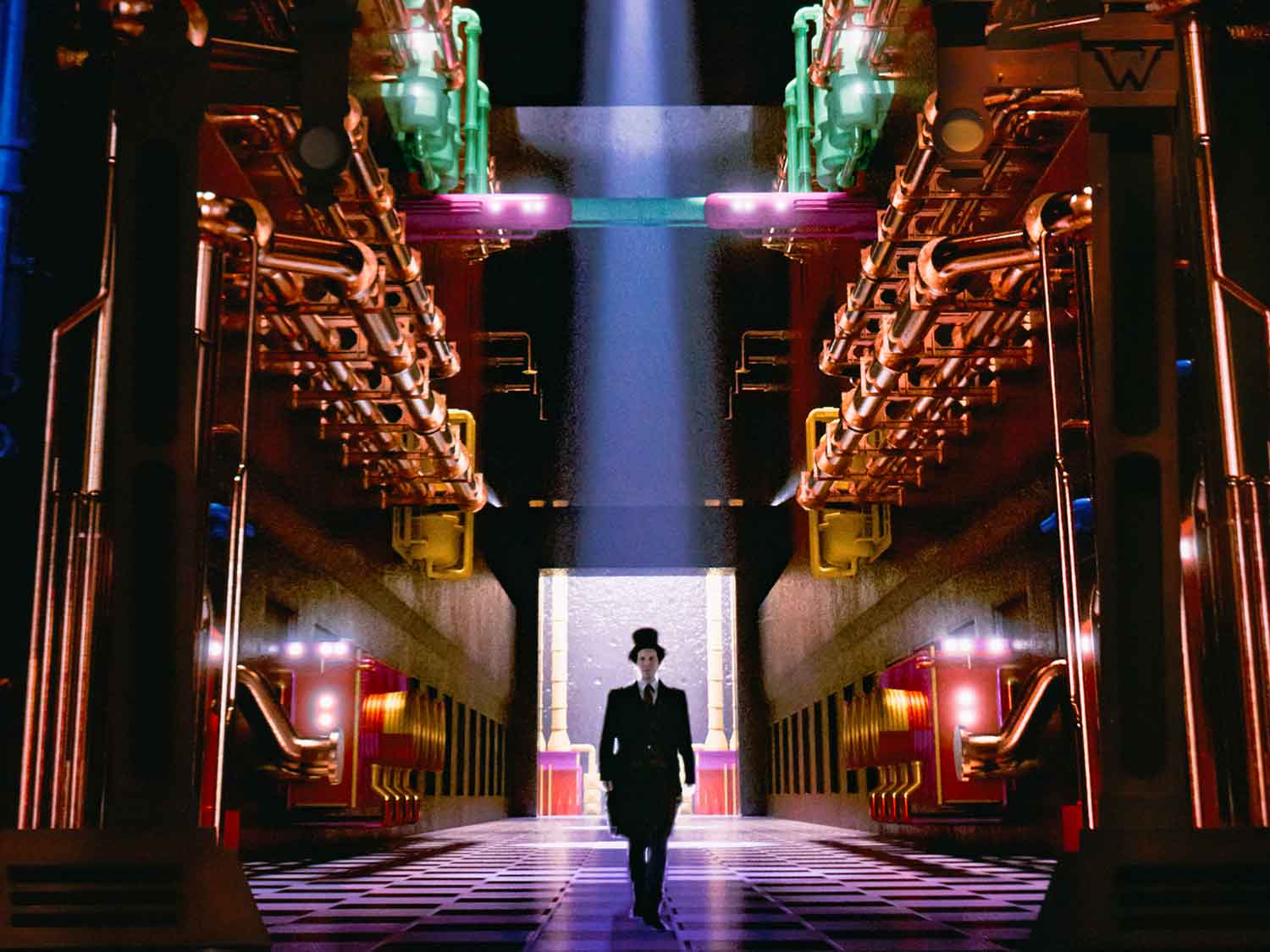
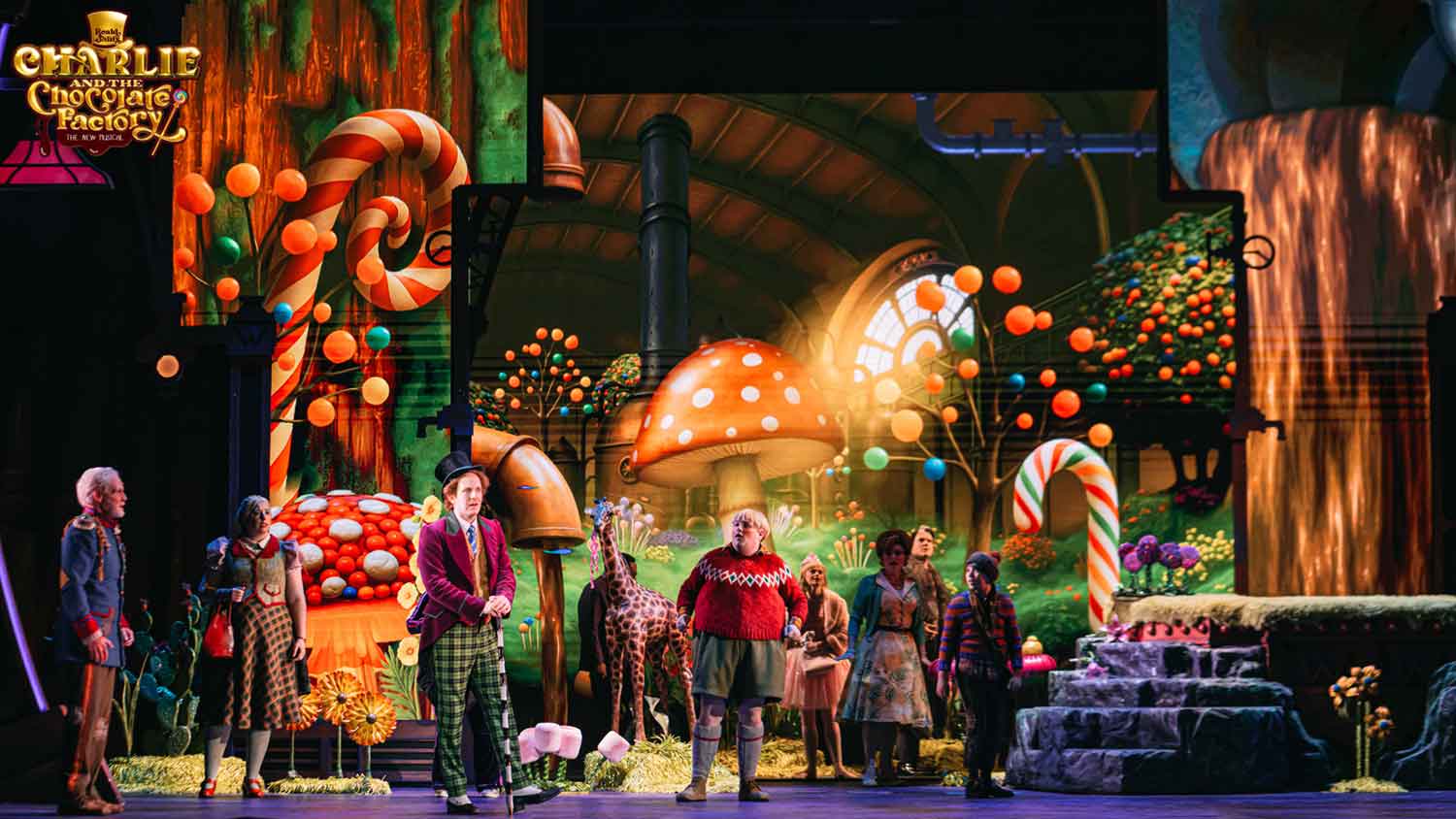
The set physically fills the stage. The chocolate factory, copper pipe machinery, towering industrial infrastructure, the vast candy room with its mushrooms and floating balloons is built in front of you.
The tunnel sequence uses immersive projection that surrounds the entire theatre space. The Oompa-Loompas are a full company of dancers performing choreography created by the team behind the original Broadway production.
None of this can be replicated on a screen. The scale, the liveness, the sense of being inside a world rather than watching one, these are things that only exist in the room, on the night.
They are also, not coincidentally, the things that tend to affect adults most.
The moments that hit differently when you’re an adult
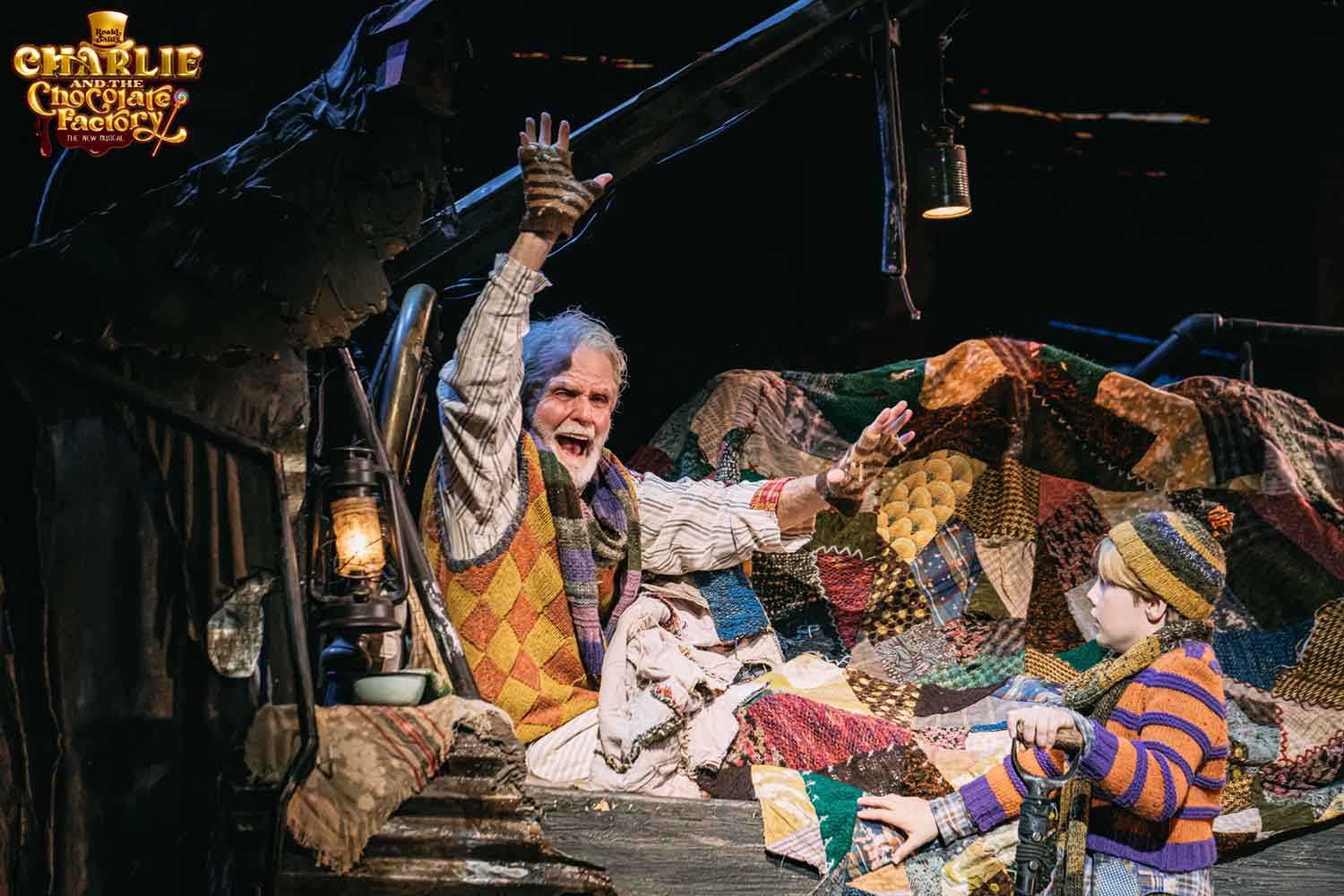
There is a scene early in the show where Charlie’s family sit together in their cramped, cold home. Grandparents share a single bed. His mother moves around the edges of the room, holding things together with almost no resources at all. The family is poor in a way that is specific and unsentimental, not picturesque poverty, but the quiet, exhausting kind.
Children watching this scene see Charlie’s circumstances. Adults watching it see something else: a family choosing warmth and dignity over bitterness, in conditions that would break most people.
Grandpa Joe’s relationship with Charlie, the old man who has not left his bed in years, suddenly finding a reason to get up, reads as a gentle adventure story to a child. To anyone who has watched a parent or grandparent diminish, it reads as something considerably more complicated and more true.
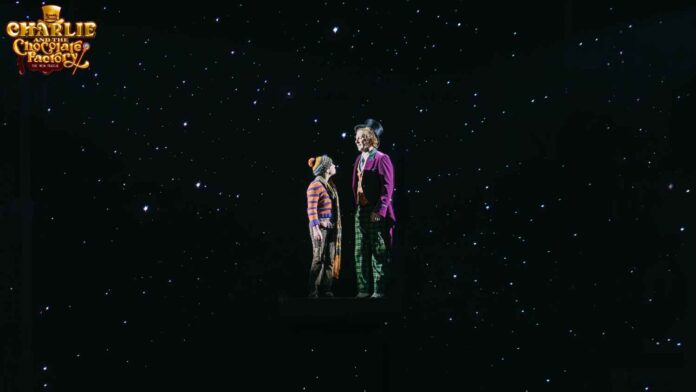
And then there is the ending. Without giving it away: the final image of this production is Wonka and Charlie alone together on a tiny lit platform, suspended in a vast starfield. Two figures, infinite black, and the weight of something being passed from one generation to the next. It is not a children’s moment. It is a human one. Children will enjoy it.
Adults may find it does something unexpected to them.
This is what Roald Dahl understood, and what the best productions of his work preserve: the story works on the surface for the young, and underneath for everyone else.
One week in Haikou. Eight shows. That’s it.
Charlie and the Chocolate Factory runs at the Hainan Provincial Song and Dance Theatre from Friday 20 March to Thursday 26 March, eight performances only, before the production moves on to Beijing.
This is a full-scale Broadway touring production. The same show that sold out Shanghai and drew more than 40,000 audiences across China has not been scaled down for Haikou. The set, the cast, the live orchestra, the production values, all of it arrives intact.
Tickets run from 280 RMB to 980 RMB for most performances, with a 100 RMB tier available on Wednesday 25 and Thursday 26 March. Family packages are available for groups of three or five at discounted rates on the top tiers.
Full details and booking via Damai (大麦网) — search 查理与巧克力工厂海口, or scan the QR code below.

If you have been thinking of this as something to take the children to, it is. But it is also something worth going to yourself.
Related article: Broadway’s Charlie and the Chocolate Factory Opens in Haikou This Friday — Eight Shows Only