
Will the RCEP and Hainan’s zero tariff policy attract more international investment?

Just after midnight December 1st, the first batch of zero-tariff goods with a tariff exemption of 3.81 million yuan ($580,000) was imported into Hainan.

Download the zero tariff list here

The goods were meteorological radar transceivers declared by Hainan Airlines, meaning that the first zero-tariff list had officially taken effect in the Hainan Free Trade port.

The zero-tariff policy comes within a month of China signing the Regional Comprehensive Economic Partnership (RCEP) – the world’s biggest free trade bloc- with 10 ASEAN countries including Japan, South Korea, Australia and New Zealand.

According to Zhang Huawei, deputy Director of the Hainan Free Trade Port Office, the zero tariff policy is seen as strong motivation to attract more international investment.

It aims to attract more high-end manufacturing enterprises to invest and set-up factories in Hainan, so as to build up a modern industrial chain in the free trade port.

The Hainan Free Trade Port under RCEP

While China has 20 free trade zones, what makes Hainan different is that other free trade zones are only parts of a city or a province, but the whole of Hainan Island Province is designated entirely as a free trade port.

Hainan is over 40 times larger than Hong Kong, 30 times larger than Singapore, and 14 times the total area of all the other 20 free trade zones in China combined.

More space is seen as one of Hainan’s advantages in developing more diversified industries such as the petrochemical and service industries, digital economy and high-tech sectors.

A vital artery for trade:

As a vital artery of trade for many of the world’s largest economies it is frequently reported that $5.3 trillion worth of goods transits through the South China Sea annually.

Although this figure, it has been argued, is an overestimate, there’s no doubt that for many of the world’s largest economies, the South China Sea is an essential maritime crossroads for trade.
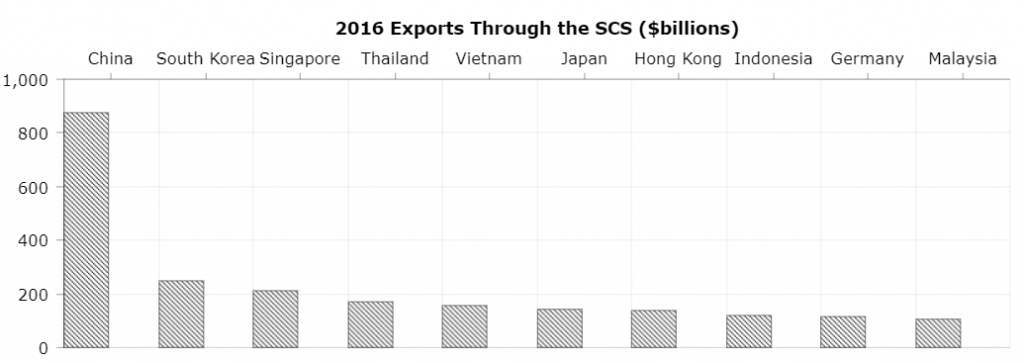
2016 Exports through the SCS in billions
Estimated 2016 Exports through the SCS in $billions
Source: International Monetary Fund, Department of Trade Statistics

Over 64 percent of China’s maritime trade transited the waterway in 2016, while nearly 42 percent of Japan’s maritime trade passed through the South China Sea in the same year.

With just over 14 percent of its maritime trade passing through the region, the U.S. is less reliant on the South China Sea.

The zero-tariff list includes 169 items, ranging from coconuts, coal, chemicals, to components for aircraft and ships and is seen as another step in Hainan’s trade liberalization six just months after China unveiled the development plan for the Free Trade port.

It’s not a bonded policy, but a direct zero-tariff policy

“It’s not a bonded policy, but a direct zero-tariff policy. It’s an exclusive policy in China at the moment,” Zhang Huawei, Deputy Director of Hainan Free Trade Port Office told CGTN. “Compared to the former, the latter is simpler. And it’s implemented not only within the customs regulation areas, but on the entire Hainan province, all companies are adapted to this policy.”
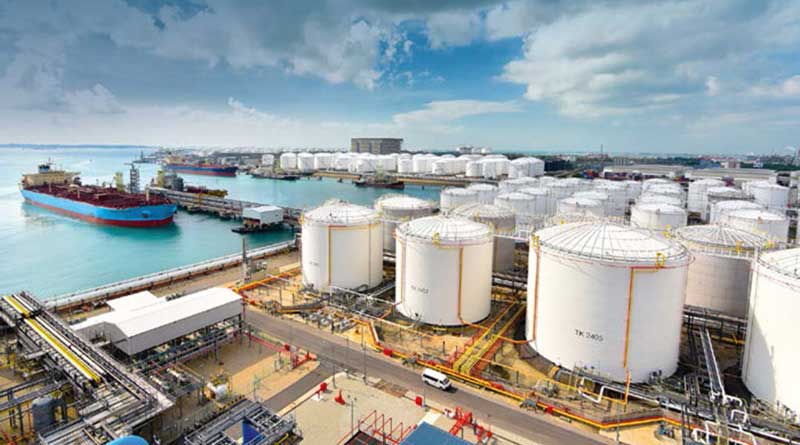
Xingguang-Chemical-Company
Yangpu is home to the largest refined oil depot in Asia.

Xingguang Chemical is a company located in Yangpu, a pilot area in the Free Trade Port.

Xingguang Chemical imports chemical materials and exports its products to Asian countries including Vietnam and Cambodia.

According to Kang Yunfu, Deputy General Manager, of Hainan Xingguan Chemical, “This list includes some of the raw materials we import and the products we export, so we estimate this policy will save us about 80 million Yuan a year.”

“We estimate our profit will reach 100 million yuan to 150 million per year”

Zhang Huawei, Deputy Director of Hainan Free Trade Port Office stated that “we are working on becoming a transportation hub for the RCEP.”

Related article: Haikou introduces new measures to accelerate the development of high-tech industries

Tropicalhainan.com launched it’s official mini programme and WeChat account, scan the Qr code to keep up to date with news, sports, entertainment, travel, opinion and more.

Mini programme ad for middle of articles

- Follow Us on WeChat -

spot_img

Related articles:

Hainan’s 2026 Investment Opportunity List Shows What the Free Trade Port Wants Built Next

Hainan’s 2026 Investment Opportunity List shows what the Free Trade Port wants built next, from ports and digital trade to medical platforms and future industries …

Explainer: Apostille vs Consular Authentication for Hainan Work Permit Documents

Apostille has replaced Chinese consular authentication for relevant documents from Convention countries, but notarisation, translation and validity rules can still apply ...

Lost Your Passport in China: The Emergency Document You Should Know About

Lost your passport in China? If your embassy, consulate, or relevant home-country institution in China cannot reissue a travel document, China has an Exit-Entry Permit for Foreigners …

Hainan’s Free Trade Port Is Moving From Incentives to Usability

Hainan’s new services plan points to a shift in how foreign operators may use the FTP: banking, permits, policy access and talent recognition …

Get weekly email updates for new articles published!

Follow Us on WeChat

spot_img

Latest Articles ...

How Hainan’s 30% rule is beginning to shape business decisions for companies using the FTP’s customs route into mainland China ...
Typhoon Season 2026 in Hainan: What residents need to know about storm forecasts, El Niño impacts, ferry suspensions, airport disruptions, warning levels, and how to prepare for typhoons from July to October ...
How international graduates can stay in China after graduation through Hainan’s startup residence route, and why it does not allow paid work ...
What spouses on S visas in China can and cannot legally do, including work, tutoring, remote work, volunteering, tax, and permit risks ...
spot_img

Why Foreigners Lose Access to Their Chinese Bank Accounts

Frozen accounts, blocked cards, restricted access. Most expats in China don't think about their bank account until they can't access it …

China’s Green Card: How Rare Is It, and What It Takes to Get One

Between 2004 and 2017, China issued just over 10,000 permanent residency permits to foreign nationals. This guide explains the four eligibility routes, the real criteria, and your honest odds of qualifying …

Why Your Passport Doesn’t Work: A Foreigner’s Guide to China’s ID-Only Systems

Your passport is legally valid for trains, hotels, SIM cards and payment accounts in China. The problem isn't the rules, it's the systems built on top of them …

China’s 2026 Work Permit Salary Rules: Who Actually Needs to Worry?

China’s work permit salary thresholds have raised concerns among foreign professionals. This explainer clarifies the 6× and 4× rules, why the figures appear high, and who is actually affected ...
spot_img

Looking for an international pre-school in Haikou?

Flora's International Preschool has three preschools in the Haikou area. Our schools follow a European curriculum

Continue Reading ...

Hainan’s 2026 Investment Opportunity List Shows What the Free Trade Port Wants Built Next

Hainan’s 2026 Investment Opportunity List shows what the Free Trade Port wants built next, from ports and digital trade to medical platforms and future industries …

Explainer: Apostille vs Consular Authentication for Hainan Work Permit Documents

Apostille has replaced Chinese consular authentication for relevant documents from Convention countries, but notarisation, translation and validity rules can still apply ...

Lost Your Passport in China: The Emergency Document You Should Know About

Lost your passport in China? If your embassy, consulate, or relevant home-country institution in China cannot reissue a travel document, China has an Exit-Entry Permit for Foreigners …

Get weekly email updates for new articles published!

Never miss another important notice or event. Be informed of what you need to know, when you need to know it.