

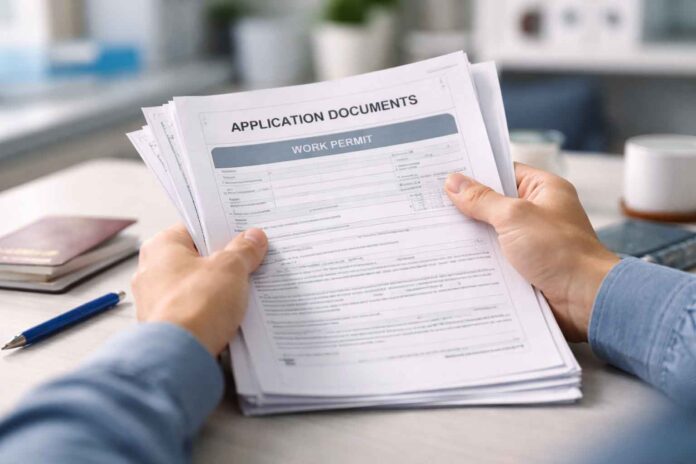
Following our previous article on why document checks for foreign teachers in China have become stricter, a natural question arises:
What exactly is causing applications to be delayed or rejected?
As previously discussed, most problems today are not caused by new laws, but by how documents are reviewed, verified, and cross-checked in an increasingly digital system.
Below is a breakdown of the documents most likely to cause issues, why they matter more now than before, and what teachers can do to reduce the risk of delays.
Why Applications Are Being Delayed More Often
For many teachers, the current experience feels different from a few years ago. Applications that once moved quickly now face repeated requests for clarification, resubmission, or additional paperwork. In most cases, this is not a rejection. Instead, it reflects three changes:
Greater digital cross-checking of records
Higher compliance pressure on schools
Less tolerance for incomplete or unclear documentation
What used to be handled informally is now processed through systems designed to flag inconsistencies.
1) Degree Certificates
Degree-related delays usually come from authentication, consistency, and format, not from the fact that someone has a degree.
Issues commonly arise when:
- The degree has not been authenticated correctly for use in China (apostille or consular legalization, depending on the issuing country). China’s document rules now distinguish between Apostille-Convention countries and non-member countries; the required steps differ.
- The uploaded degree scan/translation is incomplete or unclear.
- Work-permit materials are submitted through the official online system, and unclear or incomplete uploads can trigger requests for resubmission.
- Names or key identity details do not match exactly across passport, degree, and supporting documents.
- Even minor inconsistencies can require clarification or correction because the employer must upload and file materials under the applicant’s identity record in the system.
- The degree’s subject does not clearly align with the teaching position being filed. Education institutions are responsible for confirming a foreign teacher has the “corresponding qualifications” for serving as a foreign teacher (this is stated directly in the 2020 MoE draft).
Why this can cause delays now:
Applications are processed through centralized online submission and review, which tends to reduce “informal fixes” and increases requests for clean, consistent documentation.
Bottom line:
A degree is rarely the problem by itself; delays are more often caused by authentication steps, document quality, and internal consistency across the file.
2) Criminal Background Checks
Criminal background checks are one of the most common points where applications are delayed or returned for correction.
In practice, issues most often arise when:
- The background check does not meet the format required by the local authority processing the application
- The document was issued by an authority not recognised for overseas employment verification. (For example, some local authorities expect national-level criminal background checks issued by a country’s central police or justice authority and may not accept documents issued by local or municipal police departments.)
- The document has not been notarised or apostilled where required
- The wording or structure of the document differs from what the local system expects
- There are gaps in coverage for periods spent in other countries. (This typically occurs when an applicant has lived or worked in multiple countries, but the background check only covers their home country, leaving periods of residence abroad undocumented).
While China does not publish a single nationwide validity period for criminal background checks, many local authorities require them to be recent, and in practice, often request documents issued within a limited timeframe.
This is not a new legal requirement. What has changed is that background checks are now reviewed more systematically as part of the work-permit application process, leaving less room for informal acceptance of incomplete or outdated documents.
3) Employment History and Consistency
Employment history is another area that may attract closer review during the application process.
In practice, additional questions can arise when:
- There are unexplained gaps between periods of employment
- An applicant has held multiple short-term positions in a short time
- The job title or duties listed in previous roles do not clearly align with the current visa category
- A significant change in role or field is not accompanied by supporting documentation
This does not mean that such situations are prohibited. However, employers are required to ensure that the information submitted for a work permit accurately reflects the role being applied for and the applicant’s professional background.
As employer responsibility has increased, schools and institutions are more cautious about submitting applications that contain inconsistencies or require interpretation. What may previously have been accepted with minimal explanation may now prompt requests for clarification or additional supporting documents.
4) Health Checks
Health checks rarely result in outright rejection, but they are a common source of delay during the work-permit and residence-permit process.
In practice, delays most often occur when:
- Outdated or incorrect medical forms are used
- Required tests are missing or incomplete
- The medical examination is completed too early in the process, i.e. the health report expires before the application is finalised
In many cases, applicants are required to undergo more than one medical examination, depending on where the initial check was completed and the requirements of the local Entry-Exit Inspection and Quarantine authority.
Why Schools Are Now More Cautious
One of the biggest changes in recent years is who carries the risk.
Schools are now held more accountable for:
- Document accuracy
- Proper visa classification
- Compliance with hiring rules
- Record-keeping and reporting
As a result, many schools have become more conservative in hiring decisions. If an application looks complicated or uncertain, they are more likely to delay or decline rather than take a risk.
What Teachers Can Do to Reduce Risk
While no application can be guaranteed, there are several steps that significantly reduce problems:
- Ensure names match exactly across all documents, (probably the biggest source of all delay headaches)
- Apostille degrees and background checks early
- Use recent background checks
- Keep digital copies of all documents
- Avoid last-minute submissions
- Be cautious of “we’ll fix it later” assurances
Preparation now matters more than experience.
Red Flags to Be Aware of During the Hiring Process
It is not always possible for a teacher to determine whether a school is fully prepared to handle a work-permit application. However, certain situations consistently create higher risk for delays or complications.
The following are commonly associated with applications that later encounter problems.
⚠️ Red flags to watch for:
- Being asked to enter China on a tourist (L) visa for the purpose of starting work.
- While some processes involve status changes after arrival, being asked to work before permits are in place increases risk and uncertainty.
- Promises that visa or work permit issues can be “fixed later”.
- Legitimate applications normally follow a defined sequence. Vague assurances without written steps often indicate that the process is not clearly planned. Reluctance to explain the application process in writing. Employers who are familiar with the system are usually able to outline the required documents, timelines, and steps in advance.
- Downplaying document requirements. Statements such as “it won’t be checked” or “that’s not necessary anymore” can lead to problems later if the local authority does in fact require those documents.
- Pressure to start work before permits are issued. Even short periods of work before proper authorization can create complications for later residence or permit applications.
- Inconsistent or changing instructions. Frequent changes in requested documents or explanations may indicate uncertainty or inexperience about local procedures or internal approval processes.
None of these situations automatically mean that an employer is acting improperly. In many cases, they may simply reflect misunderstanding, inexperience, or differences in local interpretation.
However, these scenarios are commonly associated with:
- Longer processing times
- Repeated document requests
- Rejected or returned applications
- Increased personal risk for the teacher
Being aware of them allows teachers to ask clearer questions and make informed decisions before committing.
A Practical Rule of Thumb
If an employer cannot clearly explain the process, timeline, and required documents in writing, it is usually worth slowing down and asking for clarification before proceeding.
For qualified teachers with proper documentation, China remains open and workable. However, the margin for error is smaller than it used to be. In the past, informal handling could compensate for missing paperwork. Today, accuracy and preparation matter more than ever.
In the Next Article
In the next article, we’ll look beyond paperwork to something many foreign teachers rarely think about until it’s too late: pensions and long-term financial security.
We’ll explore:
- Why many foreign teachers aren’t building pension coverage while working abroad
- How overseas work can create long-term gaps in national pension systems
- What China does, and does not, provide in terms of pension contributions
- Why falling birth rates are putting pressure on pension systems worldwide
- What teachers can realistically do to protect themselves
Work permits feel urgent. Pensions don’t, until one day they are.
Understanding the long-term impact of working overseas is just as important as getting your documents right.
Sources and References
- Ministry of Education – Draft Measures for the Hiring and Management of Foreign Teachers (2020)
https://www.moe.gov.cn/jyb_xxgk/s5743/s5744/202007/t20200721_474014.html - China Law Translate – English Summary of the Draft Measures
https://www.chinalawtranslate.com/en/foreign-teacher-rules-draft/ - Foreigner’s Work Permit Application Guidance (Beijing Municipal Government)
https://english.beijing.gov.cn/mostrequested/workpermit/changingemployment/ - Ministry of Foreign Affairs – Apostille Convention Implementation Notice
https://english.www.gov.cn/services/visitchina/202408/13/content_WS66bb1869c6d0868f4e8e9e2a.html
Related article: Why Foreign Teachers in China Are Facing Stricter Document Checks in 2026