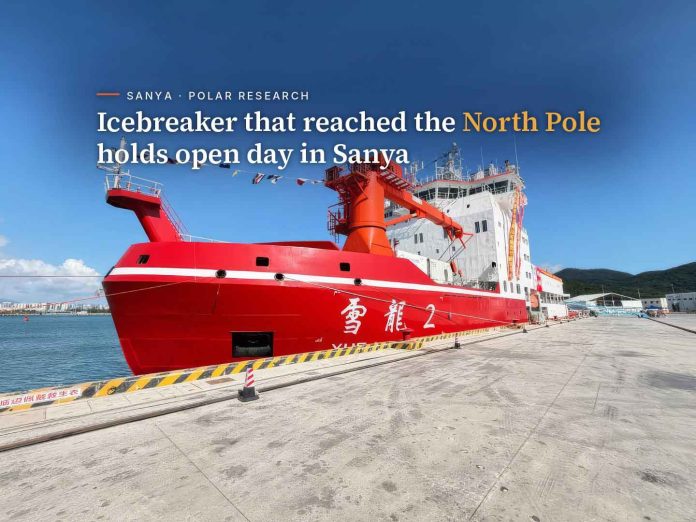
A ship that has sailed to the North Pole spent the 5th of November 2026 tied up at a wharf in Sanya, with students walking its decks.
Xuelong 2 (雪龙2, “Snow Dragon 2”) is China’s first home-built polar research icebreaker. It berthed at the research wharf of Nanshan Port to take on supplies and hold a public open day, Xinhua reported. Visitors toured the bridge, the laboratories and the helicopter deck.
What the ship can do
Xuelong 2 is 122.5 metres long and 22.32 metres wide. It can keep breaking ice 1.5 metres thick, topped with 0.2 metres of snow, at 2 to 3 knots (about 4 to 6 km/h). Its top speed is 18 knots (about 33 km/h) and its range is 20,000 nautical miles (about 37,000 km). It entered service in July 2019, according to a separate Nanhai Net photo report.
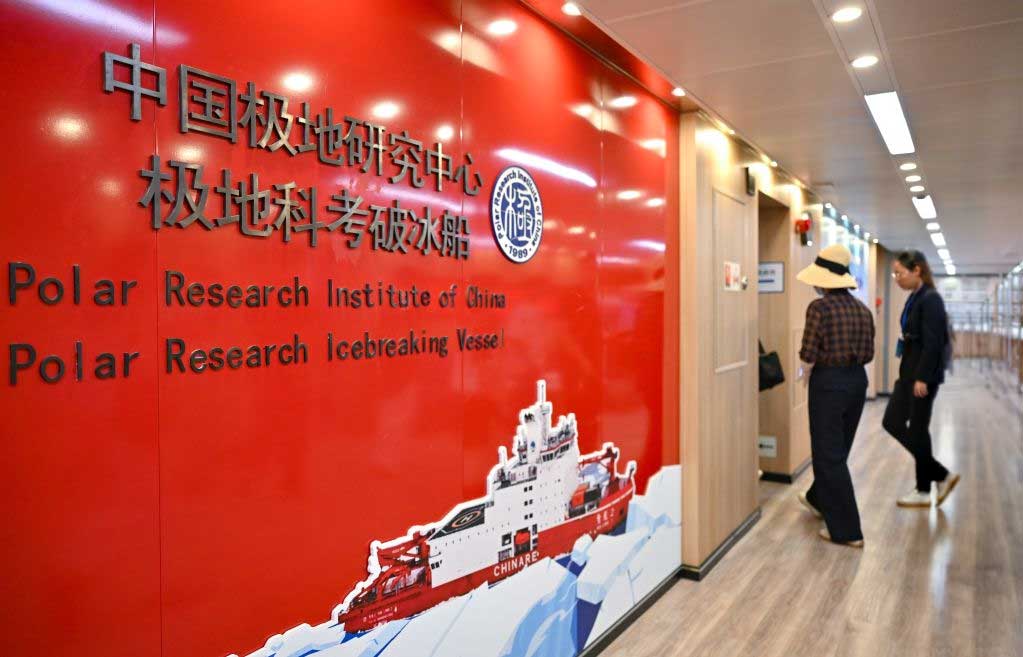
Icebreakers smash ice with the weight and structure of their hulls, said Zhu Pengtao, the ship’s chief officer. Xuelong 2 can do this going forwards or astern. Zhu said this two-way design was a first among the world’s polar research vessels. Its propellers sit in two electric pods that can swivel all the way round. Zhu said they can be turned through 180 degrees and used to break ice.
The ship has 12 laboratories. In the middle of the hull is a “moon pool”, a vertical shaft about 3 metres square. Scientists lower and recover instruments through it along a guide rail, so the equipment swings less in heavy seas, Zhu said. He added that the ship can hold its position at sea to within 1 metre.
Where it has been
On the 5th of September 2023, Xuelong 2 carried China’s 13th Arctic Ocean expedition to the North Pole area. It was the first time a Chinese research vessel had reached the area to carry out a full survey, China Daily reported, citing the Ministry of Natural Resources.
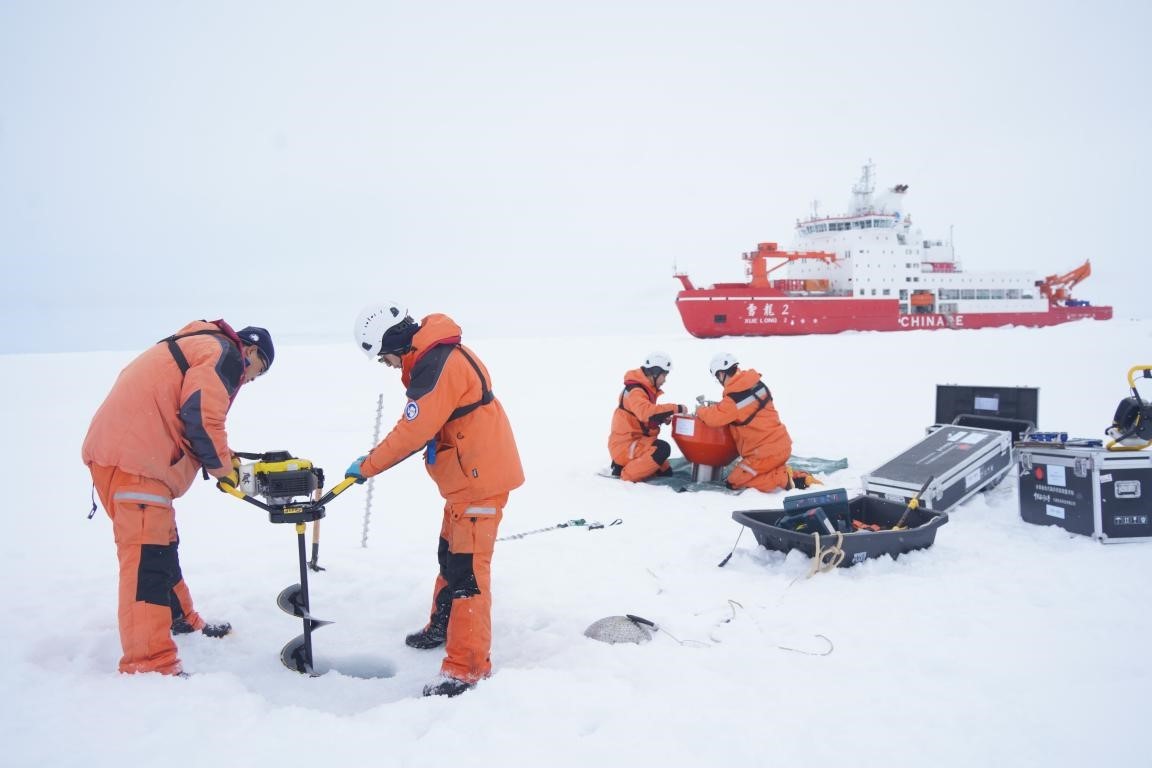
For China’s 42nd Antarctic expedition, the ship set out on the 1st of November 2025. It returned to its home port of Shanghai on 18 May 2026, after nearly 200 days and more than 30,000 nautical miles. The team collected more than 20,000 samples of seawater, marine life and sediment.
Why Sanya
Nanshan Port is China’s first home port for research ships that is open to every research vessel and institution, Hainan Daily reported. It lies 164 km from waters 1,000 metres deep, so ships can reach deep-sea work areas within half a day.
In 2025 the port logged 2,152 service trips for research ships, almost six a day. More than 60 marine research institutions and their ships berthed there.
Liu Wen, deputy dean of Wuhan University of Technology’s School of Marine Science and Technology, brought nearly 40 postgraduate students on board. The university has set up the school in Hainan, he said. He hopes more young people will stay on the island and work in marine science.
Related article: Chinese scientists switch off one gene to make cabbage smell of popcorn