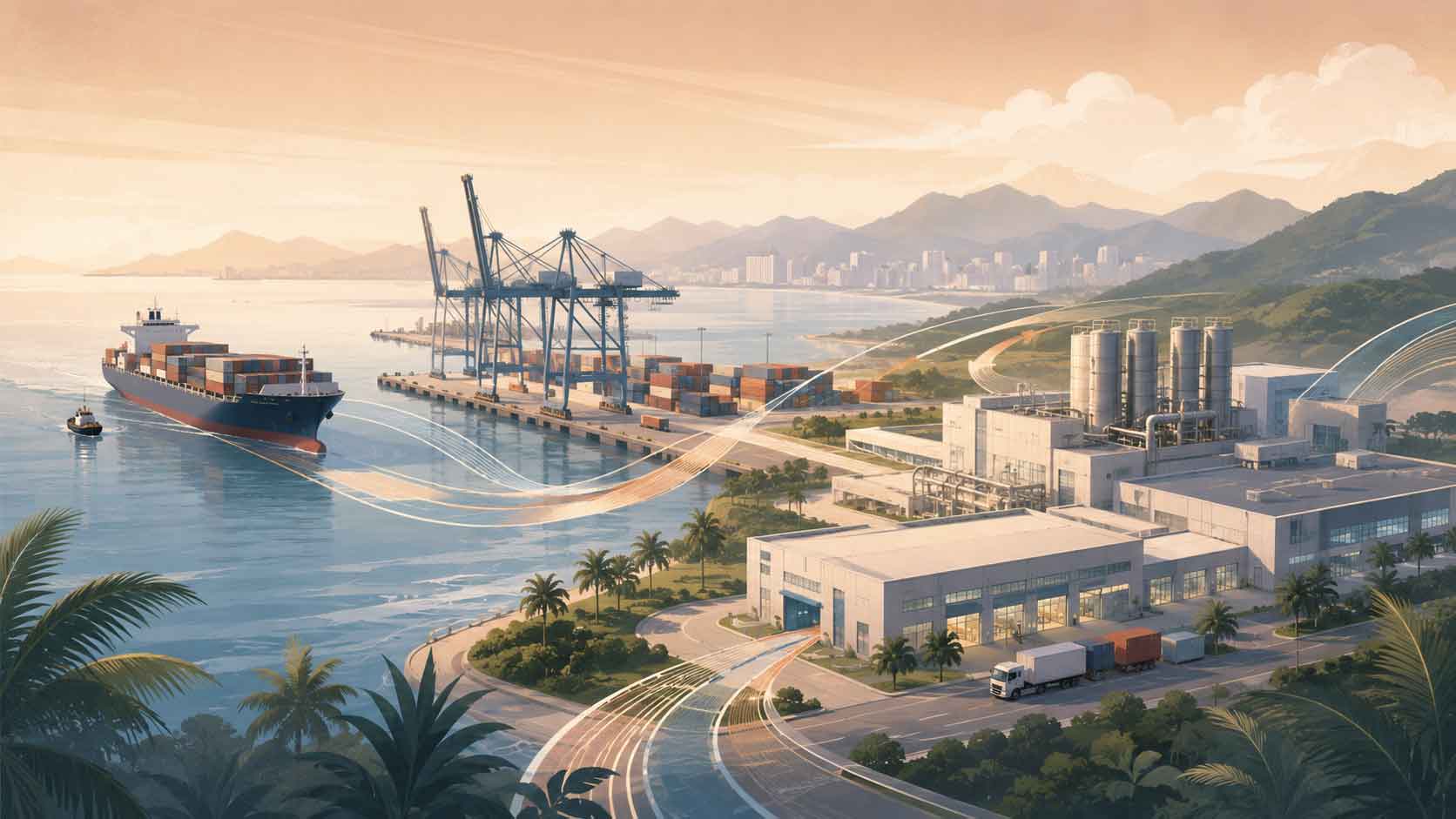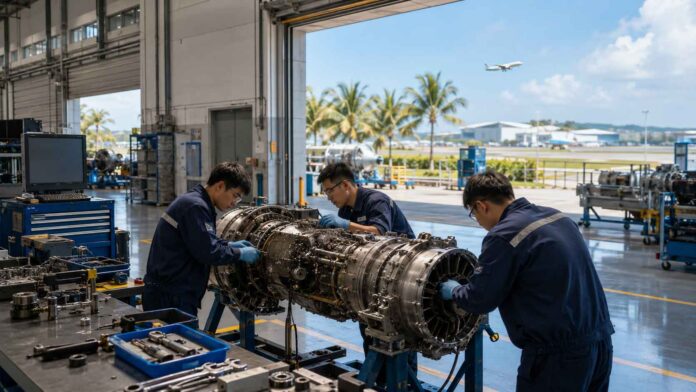
On 10 July, a diesel engine used in an overseas mining truck left the Haikou Comprehensive Bonded Zone after repair, inspection and testing. It had entered Hainan on 18 December 2025, the first day of island-wide special customs operations, under an exception that allows selected categories of used overseas equipment to enter the Free Trade Port for repair before being sent abroad again.
Official reports said the engine was dismantled, cleaned, inspected, repaired, reassembled and tested. The technical work took slightly more than two months, although almost seven months passed between arrival and re-export. The equipment could not be sold or put into use in China. It came from overseas, the repair took place in Hainan, and the completed engine returned overseas.
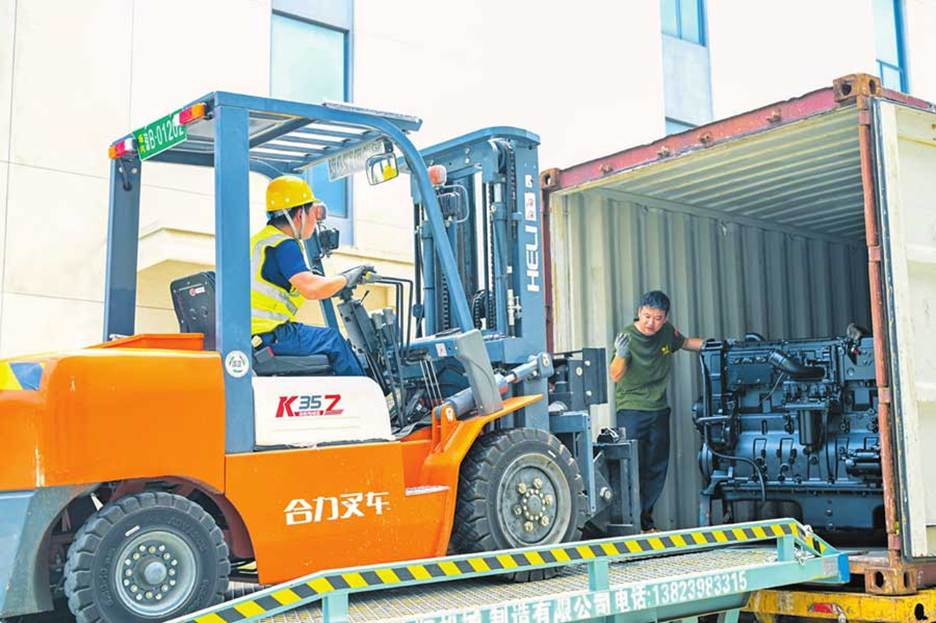
It was the first engine to complete the full inbound-repair-re-export cycle under Hainan’s new import-exception regime. The repair and re-export provide an early demonstration of Hainan’s new regime in practice: selected used foreign equipment can enter despite normal import restrictions, undergo complex repair under customs supervision and then be sent overseas again.
The opportunity lies in the wider repair and after-sales industry Hainan is trying to build around these policies.
Hainan is beginning to position bonded repair as one part of a wider international after-sales and equipment-lifecycle services industry. The potential business extends beyond workshop repairs to diagnostics, component replacement, testing, spare-parts storage, authorised maintenance, warranty support, technical upgrades and regional logistics.
The province’s 2026 Investment Guide, presenting objectives from Hainan’s 15th Five-Year Plan, describes an intended maintenance and remanufacturing hub centred on aircraft, automobiles and components, and construction machinery.
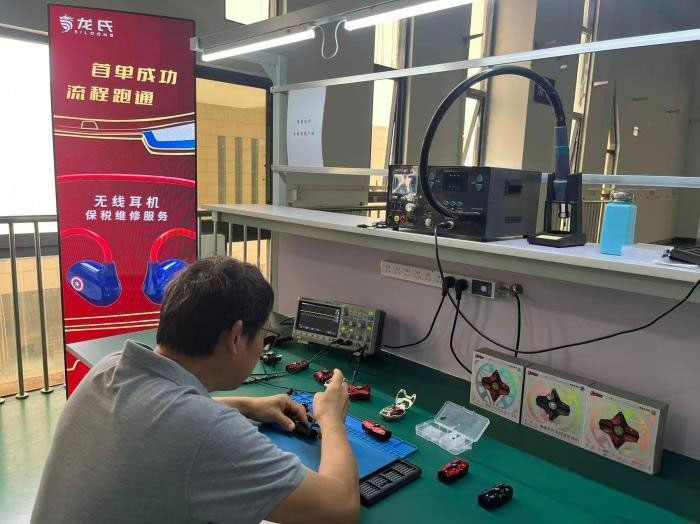
Operating cases already extend beyond engines to aircraft, medical devices, jewellery and consumer electronics. Energy-equipment projects are under construction, while marine and offshore-engineering proposals remain in planning or negotiation. Nine additional bonded-repair projects were in the provincial pipeline as of June 2026.
More than a 38-product exception
Much of the official coverage has focused on the 38 product entries that Hainan added to its “two ends outside” bonded-repair regime. They include selected petrol and diesel engines, vehicle parts, television equipment, motorcycles, all-terrain vehicles and medical devices.
Qualifying used goods may enter Hainan from overseas under customs supervision, undergo repair and then be re-exported. They may not enter domestic circulation. Repair enterprises must maintain traceability systems, connect relevant data with the supervising authorities and separately account for goods awaiting repair, completed goods, unusable goods, replacement components, removed parts and waste.
The measures apply across Hainan Island rather than only inside one comprehensive bonded zone. That does not mean however that a repair company can establish anywhere automatically. Each project remains subject to commercial, customs and environmental assessment. Municipal or county commerce authorities conduct the initial review before provincial commerce and environmental authorities and Haikou Customs prepare a supervision plan for provincial approval.
The rules also prohibit importing solid waste under the name of bonded repair or using a repair project for scrapping and dismantling. Unrepairable goods, removed components and repair waste remain under customs and environmental control.
A separate part of the framework removed import-licence requirements for 60 categories of used electromechanical equipment intended for production and self-use by final users in Hainan. Those products cannot circulate freely within the island or be resold to the mainland. The policy is distinct from bonded repair, but it may still matter to companies equipping a Hainan production or service facility.
Permission, capability and demand
For companies assessing Hainan, the opportunity can be reduced to three tests: permission, capability and demand.
Permission asks whether the product can legally enter, whether the transaction fits an available customs route and whether the enterprise can obtain the required approvals and manufacturer authorisation.
China’s customs rules require a bonded-repair enterprise to submit its repair contract and an authorisation document from the brand owner or its agent. Hainan’s measures continue to refer to those national customs requirements, but public reports do not disclose what authorisation supported the mining-engine transaction.
China Customs requires a bonded-repair enterprise to submit three core documents:
- A description of the proposed bonded-repair business.
- The repair contract signed with the overseas customer.
- An authorisation document from the brand owner or its agent.
Without that authorisation, an independent repairer cannot proceed with the bonded-repair application.
Capability asks whether the operator has original components, diagnostic software, technical data, qualified engineers, testing equipment and environmental systems, and whether Hainan’s logistics network can move the goods efficiently.
Demand is the hardest test. It asks whether overseas customers will send repeat orders to Hainan at a total cost, quality and turnaround time that compare favourably with existing service options.
The July engine transaction demonstrates legal access and one completed repair. It does not yet demonstrate recurring demand. The manufacturer, overseas customer, contract value, warranty arrangements and manufacturer authorisation have not been disclosed. No published evidence shows a repeat order or a complete delivered-cost comparison with the customer’s previous repair provider.
The transaction is operational proof. It is not yet market proof.
Bvlgari shows the after-sales model

A more developed example comes from a different industry.
Bvlgari signed an agreement in November 2023 to establish an integrated after-sales service centre in the Haikou Comprehensive Bonded Zone, its second such centre in China after Shanghai. The operation initially will service jewellery sold through Hainan’s offshore duty-free stores.
Before the centre opened, products requiring repair or maintenance were sent to Italy or France. The first batch of nearly 100 items was repaired and delivered in June 2025. Hainan’s Investment Guide says repairs now take between seven and 15 days, cutting service time by more than 70% compared with the previous overseas process.
Bvlgari’s longer-term plan is to expand coverage to stores elsewhere in mainland China, Hong Kong, Macao and Taiwan, and eventually provide cross-border repair services for the Asia-Pacific region.
Jewellery is not among Hainan’s 38 import-exception products, so the Bvlgari centre is not an example of that specific repair route. Its significance lies in the broader after-sales model Hainan is promoting. The centre currently handles jewellery sold through Hainan’s offshore duty-free stores, but it was planned from the outset as a phased operation. According to the Investment Guide, Bvlgari intends to extend coverage to its self-operated stores in mainland China, Hong Kong, Macao and Taiwan, and later provide cross-border repair services for the wider Asia-Pacific region.
The project therefore connects Hainan’s offshore duty-free retail market with a potentially much larger regional service function. The guide also presents the centre within Hainan’s wider Free Trade Port policy package, including the 15% corporate and individual income-tax incentives, visa-free access for eligible foreign nationals and, for qualifying manufacturing or processing activities, the 30% value-added policy.
Medical Devices Show the Exporter After-Sales Model
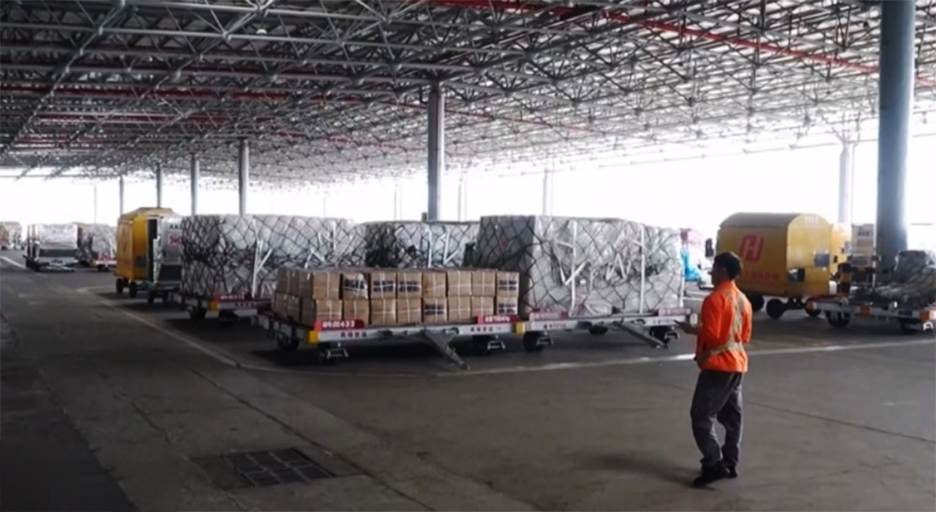
On 1 February 2026, 21 repaired endoscopes and endoscope-system devices left Haikou Meilan International Airport for Hong Kong and onward delivery to overseas customers. They had entered Hainan on 18 December and spent more than a month undergoing repair.
The company told CCTV that the route reduced logistics costs by 20% and other potential costs by 40%. The commercial logic is clear. A medical-device manufacturer selling into multiple overseas markets cannot necessarily maintain a fully equipped complex-repair centre in each country. Difficult cases can return to a central facility with the original engineers, components, calibration systems and technical records.
The completed endoscope transaction involved products connected to the original manufacturing group. It demonstrates how Hainan can support an exporter’s own overseas installed base.
Aviation Shows What a Repair Ecosystem Looks Like
Haikou Customs reported that the Haikou Airport Comprehensive Bonded Zone handled 87 aircraft maintenance visits, 15 engines and 15 batches of aviation materials in 2025. The maintenance business’s combined import and export value exceeded RMB100 billion for the first time, rising by more than 70% from the previous year.
Aviation maintenance predates the 38-product exception and the December 2025 customs closure. It should not be presented as a result of the new engine policy. It does show however, that Hainan already has experience supervising high-value overseas assets, bonded spare parts, specialist inspections and re-export procedures.
HNA Technic says its bonded parts operation stocks more than 2,200 types of consumable components, nearly 18,000 items, and has cut typical waits from months to less than a week. Nearby, the Haikou Genesis aircraft-engine maintenance base has built a 150,000-pound-thrust test cell and introduced specialised machining and measurement equipment.
Aviation has already required customs authorities, logistics operators, industrial parks and repair companies to solve many of the institutional problems involved in handling valuable foreign equipment.
Siemens Energy shows why the wider policy stack matters

Siemens Energy’s developing operation in Yangpu shows how far the model could extend.
The company established a Hainan branch and green-energy innovation centre in September 2024. On 18 December 2025 it created Siemens Energy (Hainan) Co., Ltd. and began construction of a heavy-duty gas-turbine final-assembly base and service centre.
According to Siemens Energy, the facility is intended to combine final assembly, local application validation, spare-parts support and operation and maintenance services for Chinese and overseas markets. It is scheduled to begin operating in 2027.
This is not yet an operating case comparable with the repaired engine or Bvlgari centre, but it does illustrate the type of integrated activity Hainan wants to attract: assembly, engineering, spare-parts support and lifecycle service in one location.
Siemens also shows why Hainan’s proposition should not be reduced to one repair exception. Imported turbine components that undergo sufficient manufacturing or assembly in Hainan may qualify for import-duty exemption when the finished equipment enters mainland China, provided the business satisfies the 30% processing-value-added conditions.
That policy is separate from “two ends outside” bonded repair. It does not provide a domestic-market route for an overseas product admitted under the 38-product exception, which must still be re-exported. Siemens may, however, use different policies for different parts of the same operation: manufacturing treatment for newly assembled products, separate customs arrangements for parts and overseas services, and corporate tax treatment for the Hainan business.
The plant is not yet operating, and no public evidence shows that Siemens has registered specific products under the processing-value-added programme or cleared a Hainan-assembled turbine into the mainland under the concession.
CEVA Logistics adds a supporting layer

According to the Investment Guide, CEVA Logistics has leased a 3,000-square-metre bonded warehouse in the Haikou Comprehensive Bonded Zone and launched the first phase of an Asia-Pacific Logistics Service Centre. A bonded warehouse does not create a repair cluster by itself, but it can support parts storage, return logistics, customs handling and regional redistribution.
Repair operators alone do not form an industrial ecosystem. A functioning regional service centre also requires component suppliers, authorised distributors, testing facilities, waste-treatment contractors, insurers, specialist technicians and customers with enough recurring volume to keep the facilities in use.
Hainan now has many of those building blocks in place
The wider Free Trade Port package
Hainan’s proposition rests on combining policies that affect different parts of a company’s operating model.
Under the island-wide customs system, the boundary with overseas markets is treated as the “first line” and the boundary with mainland China as the “second line”. Under Hainan’s island-wide customs system, qualifying businesses can import many goods from overseas without paying customs duty, import VAT or consumption tax, provided the goods are not on the imported dutiable goods catalogue.
Goods manufactured in Hainan by qualifying encouraged-industry enterprises may enter the mainland free of import duty when processing in Hainan adds at least 30% of their value. Import VAT and consumption tax remain payable. Qualifying encouraged-industry companies may also benefit from a 15% corporate income tax rate, but registration alone is insufficient; substantive operations and the relevant revenue tests still apply.
Bonded treatment, zero-tariff importation, the 30% processing-value-added concession and the 15% corporate income tax rate are separate policies with separate conditions. But companies do not choose locations by comparing one customs policy in isolation. They consider the combined cost of importing equipment, holding parts, employing engineers, financing inventory, moving goods and supporting customers.
Hainan’s pitch is that the Free Trade Port may address several parts of that equation at once.
The national market has become more competitive
In December 2025, the Ministry of Commerce, Ministry of Ecology and Environment and General Administration of Customs published a fourth national comprehensive bonded-zone repair catalogue. It added 179 product entries, including communications equipment, railway locomotives, yachts and automotive power batteries, and created broader national routes for comprehensive bonded-zone enterprises to repair products connected to their own corporate groups.
Hainan therefore does not have a monopoly on bonded repair. Several medical devices, electronics and vehicle components included in its exception list can also be repaired in bonded zones elsewhere under national rules.
Hainan’s remaining product-level distinctions matter, but its wider case cannot rest on a small number of exclusive entries. It must compete on approval efficiency, technical capability, logistics, customer access and the ability to combine manufacturing, service and international trade.
So, who should take a closer look?
Hainan is most likely to suit companies whose products are valuable enough to justify international transport and complex enough to benefit from centralised technical expertise.
That could include industrial engines, specialised machinery, medical and diagnostic devices, high-value consumer products, aviation components, energy equipment and selected marine or offshore systems.
The strongest candidates will already have products operating across several overseas markets, access to manufacturer authorisation and original components, and enough repeat repair volume to justify a permanent facility. The economics are weaker for bulky, low-value or rapidly depreciating products whose freight and handling costs approach the value of the item.
Legal eligibility does not create a viable business model.
Early progress, limited evidence of scale
By May 2026, Hainan had 24 bonded-repair projects covering aircraft, portable electronics, automotive transmissions and engines, X-ray tubes and related equipment. Six had been added since island-wide customs operations began, while nine further projects were under discussion.
The total shows that bonded repair is broadening across sectors. The figure includes mature aviation maintenance and projects operating under national comprehensive bonded-zone rules as well as Hainan-specific measures.
The information that would establish commercial scale has not yet been published. There is little public data on repeat overseas customers, operating margins, delivered-cost comparisons, approval periods or the proportion of authorised projects that have developed into recurring operations.
First transactions prove that a policy can be used. Repeat transactions show that a market wants to use it.
The next engine matters more than the first
The engine that left Haikou in July demonstrated that Hainan’s new customs route can carry a real piece of overseas equipment through entry, repair, testing and re-export.
Around it, Hainan is assembling a wider proposition: authorised after-sales services, medical-device support, aviation maintenance, energy-equipment assembly and servicing, and bonded logistics.
The legal and institutional foundations are becoming visible. The commercial ecosystem is not yet complete.
The more important milestone will not be another ceremonial first. It will be the next engine, or medical device, turbine component or high-value product, arriving because an overseas customer has compared the alternatives and decided that Hainan is the best place to service it.
Related article: How Hainan’s 30% Rule Is Beginning to Shape Business Decisions