
Hainan’s Oldest Known Burial Unearthed at Luobi Cave: A Landmark in Paleolithic Archaeology

A new archaeological discovery in Sanya is reshaping what we know about early human history in southern China. At the Luobi Cave site (落笔洞遗址), researchers have uncovered Hainan’s oldest known burial, a Paleolithic burial dating back approximately 12,000 to 13,000 years.
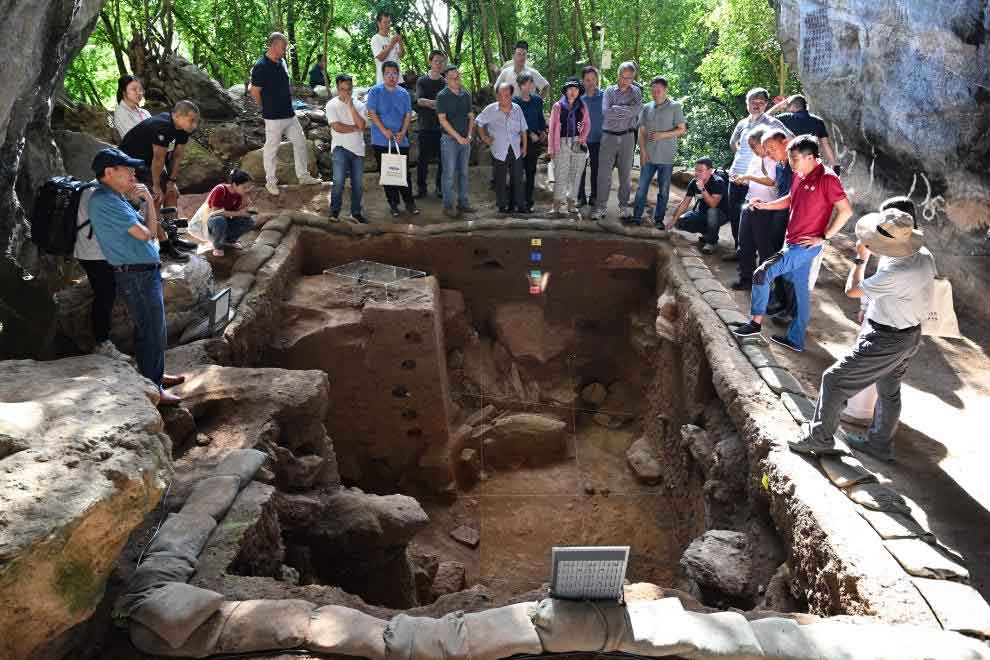
Hainan’s Oldest Known Burial Unearthed at Luobi Cave A Landmark in Paleolithic Archaeology (2)

A Rare Glimpse into the Distant Past

The burial, found at the base of Luobi Peak in Sanya’s Jiyang District, represents the earliest evidence of funerary practice ever identified on Hainan Island. According to Li Feng, lead archaeologist from Peking University’s School of Archaeology and Museology, it is also the most clearly defined Paleolithic burial form yet discovered in South China.

Hainan’s Oldest Known Burial Unearthed at Luobi Cave A Landmark in Paleolithic Archaeology (3)

The remains belong to a child who had been laid to rest on their side with bent limbs, a posture suggesting intentional placement. Near the head and waist, archaeologists discovered shell ornaments believed to be the oldest of their kind ever found in China. These adornments provide valuable evidence of symbolic behavior, indicating a society with complex cultural and ritual traditions.

Artifacts from a Hunter-Gatherer Society

Excavations around the burial uncovered a wide range of Paleolithic tools and remains, including:

Stone flakes and scrapers made from tektite, natural glass formed by meteorite impacts,  used for cutting and scraping;

Implements made from river pebbles, likely for daily use;

Abundant animal bones, snail shells, and mollusk remains, revealing details about diet and the surrounding environment.

Together, these findings point to a hunter-gatherer community adapted to Hainan’s tropical ecosystem and reliant on both land and sea resources.

Hainan’s Oldest Known Burial Unearthed at Luobi Cave A Landmark in Paleolithic Archaeology (4)

A Site of National Significance

Luobi Cave has long been one of China’s most important prehistoric sites. Two excavations in the early 1990s revealed rich cultural layers, confirming it as the southernmost prehistoric human cave site ever discovered in the country.

In July 2025, it was included among the candidate projects for designation as a National Archaeological Site Park. The current joint excavation, launched in August 2025 by the Hainan Provincial Institute of Cultural Relics and Archaeology, Peking University, and the Sanya Museum, represents a new chapter in understanding early human activity on the Island.

Cultural Connections Across the Region

Experts attending a seminar at the Luobi Cave site on November 8–9 agreed that the discovery carries far-reaching academic significance. It helps establish a prehistoric cultural sequence for Hainan and sheds new light on the technological and symbolic exchanges between South China and Southeast Asia.

In particular, the site reinforces the idea of regional interaction and shared cultural expressions among early coastal communities in this part of the world.

What Comes Next

The research team plans to:

  • Continue the detailed excavation and analysis of the burial site;
  • Expand the exploration area to look for additional burials or habitation zones;
  • Conduct broader Paleolithic surveys across the surrounding region;
  • Strengthen public archaeology and science communication to make the discoveries accessible to a wider audience.

As excavation progresses, Luobi Cave is emerging not only as a cornerstone of Hainan’s archaeological heritage, but also as an important link in the story of early human migration and cultural development across Asia.

Related article: First Paleolithic Open-Air Site Discovered in Hainan

First Paleolithic Open-Air Site Discovered in Hainan – TropicalHainan.com

The Nanhuo River site, the most comprehensive Paleolithic site ever found on Hainan, challenges the long-held belief that the island had limited prehistoric occupation. Its discovery reshapes our understanding of early human activity in southern China …
www.tropicalhainan.com

SourceSource

- Follow Us on WeChat -

spot_img

Related articles:

Hainan’s 2026 Investment Opportunity List Shows What the Free Trade Port Wants Built Next

Hainan’s 2026 Investment Opportunity List shows what the Free Trade Port wants built next, from ports and digital trade to medical platforms and future industries …

Explainer: Apostille vs Consular Authentication for Hainan Work Permit Documents

Apostille has replaced Chinese consular authentication for relevant documents from Convention countries, but notarisation, translation and validity rules can still apply ...

Lost Your Passport in China: The Emergency Document You Should Know About

Lost your passport in China? If your embassy, consulate, or relevant home-country institution in China cannot reissue a travel document, China has an Exit-Entry Permit for Foreigners …

Hainan’s Free Trade Port Is Moving From Incentives to Usability

Hainan’s new services plan points to a shift in how foreign operators may use the FTP: banking, permits, policy access and talent recognition …

Get weekly email updates for new articles published!

Follow Us on WeChat

spot_img

Latest Articles ...

How Hainan’s 30% rule is beginning to shape business decisions for companies using the FTP’s customs route into mainland China ...
Typhoon Season 2026 in Hainan: What residents need to know about storm forecasts, El Niño impacts, ferry suspensions, airport disruptions, warning levels, and how to prepare for typhoons from July to October ...
How international graduates can stay in China after graduation through Hainan’s startup residence route, and why it does not allow paid work ...
What spouses on S visas in China can and cannot legally do, including work, tutoring, remote work, volunteering, tax, and permit risks ...
spot_img

Why Foreigners Lose Access to Their Chinese Bank Accounts

Frozen accounts, blocked cards, restricted access. Most expats in China don't think about their bank account until they can't access it …

China’s Green Card: How Rare Is It, and What It Takes to Get One

Between 2004 and 2017, China issued just over 10,000 permanent residency permits to foreign nationals. This guide explains the four eligibility routes, the real criteria, and your honest odds of qualifying …

Why Your Passport Doesn’t Work: A Foreigner’s Guide to China’s ID-Only Systems

Your passport is legally valid for trains, hotels, SIM cards and payment accounts in China. The problem isn't the rules, it's the systems built on top of them …

China’s 2026 Work Permit Salary Rules: Who Actually Needs to Worry?

China’s work permit salary thresholds have raised concerns among foreign professionals. This explainer clarifies the 6× and 4× rules, why the figures appear high, and who is actually affected ...
spot_img

Looking for an international pre-school in Haikou?

Flora's International Preschool has three preschools in the Haikou area. Our schools follow a European curriculum

Continue Reading ...

Hainan’s 2026 Investment Opportunity List Shows What the Free Trade Port Wants Built Next

Hainan’s 2026 Investment Opportunity List shows what the Free Trade Port wants built next, from ports and digital trade to medical platforms and future industries …

Explainer: Apostille vs Consular Authentication for Hainan Work Permit Documents

Apostille has replaced Chinese consular authentication for relevant documents from Convention countries, but notarisation, translation and validity rules can still apply ...

Lost Your Passport in China: The Emergency Document You Should Know About

Lost your passport in China? If your embassy, consulate, or relevant home-country institution in China cannot reissue a travel document, China has an Exit-Entry Permit for Foreigners …

Get weekly email updates for new articles published!

Never miss another important notice or event. Be informed of what you need to know, when you need to know it.