China To Restrict Use Of Facial Recognition Tech By Businesses, Issues Draft Guidelines 

China’s cyberspace regulator revealed draft regulations on Tuesday, August 8th, aimed at overseeing the secure use of facial recognition technology in response to growing public concerns about its potential misuse.
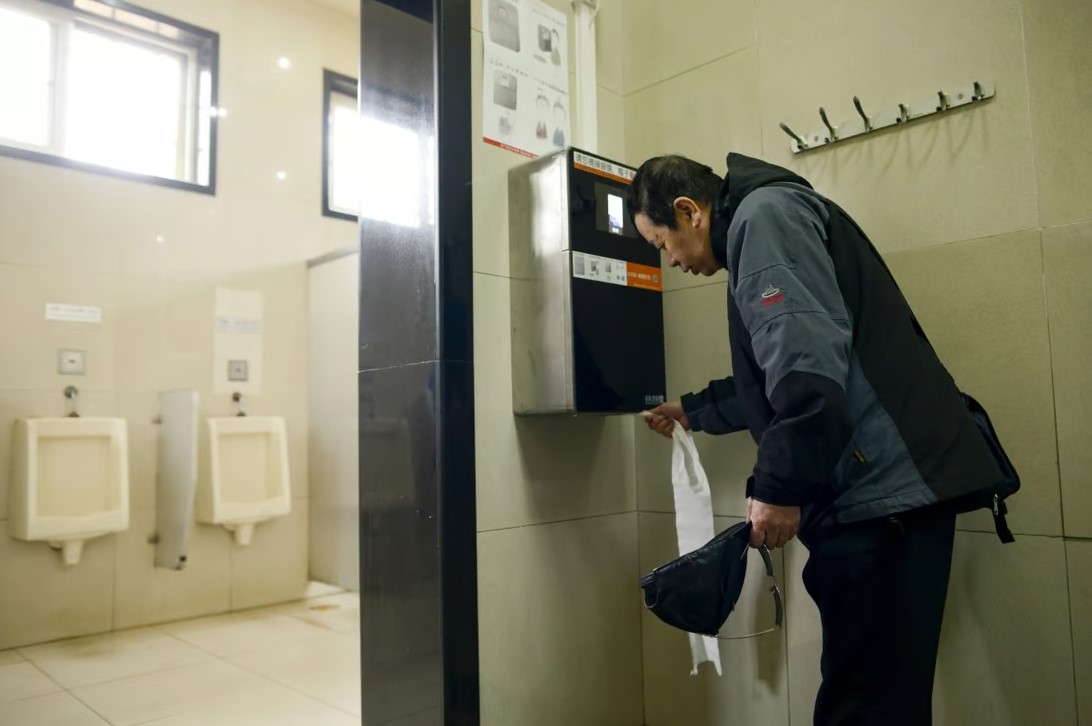
A man uses an automatic toilet paper dispenser that uses facial recognition technology at a public toilet at the Temple of Heaven in Beijing on March 21, 2017 Photo AFP
A man uses an automatic toilet paper dispenser that uses facial recognition technology at a public toilet

Mounting concerns over privacy have pushed Chinese authorities to pause the use of facial recognition technology in a public loo.

The facial recognition system in a public toilet in Guangdong province’s Dongguan city was employed to identify individuals and control the amount of toilet paper each person could take within a specific timeframe. The city’s Urban Management and Law Enforcement Bureau announced the suspension after citizen complaints. The system did not connect to a network, and user photos were deleted after a certain period.

The broader issue of personal privacy regarding the growing use of facial recognition technology has been amplified by experiences like that of Wang Qiyu, who found himself in a 20-minute argument with a hotel in Shenzhen over submitting a facial scan for check-in.

Wang, a software developer with a US doctorate, voiced concerns over the ubiquity of facial data collection across various institutions, often without transparent explanations or safeguards, saying he felt harassed by the hotel. “Airport, train stations, stores and hotels – almost every organisation asks for facial data,” the 31-year-old told the South China Morning Post. “But no one tells me why they collect the data and how they protect it.”

The Cyberspace Administration of China (CAC) said facial recognition technology can only be used to process facial information when there is a specific purpose and sufficient necessity, and with strict protective measures.

The use of the technology will also require individual’s consent, the CAC said in a statement. It added that non-biometric identification solutions should be favoured over facial recognition in cases where such methods are equally effective.

According to Wu Shenkuo, Deputy Director of the Research Centre of the China Internet Association the “Draft Regulations” present a comprehensive supervision approach, covering all aspects of facial recognition technology application, from device installation to image collection, data handling, storage, provision, deletion, accuracy, precision, and confidence threshold.

The “Draft Regulations” have established specialised governance rules. These include prohibiting the installation of image collection and personal identification devices in places like hotel rooms, public restrooms, changing rooms, and bathrooms, or other areas that could potentially infringe upon individual privacy.

Related article: Milestone: China’s Linglong One SMR Core Installed in Hainan
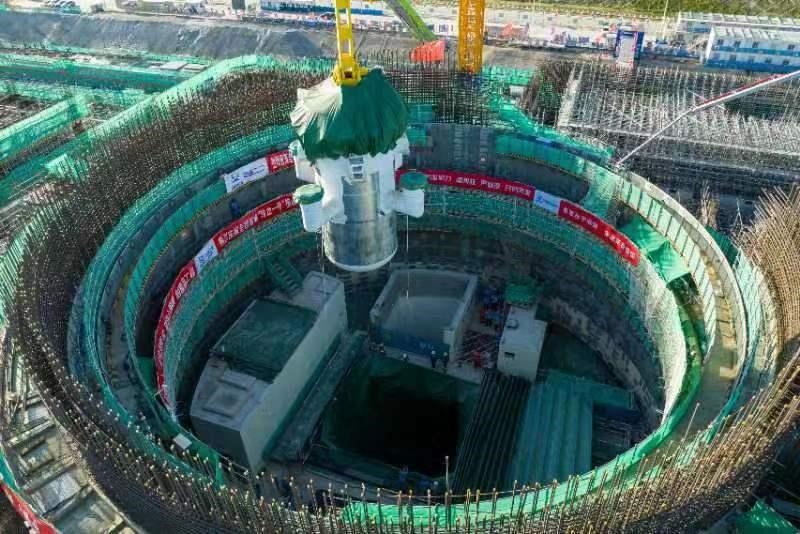
Linglong One Small Modular Reactor Achieves Landmark Core Module Installation in Hainan Province

SourceChinanews

Latest Forum Discussions

- Follow Us on WeChat -

spot_img

Related articles:

From Lecheng to Production: How Hainan Is Building a Medical Innovation Pipeline

Hainan is exploring whether Lecheng’s medical-access advantage can become the foundation of a new Free Trade Port industry. One drug has already moved from Lecheng use to production in Haikou, while new policies aim to help more innovative medicines and medical devices follow a similar pathway ...

How Hainan Is Turning Aircraft Maintenance Into a Free Trade Port Industry

The future of aviation business in Hainan is beginning to take shape in Haikou. Foreign airline maintenance, engine overhaul, parts supply and aircraft dismantling are now operating around the airport, with a major bonded-zone expansion planned to support the next stage of growth ...

Hainan’s Next Economic Bet: Aerospace, Data and Specialised Technology Industries

Hainan’s technology ambitions have been known for years. In 2026, parts of that strategy are finally moving into operation across aerospace, data, semiconductors and deep-sea technology ...

Hainan Is Planning an Entirely New Transport Layer Between the Roads and Conventional Aviation

Hainan is planning a new low-altitude transport layer above its roads, from cargo drones to passenger eVTOLs. What will that look like over the next five years?

Get weekly email updates for new articles published!

Follow Us on WeChat

spot_img

Latest Articles ...

Where will the business opportunities lie in Hainan’s logistics sector over the next five years? The 2030 plan points to freight, cold chain, air cargo, shipping services and logistics technology …
Haikou has direct flights across Southeast Asia and selected long-haul routes. Compare destinations, operating days, frequencies and intermediate stops ...
Hainan’s 2030 service-sector plan sets targets for trade, finance, logistics and modern services, with distinct roles for Haikou, Sanya and Yangpu ...
Hainan-registered companies exported RMB 22.23 billion to ten ASEAN markets in H1 2026, turning a RMB 3.19 billion deficit into a RMB 12.01 billion surplus …
spot_img

How to Claim Your Housing Provident Fund Before You Leave China

Foreign employees in China may have a Housing Provident Fund account they have never checked. The balance, employer contributions included, can be withdrawn in full when you leave. Here is how to claim it before you go …

Leaving China? Here’s the Pension Money Most Expats Never Claim

You contributed 8% of your salary to a Chinese pension account every month. Many expats leave without claiming it. Here is a breakdown of what you are owed and the window you cannot afford to miss ...

Why Your Name Doesn’t Match Across Chinese Systems, and What to Do About It

Your name exists in five different systems in China. Zero automated checks and they don't talk to each other. Here's what happens when they disagree ...

Why Foreigners Lose Access to Their Chinese Bank Accounts

Frozen accounts, blocked cards, restricted access. Most expats in China don't think about their bank account until they can't access it …
spot_img

Looking for an international pre-school in Haikou?

Flora's International Preschool has three preschools in the Haikou area. Our schools follow a European curriculum

Continue Reading ...

From Lecheng to Production: How Hainan Is Building a Medical Innovation Pipeline

Hainan is exploring whether Lecheng’s medical-access advantage can become the foundation of a new Free Trade Port industry. One drug has already moved from Lecheng use to production in Haikou, while new policies aim to help more innovative medicines and medical devices follow a similar pathway ...

How Hainan Is Turning Aircraft Maintenance Into a Free Trade Port Industry

The future of aviation business in Hainan is beginning to take shape in Haikou. Foreign airline maintenance, engine overhaul, parts supply and aircraft dismantling are now operating around the airport, with a major bonded-zone expansion planned to support the next stage of growth ...

Hainan’s Next Economic Bet: Aerospace, Data and Specialised Technology Industries

Hainan’s technology ambitions have been known for years. In 2026, parts of that strategy are finally moving into operation across aerospace, data, semiconductors and deep-sea technology ...

Get weekly email updates for new articles published!

Never miss another important notice or event. Be informed of what you need to know, when you need to know it.