The Yingdun Site Discovery: Unlocking Hainan’s Prehistoric Culture

The Yingdun (英墩) site in Sanya’s Haitang District (海棠区) represents a landmark archaeological discovery that is adding to our understanding of southeastern Hainan’s prehistoric civilization. This shell midden has been recognized as an immovable cultural relic and included in the Fourth National Cultural Relics Census, marking a significant achievement in regional heritage preservation.
The-Yingdun-Site-Discovery
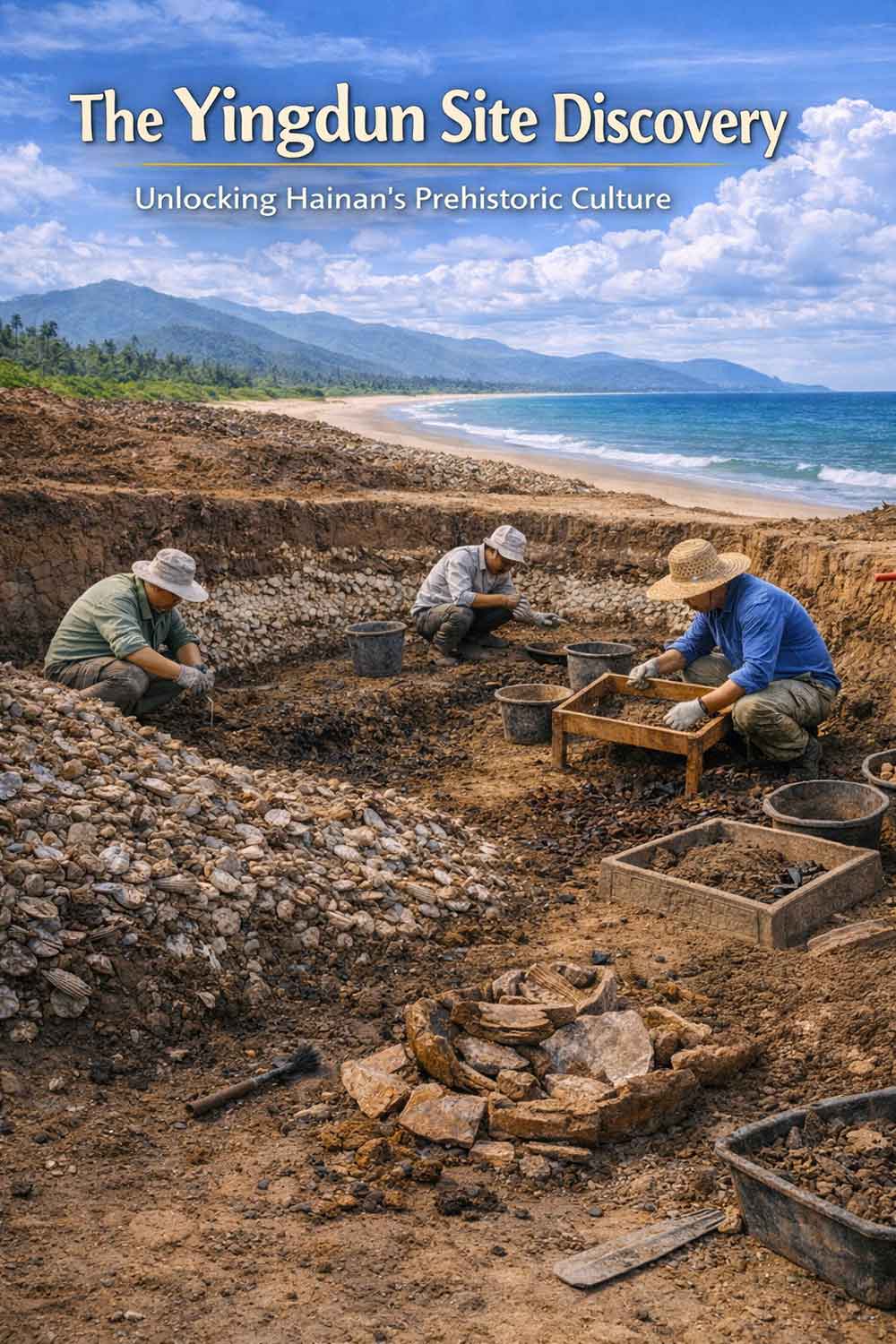
Impression of the archeological dig

Discovery and Excavation History

The Yingdun site was first identified in 2012, when a joint archaeological team from the Chinese Academy of Social Sciences’ Institute of Archaeology and the Hainan Provincial Museum (later the Hainan Provincial Institute of Cultural Relics and Archaeology) conducted systematic surveys along the coastal regions between Lingshui and eastern Sanya.
The Yingdun Site Discovery (4)
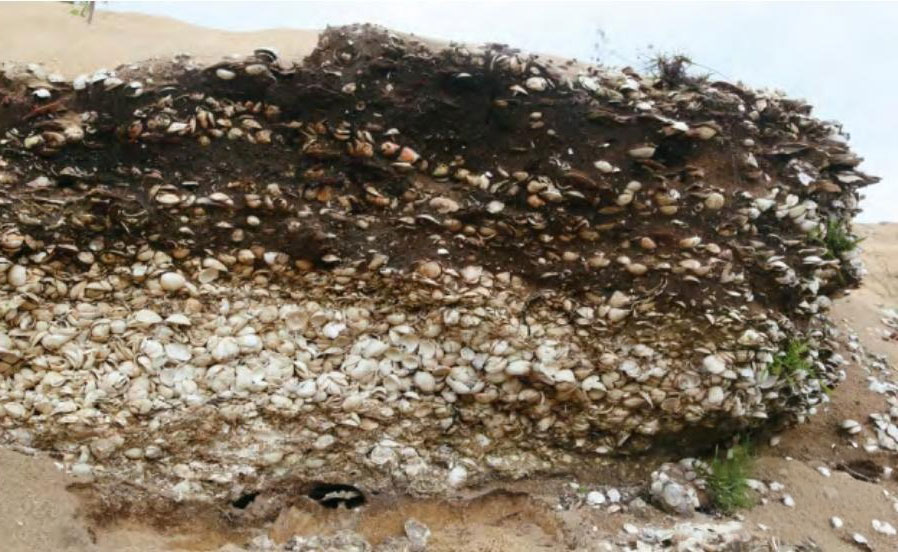
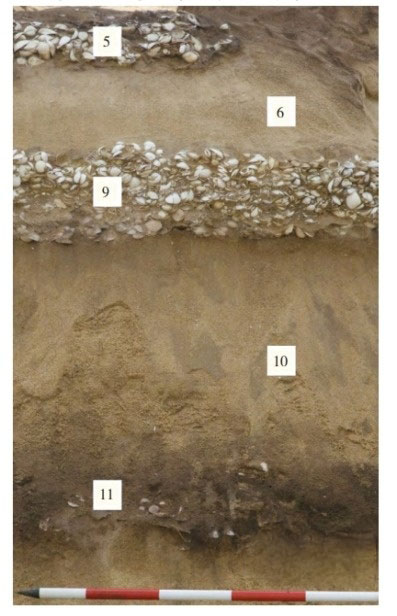
Shell accumulation at the Yingdun site
The Yingdun Site Discovery (5)
Shell accumulation at the Yingdun site

Following its discovery, the collaborative team carried out multiple rescue excavations between 2012 and 2016, uncovering rich cultural deposits that have provided crucial insights into the region’s Neolithic heritage.

Cultural Chronology and Characteristics

Archaeological evidence at Yingdun is well stratified, revealing several phases of occupation. The earliest deposits date to approximately 6,000–5,500 years ago, but later Neolithic cultural layers also exist, showing continuity and variation across centuries.

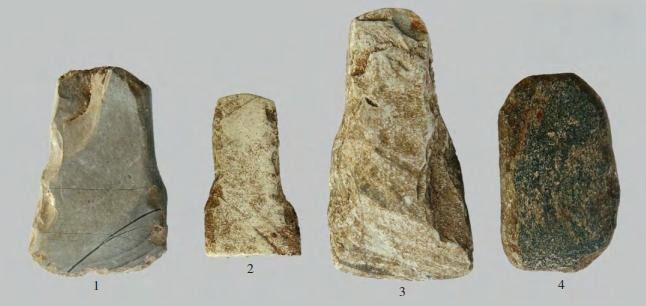
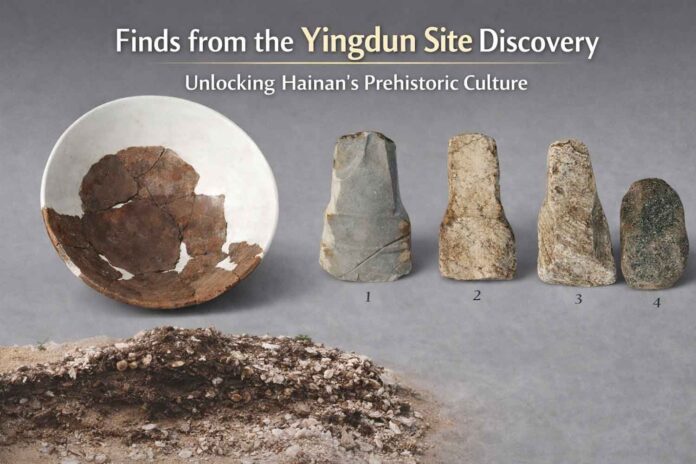
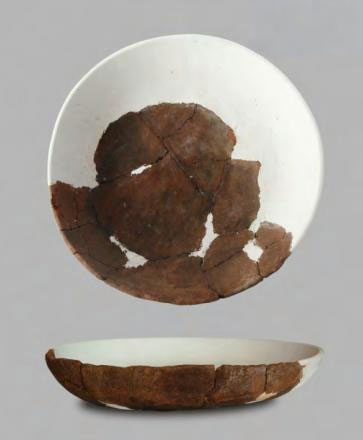
Excavations yielded abundant artifacts, including:
The Yingdun Site Discovery (3)
The Yingdun Site Discovery (2)
The Yingdun Site Discovery (1)

Pottery vessels such as drum-bellied jars and pan-shaped cauldrons

Stone tools of varied function

Fish bone ornamental strings from the early phase

The site is distinguished by thick shell accumulations and rich cultural deposits, making it an exceptionally well-preserved example of a shell midden settlement that reveals how ancient coastal communities lived and exploited marine resources.

Archaeological Significance

The Yingdun site’s importance extends beyond its local context. Together with the Lianziwan (莲子湾) and Qiaoshan (桥山) sites, it forms a crucial foundation for establishing the prehistoric cultural chronology of southeastern coastal Hainan.

These three sites provide a broad framework:

Yingdun cultural remains (earliest phase)

Lianziwan cultural remains (Roughly around 5,000 years old (mid‑to‑late Neolithic, middle phase))

Qiaoshan cultural remains (Approximately 3,000 years old (later than both Yingdun and Lianziwan, later phase,))

While this sequence is widely accepted, researchers note cultural overlaps and shared traits between sites, suggesting interaction and gradual transitions rather than a strict linear succession. Stratigraphic relationships and artifact comparisons allow scholars to trace the evolution of settlement patterns and cultural development across roughly 3,000 years (6,000–3,000 BP).

Heritage Protection and the region’s cultural legacy

The Haitang District government has committed to protecting and managing the site in accordance with national cultural heritage standards and census guidelines. This recognition reflects both the district’s achievements in relic protection and its deeper commitment to preserving the region’s cultural legacy.

Future plans include developing the Yingdun site into an archaeological park, as part of broader “Cultural Relics + Tourism” initiatives in Sanya. Such projects aim to bring Hainan’s prehistoric civilization to a wider audience while generating cultural tourism benefits.

The discovery and excavation of the Yingdun site underscore the importance of continued archaeological work in southern China’s coastal regions. Shell middens like Yingdun document the early development of maritime-oriented societies in the Asia-Pacific, offering invaluable evidence of how ancient communities adapted to and thrived in coastal environments.

Related article: Hainan’s Oldest Known Burial Unearthed at Luobi Cave: A Landmark in Paleolithic Archaeology

Hainan’s Oldest Known Burial Unearthed at Luobi Cave: A Landmark in Paleolithic Archaeology – TropicalHainan.com

A new archaeological discovery in Sanya is reshaping what we know about early human history in southern China. At the Luobi Cave site (落笔洞遗址), researchers have uncovered Hainan’s oldest known burial …
www.tropicalhainan.com
SourceSource

- Follow Us on WeChat -

spot_img

Related articles:

Hainan’s Free Trade Port Is Moving From Incentives to Usability

Hainan’s new services plan points to a shift in how foreign operators may use the FTP: banking, permits, policy access and talent recognition …

How Hainan’s 30% Rule Is Beginning to Shape Business Decisions

How Hainan’s 30% rule is beginning to shape business decisions for companies using the FTP’s customs route into mainland China ...

Typhoon Season 2026, What Hainan Residents Can Expect in the Coming Months

Typhoon Season 2026 in Hainan: What residents need to know about storm forecasts, El Niño impacts, ferry suspensions, airport disruptions, warning levels, and how to prepare for typhoons from July to October ...

Want to Stay in China After Graduation? Hainan Has a Startup Route

How international graduates can stay in China after graduation through Hainan’s startup residence route, and why it does not allow paid work ...

Get weekly email updates for new articles published!

Follow Us on WeChat

spot_img

Latest Articles ...

What spouses on S visas in China can and cannot legally do, including work, tutoring, remote work, volunteering, tax, and permit risks ...
A complete guide, how to apply online for a provisional driving permit in Hainan as a foreign national, including the application steps, required documents, and the online learning module you must complete ...
Foreign employees in China may have a Housing Provident Fund account they have never checked. The balance, employer contributions included, can be withdrawn in full when you leave. Here is how to claim it before you go …
You contributed 8% of your salary to a Chinese pension account every month. Many expats leave without claiming it. Here is a breakdown of what you are owed and the window you cannot afford to miss ...
spot_img

China’s Green Card: How Rare Is It, and What It Takes to Get One

Between 2004 and 2017, China issued just over 10,000 permanent residency permits to foreign nationals. This guide explains the four eligibility routes, the real criteria, and your honest odds of qualifying …

Why Your Passport Doesn’t Work: A Foreigner’s Guide to China’s ID-Only Systems

Your passport is legally valid for trains, hotels, SIM cards and payment accounts in China. The problem isn't the rules, it's the systems built on top of them …

China’s 2026 Work Permit Salary Rules: Who Actually Needs to Worry?

China’s work permit salary thresholds have raised concerns among foreign professionals. This explainer clarifies the 6× and 4× rules, why the figures appear high, and who is actually affected ...

Change Jobs in China Without Losing Your Legal Status

A practical guide to changing employers in China without losing your work permit or residence status, with timelines, documents, and common risks explained ...
spot_img

Looking for an international pre-school in Haikou?

Flora's International Preschool has three preschools in the Haikou area. Our schools follow a European curriculum

Continue Reading ...

Hainan’s Free Trade Port Is Moving From Incentives to Usability

Hainan’s new services plan points to a shift in how foreign operators may use the FTP: banking, permits, policy access and talent recognition …

How Hainan’s 30% Rule Is Beginning to Shape Business Decisions

How Hainan’s 30% rule is beginning to shape business decisions for companies using the FTP’s customs route into mainland China ...

Typhoon Season 2026, What Hainan Residents Can Expect in the Coming Months

Typhoon Season 2026 in Hainan: What residents need to know about storm forecasts, El Niño impacts, ferry suspensions, airport disruptions, warning levels, and how to prepare for typhoons from July to October ...

Get weekly email updates for new articles published!

Never miss another important notice or event. Be informed of what you need to know, when you need to know it.